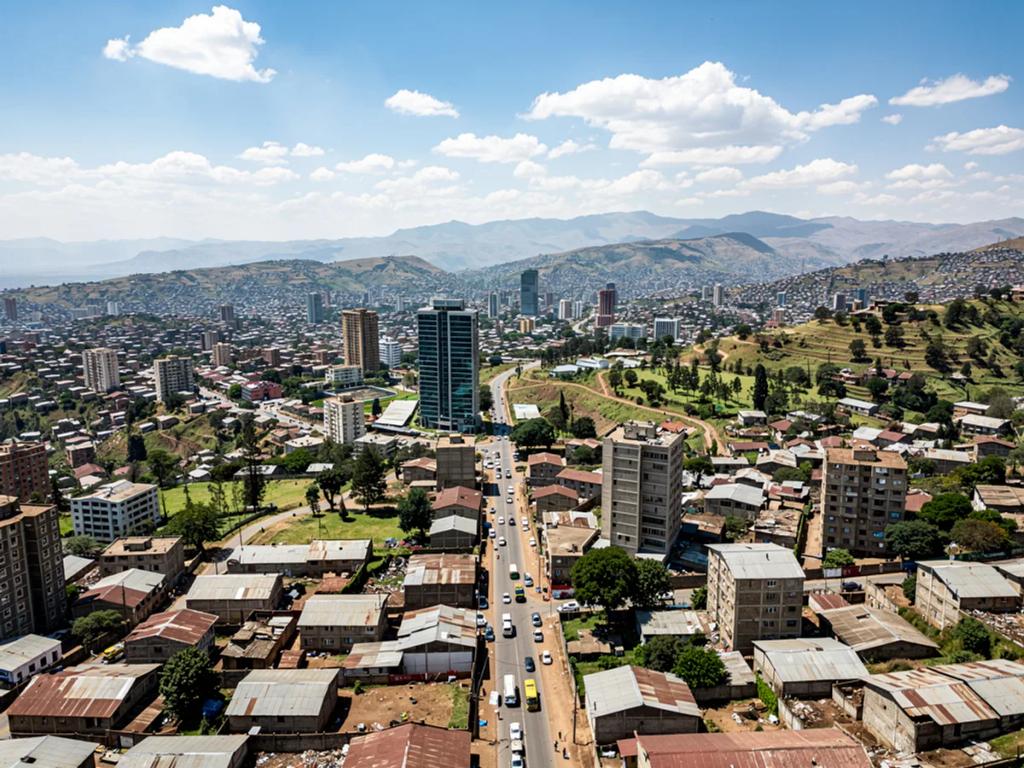
Addis Ababa runs on Ethio Telecom and Safaricom Ethiopia, and your eSIM rides one of them as its host. Coverage across the capital is reasonable and improving, and mobile data has become among the cheapest in Africa. Two things here will disorient you more than anything technical: the telecoms market only stopped being a monopoly very recently, and the country keeps a different calendar and a different clock from the one on your phone.
Ethiopia never adopted the calendar reforms the rest of the world did, and it runs its day from dawn. Both facts have practical consequences for anyone making an appointment.
The Ethiopian calendar has thirteen months - twelve of thirty days, plus a short thirteenth of five or six. This is where the tourist board's "thirteen months of sunshine" line comes from.
The year is seven to eight years behind the Gregorian one, and the new year falls in September, not January. A date written locally will not match your passport stamp.
The clock counts from dawn. Ethiopian time starts at sunrise, so it runs about six hours off the international clock: what your phone calls 7am is 1 o'clock in the morning here, noon is 6, and 6pm is 12.
This matters for arrangements. A driver told to come at "two o'clock" may mean 8am. Hotels and airlines aimed at foreigners use international time; a guide, a driver or a shopkeeper may not.
The fix is one sentence. Confirm in both: "two o'clock Ethiopian, or eight in the morning?" Nobody will find the question odd - Ethiopians ask each other the same thing constantly, and both systems are in everyday use side by side.
Your phone stays on international time throughout. It is the human arrangements that need checking.
Ethio Telecom was the state monopoly for around fifty years, one of the last in the world, and it showed - expensive data, slow rollout, no pressure to improve.
Safaricom Ethiopia launched commercially in October 2022, backed by a consortium including Vodafone, and took millions of subscriptions within months.
Competition worked quickly. Prices fell, Ethio Telecom sharpened up, and mobile data here is now genuinely cheap by African standards.
The incumbent still owns the bones of it, though - the backbone fibre, the transmission network and most of the towers - so the market is more open than it is level, and coverage outside the cities still reflects the older build.
One honest caveat. Ethiopia has restricted or shut down internet access during periods of conflict and unrest, and some regional shutdowns have run for months rather than hours. Addis has generally been less affected than the regions, but it is worth checking current conditions before travelling and not treating a data connection as guaranteed if you are heading to the north.
Addis sits at roughly 2,355 metres, which makes it one of the highest capital cities in the world - higher than most European ski resorts, and higher than anywhere else in this series.
You will feel it for a day or two. Stairs, hurrying and alcohol all hit harder than they should. Take the first day gently.
It is also why the weather is so pleasant. Nine degrees north of the equator, and mild all year because of the elevation.
And it is why Ethiopia produces the runners it does. The high plateau around the capital is where a remarkable share of the world's distance-running talent trains, and you will see groups of them on the roads at dawn - a completely ordinary sight here and a slightly humbling one.
Nights are cool. Bring a layer; visitors expecting equatorial Africa pack wrong.
Addis itself is reasonably covered, better in the newer districts and around the centre.
Power cuts affect the network, and they are frequent. A long outage can thin coverage as well as the lights.
The Simien Mountains in the north drop out across most of the trekking routes.
The Danakil Depression, one of the hottest and lowest places on earth, has essentially nothing, and trips there go with guides, convoys and satellite communication for good reason.
Lalibela, Gondar and Axum have service in the towns and much less between them.
The Bale Mountains and the southern Omo Valley are patchy to absent.
The currency is the birr, and this is substantially a cash economy.
Cards work at international hotels and a few restaurants and very little else. Do not plan around them.
telebirr, the mobile money service, is what locals use, and it needs local documentation.
Bring clean US dollars or euros to change at banks or your hotel, and keep receipts.
As for the coffee: Ethiopia is where coffee comes from, and the buna ceremony is a genuine social institution rather than a performance for visitors. Green beans are roasted over coals in front of you, ground by hand, and brewed in a clay jebena. Three rounds are poured - abol, tona and baraka - and leaving before the third is impolite. It takes an hour or more. Accept when invited; it is one of the best things about being here.
- Ride, Feres or Zayride, the local ride-hailing apps, which are the practical way to move around.
- Maps with offline copies, since addressing here works by landmark rather than street number and mapping data is thin.
- A translation app. Amharic is the working language and uses the Ge'ez script, which you will not be able to guess at. English is widely spoken in business and tourism.
- A currency converter, for birr arithmetic.
- An Ethiopian calendar converter, which sounds like a novelty and is not.
Bole International (ADD) is about 6 km from the centre and is the largest aviation hub in Africa - Ethiopian Airlines has built it into the main connecting point for the continent, so a great many visitors pass through without leaving the terminal.
Most nationalities need a visa, and the e-visa system is straightforward and should be arranged before travel. Check the current position for your passport.
Airport taxis and hotel transfers are the sensible options; the ride apps also work.
In the city, ride apps and taxis dominate. The light rail exists and is cheap but limited. Traffic is heavy and getting heavier.
Moderate, and cheap enough that there is no reason to skimp. Ride apps and maps run constantly, and offline maps matter more here than in most cities because addressing is informal. Hotel wifi ranges from good to ornamental.
Layers, always. Warm days and genuinely cool evenings at this altitude, in every season.
A rain jacket from June to September, when the main rains fall and fall hard.
Modest dress. Ethiopia is religiously conservative across both its Orthodox Christian and Muslim communities. Shoulders and knees covered, and a scarf for women entering churches.
Shoes that come off easily - you remove them at churches and mosques.
Sun protection. Thin air at altitude, nine degrees off the equator.
Something respectable for the evening. Addis dresses smartly and notices.
A coffee ceremony, with the roasting pan, the incense and the jebena.
Merkato, said to be among the largest open-air markets in Africa. Go with someone who knows it.
Holy Trinity Cathedral, where Haile Selassie is buried.
The National Museum, which holds Lucy - the 3.2-million-year-old hominin skeleton that rewrote human origins.
Mount Entoto, above the city, for the eucalyptus forest and the view back down over the whole basin.
Lalibela's rock-hewn churches, an hour's flight north and one of the genuine wonders of the world - eleven churches carved down into the rock rather than built up from it.
Timkat, if your dates allow, which is the most photographed religious festival in the country.
Ethiopia was never colonised. Alone in Africa, it kept its independence through the scramble, defeating Italy at Adwa in 1896, and enduring only a brief Italian occupation from 1936 to 1941.
Coffee originated here, in the forests of Kaffa, which is where the word comes from.
Ethiopia has its own script. Ge'ez is a syllabary of over two hundred characters, used for Amharic and Tigrinya, and unrelated to the Latin or Arabic alphabets.
Lucy is here, and Ethiopians call her Dinknesh, meaning "you are marvellous".
The Ethiopian Orthodox Church is one of the oldest Christian traditions anywhere, with its own canon, its own fasting calendar and a claim to hold the Ark of the Covenant at Axum.
And Addis Ababa means "new flower", named by Empress Taytu Betul in the 1880s.
Timkat, 19 January, the Orthodox Epiphany, when replicas of the Ark are processed through the streets and enormous crowds are blessed with water. It is UNESCO-listed and it is extraordinary.
Genna, 7 January, Ethiopian Christmas.
Enkutatash, 11 September, the Ethiopian New Year, at the end of the rains when the yellow meskel daisies are out.
Meskel, 27 September, marking the finding of the True Cross, with a huge bonfire in Meskel Square. Also UNESCO-listed.
The Great Ethiopian Run, in November, Africa's largest road race, with tens of thousands running through the capital.
October to March is the dry season and the time to come.
The love: Addis is the gateway to a country unlike anywhere else, with its own calendar, script, church, cuisine and history of never having been conquered. The food is superb and completely distinctive - injera with a dozen stews on a shared platter, and the fasting menus are among the best vegan food anywhere by accident of religion. The coffee is the best you will drink. The festivals are on a scale and of an intensity that few places match. And Lalibela, Gondar and the Simiens are a short flight away.
The complaints are serious and worth stating. Infrastructure is unreliable - power cuts, water interruptions and patchy internet. Political instability and regional conflict have affected parts of the country badly, and travel advice for some regions is restrictive; check your government's current guidance rather than assuming. The traffic is heavy and worsening. Poverty is stark and visible. Addis itself has limited conventional sightseeing and is a base rather than a destination. And the altitude flattens some visitors for a day or two.
Come between October and March, take the first day slowly, accept every invitation to coffee, and fly to Lalibela.
Because Ethiopia counts hours from dawn rather than midnight, so local time runs about six hours off the international clock - your 7am is their 1 o'clock. Both systems are in daily use. When arranging anything, confirm in both: "eight in the morning, or two Ethiopian?" Your phone stays on international time regardless.
Not any more. Ethio Telecom held a state monopoly for about fifty years until Safaricom Ethiopia launched in October 2022, and competition brought prices down to among the cheapest in Africa. The incumbent still owns most of the towers and backbone, so coverage outside the cities lags the pricing.
It has, during conflict and unrest, and some regional shutdowns have lasted months rather than hours. Addis has generally been less affected than the regions. Check current conditions before you travel, particularly if you are heading north, and do not treat connectivity as guaranteed there.
Probably, for a day or two. Addis is at about 2,355 m, the highest capital in this series. Expect breathlessness on stairs and alcohol hitting harder. Take the first day gently, drink more water than usual, and remember the evenings are cool despite the latitude.