Dhaka runs on Grameenphone, Robi, Banglalink and Teletalk, and your eSIM rides one of them as its host. Ordinary coverage across the city is good, 4G is widespread and mobile data is very cheap. The connectivity risk here is not the network's reach. It is that Bangladesh has demonstrated, at national scale and within recent memory, that it is willing to switch the entire internet off.
Many places throttle or block. Bangladesh did something more thorough, and it is the single most important thing for a traveller to understand.
In July 2024 the internet was shut off nationwide during widespread protests. Not slowed, not restricted to certain apps: mobile data and fixed broadband both went, and the country was effectively disconnected from the outside world for around five days.
A second shutdown followed in early August 2024, at which point the government fell and connectivity was restored.
The distinction from other places matters. Where a country like Pakistan suspends mobile data in particular districts for a few hours, this was national and it took broadband with it. Hotel wifi was no escape route, because there was no wifi.
Since then things have been normal, and an ordinary visit today involves no disruption at all. But the capability was used recently and comprehensively, and it is honest to treat it as a live possibility rather than a closed chapter.
What that means in practice, and it is not alarming: keep a paper or offline copy of your hotel address, flight details and a phone number that matters. Carry enough cash that you are not dependent on a payment app. Tell someone at home your itinerary rather than relying on being able to message daily. This is cheap insurance and you will almost certainly not need it.
Check current conditions before you fly, especially around elections or announced demonstrations.
Dhaka has repeatedly been ranked as having the worst traffic congestion of any major city in the world, and the numbers are genuinely startling - average speeds in the peak have been measured at little better than walking pace.
Never plan by distance. Eight kilometres can be twenty minutes at six in the morning and two hours at five in the afternoon.
The Metro Rail changed things. MRT Line 6 opened in stages from late 2022, runs elevated across the city, is air-conditioned, clean and fast, and it is the single best thing that has happened to moving around Dhaka. Where it goes, take it.
The Elevated Expressway likewise skips a large amount of surface congestion.
Pathao is the local app and its motorbike option is how Dhaka actually moves - a bike threads through what a car cannot. Uber operates too.
CNGs, the green auto-rickshaws, run on compressed natural gas and require negotiation.
Cycle rickshaws are for short hops in the old city and are part of the texture of the place.
Leave absurd amounts of time for the airport. Three hours from the city in the afternoon is not paranoid.
The city is well covered including Old Dhaka's dense lanes and the metro stations.
Network congestion is the more common failure, not absence. In a city of well over twenty million, cells get saturated at peak times and in crowds, and data slows to nothing while showing full bars.
The Sundarbans, the vast mangrove forest in the southwest, is a genuine void. Boat trips there run for days with no coverage at all, which is part of the appeal.
The river journeys - the launches down the Buriganga and out into the delta - drift in and out.
Cox's Bazar, on the coast, is covered in town and thins along the length of the beach.
Rural Bangladesh generally is better covered than you would expect, because mobile money reached the villages before roads did.
Bangladesh runs one of the most successful mobile financial systems anywhere, and it shapes daily life.
bKash is the dominant service, and its agents are on every street. Millions of people who have never had a bank account use it daily.
As a visitor you probably cannot sign up, since it needs local identity documents, so this is context rather than instruction.
Cards work in hotels, malls and better restaurants and nowhere else reliably.
Cash is what you need. Taka, in small notes, for rickshaws, CNGs, street food and markets.
ATMs are widespread in the newer districts like Gulshan and Banani and less so in the old city.
- Pathao, for motorbike and car rides, and the one locals use.
- Uber, which also operates and is worth having as the alternative.
- Foodpanda, which delivers essentially everything.
- Maps with offline copies, both for navigation and as a hedge.
- A translation app. Bangla is the language of daily life, English is widely used in business and by educated speakers, and signage outside the main commercial districts is in Bangla script.
Hazrat Shahjalal International (DAC) is about 17 km north of the centre, which sounds close and is not. Budget one to two hours into the city depending on the hour, and more if you are travelling back out in the afternoon.
A new third terminal has substantially increased the airport's capacity and improved arrival considerably.
Prearranged hotel transfers are the least stressful option and most hotels offer them. Uber and Pathao both work from the airport.
Most visitors base themselves in Gulshan, Banani or Baridhara, the diplomatic and business districts, which are calmer, greener and where most international hotels are.
A decent amount. Ride-hailing runs constantly, maps are in permanent use, and you will want offline copies as a hedge. Data itself is among the cheapest in the world here, so there is no reason to be stingy. Hotel wifi is good in the better districts.
Modest and conservative. Bangladesh is a Muslim-majority country and Dhaka is not a place for shorts and vest tops.
Women: loose clothing covering shoulders, arms and knees, and a scarf to hand for mosques. Local salwar kameez is comfortable and easily bought here.
Men: long trousers, short sleeves fine.
Lightweight natural fabrics, because the combination of heat and humidity outside winter is punishing.
Sandals or shoes you can rinse. Monsoon streets flood, and you will be taking shoes off at mosques.
An umbrella from June to October, which locals use for both rain and sun.
Something warmer for December and January evenings, which are genuinely mild rather than cold but catch people out.
Old Dhaka's rickshaws, hand-painted and packed nose to tail, which is the defining image of the city.
Ahsan Manzil, the pink palace on the riverbank, from the water.
Lalbagh Fort, the unfinished Mughal fort in the old city.
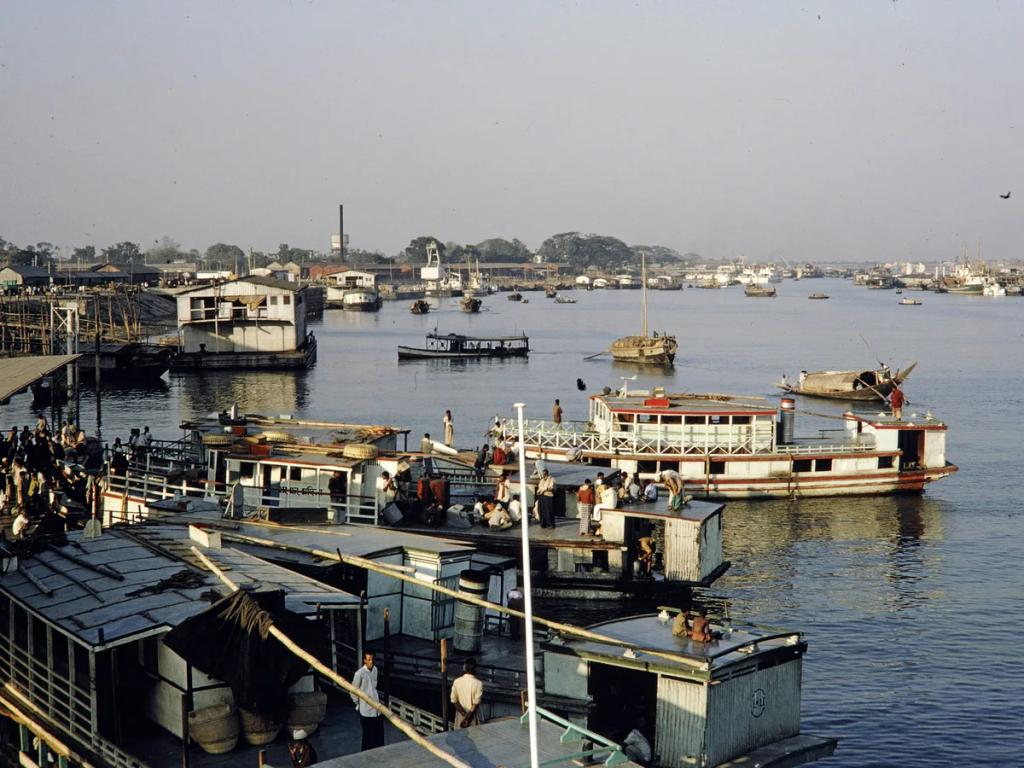
Sadarghat river port at dawn, when the passenger launches are loading and it is the busiest place you will ever stand.
Star Mosque (Tara Masjid), with its mosaic star-work.
The National Parliament House, designed by Louis Kahn and considered one of the major buildings of the twentieth century. It is genuinely extraordinary and largely unvisited by foreigners.
Shakhari Bazar, the narrow Hindu artisans' street in Old Dhaka.
The Buriganga at sunset, from a small hired boat.
International Mother Language Day exists because of Bangladesh. On 21 February 1952, students were killed in Dhaka protesting for Bengali to be recognised as an official language of Pakistan. UNESCO later adopted that date worldwide, and the Shaheed Minar monument marks the spot.
Dhaka is the rickshaw capital of the world, with estimates running into the hundreds of thousands of cycle rickshaws, and the painted rear panels are a folk art form in their own right.
Jamdani weaving is on the UNESCO intangible heritage list, descended from the legendary Dhaka muslin that was so fine it was said a whole sari could pass through a ring.
Bangladesh holds the largest mangrove forest on earth, the Sundarbans, shared with India and home to Bengal tigers.
Cox's Bazar has one of the longest uninterrupted natural sea beaches in the world, running around 120 km.
And the country is among the most densely populated on the planet - roughly 170 million people in an area smaller than England and Scotland combined.
Pohela Boishakh, 14 April, the Bengali New Year, when Dhaka wears red and white and the Mangal Shobhajatra procession - itself UNESCO-listed - fills the streets. It is the best day of the year to be here.
Ekushey February, 21 February, Language Martyrs' Day, solemn and enormous, with flowers laid at the Shaheed Minar through the night.
Eid al-Fitr and Eid al-Adha, when the city empties as millions travel home and the roads and trains are beyond description.
Durga Puja, in autumn, marked by the Hindu community with elaborate pandals.
Victory Day, 16 December, and Independence Day, 26 March.
December to February is the season to visit: dry, mild and clear.
The love: Dhaka is one of the most intense urban experiences on earth and people who take to it take to it completely. It is not a sightseeing city; it is a place where the interest is the life on the street, which is relentless, colourful and genuinely welcoming. Bangladeshis are hospitable to a degree that surprises visitors, foreigners are still uncommon enough to be greeted rather than hustled, the food is superb and absurdly cheap, and Louis Kahn's parliament building is a world-class piece of architecture almost nobody comes to see.
The complaints are consistent and substantial. The traffic is the worst in the world and it dominates every day. The crowds and noise are unrelenting. The air quality in winter is poor and sometimes very poor. There are few conventional sights, and visitors wanting a tidy itinerary struggle. The heat and monsoon rule out much of the year. Poverty is highly visible. And solo women travellers report significant staring and attention.
Come between December and February, stay in Gulshan, take the metro where it goes, and give Old Dhaka a full day on foot with a local guide.
It did so nationally in July 2024, taking both mobile data and fixed broadband offline for around five days, and again briefly that August. Things have been normal since. Treat it as a live possibility rather than history: keep offline copies of your key details, carry cash, and check conditions before travelling around elections or announced protests.
Not necessarily. That is what made 2024 different from most countries' shutdowns - fixed broadband went down too, so wifi was no escape route. In an ordinary week, hotel wifi in Gulshan and Banani is good and reliable.
You need cash. Cards are accepted in hotels, malls and better restaurants and almost nowhere else. Local life runs on the bKash mobile money system, which needs Bangladeshi identity documents, so a visitor falls back on taka in small notes for rickshaws, CNGs and street food.
Far longer than the 17 km suggests. Two to three hours from the city in the afternoon is prudent. Dhaka has repeatedly been ranked the most congested major city in the world, and the metro, where your route matches it, is the one reliable way to beat it.