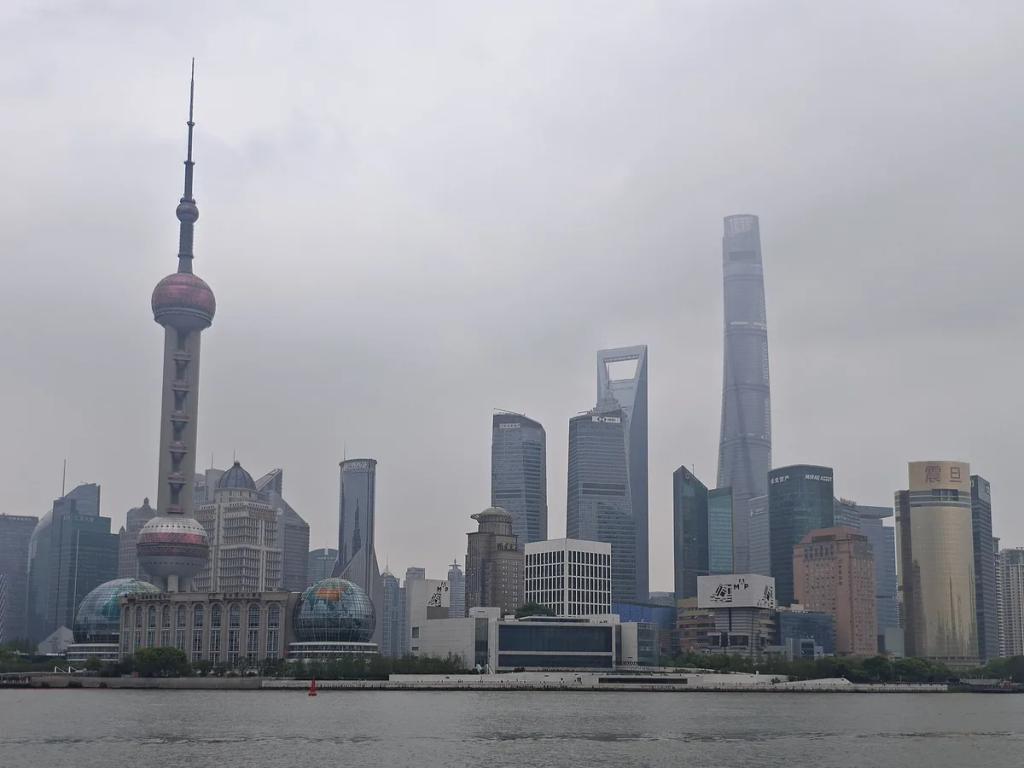
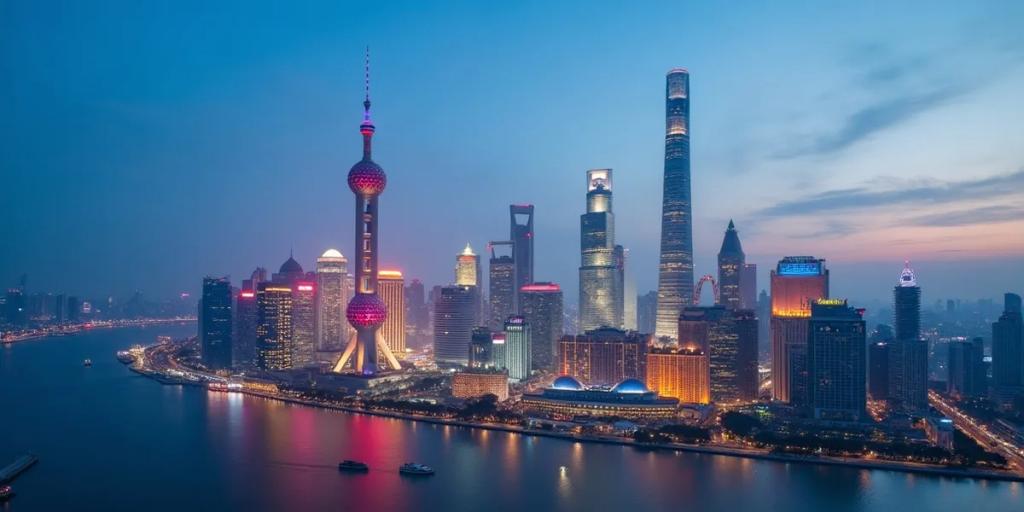
Raw coverage is the easy part in Shanghai. China's three national carriers - China Mobile, China Unicom and China Telecom - run some of the densest 5G on the planet here, and your eSIM rides one of them as its host network. Signal holds from the Bund promenade to the plane-tree lanes of the former French Concession, up the Lujiazui towers, and - unusually by European standards - through the entire metro, deep tunnels included. The real question in Shanghai is not "will I have bars" but "what will my data actually reach".
On a local Chinese SIM, or on any Wi-Fi in the city (your hotel's included), Google, Gmail, WhatsApp, Instagram and most Western services are blocked. A roaming travel eSIM is different: your data typically breaks out to the internet through a gateway outside mainland China, so those apps generally keep working with no VPN at all. Routing can vary by plan, so hedge your bets - install a reputable VPN before you fly as a backup, because VPN websites themselves are hard to reach once you are inside the firewall. One more quirk: even when Google Maps loads, its mainland map data is thin and often misaligned, so locals-in-the-know use Apple Maps (excellent in China, powered by local data) or Amap.
- Alipay and WeChat Pay are how Shanghai pays - street food, convenience stores, taxis, museums. Both have accepted international Visa and Mastercard since 2023, but the sign-up and card verification happen on your phone, with data. Cash is legal tender, yet many small vendors struggle to make change, so get a wallet app working on day one.
- Didi is the ride-hailing app locals use; it runs in English as a mini-program inside Alipay or WeChat, paid with your linked foreign card, with driver chat auto-translated.
- The metro is one of the largest networks on earth and QR-code-first: set up Alipay's Transport code once and you scan through the gates like a local. The gates read QR codes and transit cards, not foreign contactless bank cards, though ticket machines still sell single journeys.
- QR menus and mini-program bookings are the norm - many restaurants have no paper menu, and popular museums take reservations through WeChat mini-programs. Paper maps and printed timetables have essentially vanished.
From Pudong (PVG), the Maglev covers the run to Longyang Road in about eight minutes at roughly 300 km/h, or Metro Line 2 does it cheaply in under an hour; Hongqiao (SHA) sits directly on Lines 2 and 10. Public and airport Wi-Fi here often demands SMS verification to a Chinese number - a loop a visitor cannot close - which is the strongest argument anywhere for having your eSIM installed and tested before you fly.
More than a comparable European city break. Camera translation for menus and signs, constant map checks, payment apps, QR menus and mini-programs all lean on data, and because the usual messaging apps only work over your eSIM (not Wi-Fi), calls home ride on it too. Budget roughly 1GB per day or two, and add headroom for video calls. If your trip continues beyond the mainland, note that Hong Kong sits outside the firewall entirely and uses a separate Hong Kong eSIM.
Shanghai dresses smart-casual and nobody expects tourist khaki. In summer, breathable fabrics are non-negotiable and locals carry a compact umbrella year-round - it doubles as a parasol in July and a shield in the plum rain. Pack one light layer even in August, because mall, metro and restaurant air conditioning runs arctic. Winter is the trap: 3-8C sounds mild, but the damp cold penetrates, and many older buildings and smaller restaurants are barely heated, so think proper coat, scarf and warm shoes rather than a light jacket.
The classic is the Pudong skyline shot from the Bund at blue hour, roughly 30-45 minutes after sunset when the towers light up but the sky still holds color - the promenade's north end near Waibaidu Bridge is noticeably quieter than the central viewing platform. At Yu Garden, the zigzag bridge by the Huxinting teahouse is wall-to-wall by mid-morning; come right when the area wakes up. Tianzifang's narrow lanes and the plane-tree streets of the former French Concession (Wukang Road especially) are at their best in autumn light. Leave the drone at home: central Shanghai is effectively a no-fly zone and enforcement is real.
The airport Maglev was the fastest commercial train on earth at 431 km/h from 2004 until 2021, when its operating speed was cut to a still-brisk 300 km/h. The Shanghai Tower's sightseeing decks on floors 118 and 119 sit at 546 m and 552 m, among the highest observation decks anywhere. And the city's name is literal: the characters for Shanghai mean "upon the sea".
Chinese New Year lands in late January or February (it moves with the lunar calendar) and rolls into the Lantern Festival two weeks later, when Yu Garden's lantern displays draw enormous crowds. Spring brings the Formula 1 Chinese Grand Prix to Shanghai International Circuit, usually in March or April. In early November the CIIE trade expo fills the city's hotels and spikes prices - check the dates before booking a November trip.
People fall for Shanghai's sci-fi skyline, a metro that reaches everything, food from every corner of China, and a level of street safety at 2am that surprises most first-timers. The complaints are just as real: the firewall makes the first day frustrating until your apps are sorted, big sights and metro interchanges are seriously crowded, English drops off fast outside tourist zones so camera translation becomes a survival tool, and July-August humidity is genuinely draining. It is a city that rewards a working phone more than almost anywhere else.
Usually yes. A roaming travel eSIM typically routes data through a gateway outside mainland China, so normally-blocked apps keep working without a VPN. Routing varies by plan, so check the plan details if one specific app is essential - and carry a VPN installed before arrival as a backup.
No - Wi-Fi puts you on a mainland network, so the same blocks apply even in international hotels. The practical habit is the reverse of most trips: switch off Wi-Fi and stay on eSIM data whenever you need Google, WhatsApp or Instagram.
Yes - set up the Transport QR code in Alipay with an international card and scan it at the gates. Unlike London or Bangkok, the gates do not take foreign contactless bank cards, so the fallback is single-journey tickets from station machines.