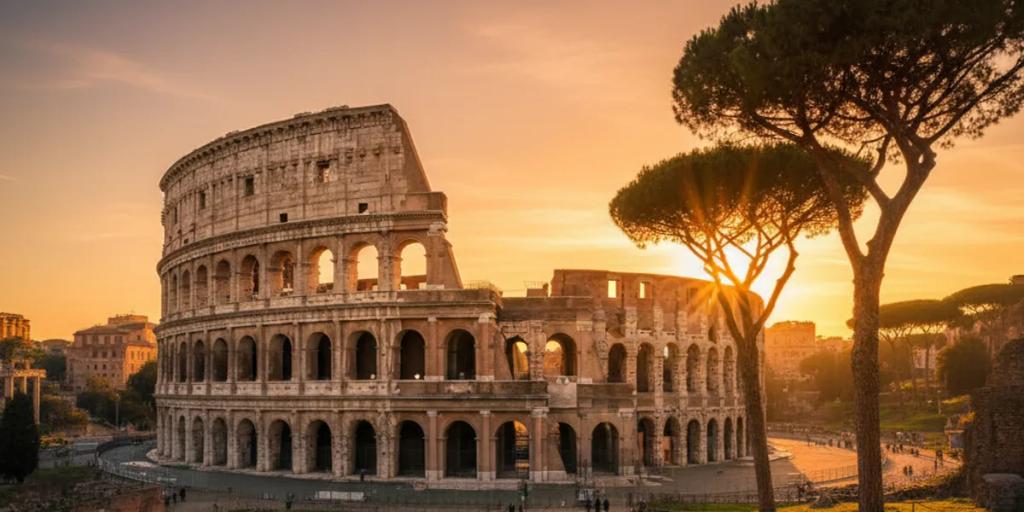
Rome runs on four mobile networks - TIM, Vodafone, WindTre and Iliad - and your eSIM rides one of them as its host. Coverage across the city is dense 4G with fast-growing 5G, and it holds up everywhere the postcards are shot: the centro storico, Trastevere, the Vatican area, Testaccio, and out along the Appia Antica. The city has also been wiring its underground: under the Roma 5G project, Metro Line A now has 4G and 5G in all 27 stations and the tunnels between them, with Lines B and C being completed next.
Rome's old center is built from meter-thick stone, and it shows. Inside churches, museums and the ground floors of Renaissance palazzi, bars can drop to one or none - step back into the piazza and it recovers instantly. On the metro, Line A is the reliable one now that its tunnel coverage is finished; on B and C expect signal in stations and stutters between them until their rollout completes, so load your route before the turnstile. One 2026 reality check: Metro C finally reaches the Colosseum (the Colosseo-Fori Imperiali station opened in December 2025), but Piazza Venezia is a walled-off station worksite for years to come, and your maps app will earn its data rerouting you around it.
- Tap and go on ATAC: Rome's metro, buses and trams all take contactless bank cards and phone wallets at the gate - Visa, Mastercard, Amex and more - so there is no paper-ticket errand. If your phone is the ticket, a dead battery at a validator is a fine waiting to happen.
- Timed, named tickets everywhere: the Colosseum sells named tickets with a photo-ID check and time slot, the Vatican Museums run on booked entry slots, and the Galleria Borghese admits 360 people per strict two-hour window with no walk-ins. Screenshot every QR code, but you will still want live data when a slot changes or an email needs re-opening at the gate.
- Taxis are app business: locals summon official white taxis through FreeNow (Uber in Rome mostly means pricier Uber Black, though it can also fetch a regular taxi). Only board a white car with a TAXI roof sign - the guys offering rides inside Termini station are not it.
- Even the Trevi Fountain is ticketed now: since February 2026, getting down to the water's edge costs 2 euro through a controlled entrance (the piazza view stays free). You can pay on the spot by card or by scanning the QR code posted at the entry.
From Fiumicino, the Leonardo Express train runs nonstop to Termini in about 32 minutes - buy the ticket in the Trenitalia app rather than queueing at machines. From Ciampino, shuttle buses to Termini are the simple play. Either way, the ride into town is when the accommodation directions, check-in codes and first maps searches all land at once, which is exactly why installing your eSIM before departure beats gambling on airport Wi-Fi.
Rome is a heavy-maps city: the centro storico is a beautiful maze, and you will be navigating constantly between timed entries. Add photo backups (the city forces the camera out of your pocket roughly every forty meters) and the occasional menu translation, and 1GB per 2-3 days is a comfortable baseline for most travelers; video callers and story-posters should size up. Plans top up from your dashboard if the trip outruns the estimate, and our best eSIM for Italy guide compares how the Italian host networks stack up.
Churches are the trap: St Peter's Basilica and most major churches enforce covered shoulders and knees on everyone, so carry a light scarf or wear longer shorts on Vatican days. The sampietrini cobblestones destroy heels and punish thin soles - cushioned flats or sneakers win. Summer means a refillable bottle (see the nasoni below), a hat, and sunscreen; winter needs a real jacket for damp 5-10C evenings, and spring or fall a layer for the temperature swing.
The Trevi Fountain before 7am is a different monument - by mid-morning it is shoulder to shoulder behind the barriers. For the Colosseum, skip the crowded forecourt and walk up into Colle Oppio park in the morning for a clean elevated angle with light on the facade. On the Aventine Hill, the keyhole of the Knights of Malta frames St Peter's dome through a hedge tunnel - there is usually a queue, and it is worth it; hold your lens right against the keyhole. For sunset, the Pincio terrace above Piazza del Popolo looks straight across the rooftops to St Peter's. Leave the drone at home: central Rome is a permanent no-fly zone and flying one is treated as a criminal offense, with drones confiscated at the Colosseum.
The Pantheon's dome, poured around 1,900 years ago, is still the largest unreinforced concrete dome on Earth at 43 meters across. The streets are dotted with roughly 2,500 nasoni, cast-iron fountains running free, cold drinking water around the clock. Vatican City, the world's smallest state, sits entirely inside the city. And the cats lounging on the ruins of Largo di Torre Argentina - where Julius Caesar was assassinated - are a legally protected colony that cannot be relocated.
Easter puts the Vatican at the center of the world, with huge crowds through Holy Week. On 21 April the city throws itself a birthday party, Natale di Roma, with Europe's largest historical re-enactment: a thousand-plus costumed legionaries and gladiators parade past the Colosseum and stage battles in the Circus Maximus. Estate Romana fills the summer with open-air cinema, concerts and riverside stalls along the Tiber. And around Ferragosto (15 August) many family-run trattorie and shops simply close - the Romans have left for the coast, and honestly, in that heat you may wish you had too.
The love is deserved: nowhere else stacks this much history per square meter, the food is superb once you are three streets from any landmark, and the center is genuinely walkable. The complaints are deserved too: tourist-menu traps ring the famous piazzas, some taxi drivers refuse short rides or "forget" the meter (the apps largely fix this), August is brutal and half-shuttered, and without timed tickets you will queue for nearly everything that matters. Book ahead, eat where the menu is only in Italian, and come in spring or fall - the ledger tilts heavily toward love.
Increasingly, yes. Line A has 4G and 5G in all stations and tunnels after the Roma 5G rollout finished there, while Lines B and C are being completed - expect solid signal in stations and possible gaps between them. Load routes and ticket QR codes before heading underground and it is a non-issue.
Yes. ATAC's tap and go readers accept foreign contactless cards (Visa, Mastercard, Amex, and others) and phone wallets at metro gates and on board buses and trams, charging a standard single fare per tap. No app or pre-registration is needed, though journey planning and disruption alerts still want data.
Only if you need an Italian phone number. Buying a physical SIM in Italy requires passport registration at a shop, which eats vacation time; a data eSIM installed before you land skips the queue and keeps your home number active for bank codes and ticket confirmations.