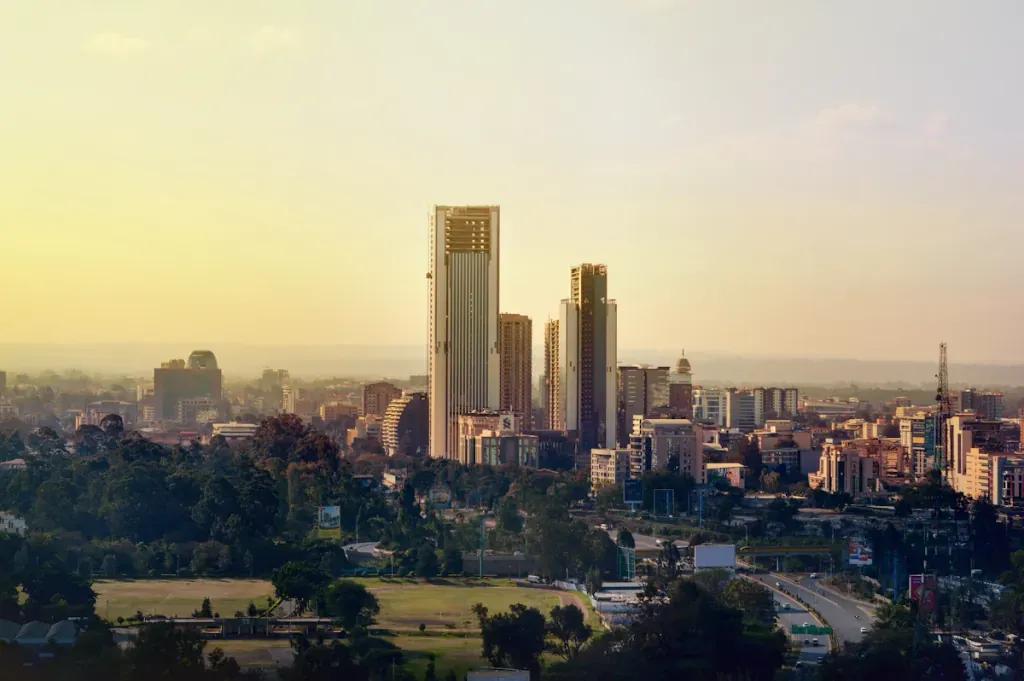
Nairobi runs on Safaricom and Airtel, and your eSIM rides one of them as its host. Safaricom is the dominant operator with roughly two-thirds of the market and was first to 5G in Kenya; Airtel is the strong second and also runs 5G in the major cities. In practice you get fast 4G across the whole metropolitan area and 5G through central Nairobi on either network. Jomo Kenyatta International has full 4G airside, so your data is working before you reach immigration.
In some cities data is a nice-to-have. In Nairobi it is infrastructure, for one specific reason: Uber and Bolt are how visitors get around, and after dark they are also the safety plan.
Daylight Nairobi is an ordinary big city - Westlands, Kilimani and the CBD in the afternoon feel much like any capital. Night is different. The local advice is consistent and worth taking literally: inside the compounds of Westlands or Gigiri you are fine on foot, and outside them you take a door-to-door ride even for three hundred metres. That means your phone needs charge and data at exactly the hour you are least likely to be thinking about either.
Two practical consequences. Carry a power bank - a dead phone at 10pm is a genuine problem, not an inconvenience. And keep the ride-hailing apps installed and logged in before you land, because the airport is not where you want to be doing SMS verification.
Matatus - the painted, sound-system-equipped shared minibuses - are the real Nairobi experience and cost a fraction of a ride. They are also unsignposted, unscheduled and route-coded in a way that takes locals years to learn. Ride one with someone who knows the route; do not try to crack the network from a maps app.
M-Pesa is not a payment app in Kenya so much as the payment layer of the entire country. Market stalls, matatu fares, salons, restaurant bills, your guide's tip - a Kenyan pays with a phone number.
Here is the part most travel guides skip: a travel eSIM will not give you M-Pesa. M-Pesa is tied to a registered Kenyan mobile number, and registration means a local SIM in your name against your passport. A roaming or travel data eSIM has no Kenyan MSISDN behind it, so the M-Pesa account cannot exist.
That is not a disaster - visitors manage perfectly well - but plan for it:
- Cards work more widely than you expect in Nairobi proper: hotels, malls, supermarkets, restaurants, the better cafes, and the Nairobi Expressway toll.
- Carry shilling cash for markets, small cafes, tips and park gates.
- If you are staying for weeks and want M-Pesa properly, that is the case for a local SIM in addition to your data eSIM - keep the eSIM for data, add the local line for money.
The metropolitan coverage is good, so the interesting gaps are specific.
Nairobi National Park is the strange one: 117 km2 of savannah with a city skyline behind it, and coverage that comes and goes as you drop into the valleys along the Mbagathi. You can be photographing rhino with four bars and lose it entirely two minutes later in a river gully. Download the park map before the gate.
The Expressway is elevated and fine, but the toll plazas bunch traffic and everyone reaches for their phone at once - expect slow rather than absent.
Older stone-and-concrete buildings in the CBD swallow signal on lower floors, as they do everywhere.
JKIA sits about 18 km southeast of the centre. The Nairobi Expressway is the thing that changed arrivals: the toll road runs airport to CBD in roughly fifteen minutes for about three dollars, against an hour or more on Mombasa Road at the wrong time of day. Your driver will ask whether you want it. Say yes.
This is the moment the eSIM earns its place - hotel directions, the ride-hailing app, the first WhatsApp to whoever is expecting you, all in the same five minutes at the kerb. Install before departure.
More than a beach trip, because you will be app-hailing several times a day and running maps in traffic that reroutes constantly.
For a week in the city, budget around 1GB per 2 days. If Nairobi is the front end of a safari, size up and read our best eSIM for Kenya guide - the Mara and the northern conservancies are a different coverage story from the capital, and the plan you want for both is not the plan you want for either alone.
Nairobi confounds people who packed for the equator. At 1,795m the sun is fierce and the air is not: days are pleasant in the low twenties, evenings drop into single-digit-adjacent territory, and every visitor who packed only shorts ends up buying a fleece. Bring layers and a light jacket.
Dress in the city is smart-casual and Nairobians dress well - scruffy tourist kit stands out more here than in most capitals. For park mornings, neutral colours, closed shoes and something warm for the 6am game drive, because open vehicles at altitude before sunrise are cold.
Nairobi National Park is the shot that exists nowhere else: giraffe, rhino and buffalo with office towers on the horizon. Non-resident entry runs about USD 80. Be at the gate for opening - predators are active roughly 6:15 to 9:00, and the late-afternoon window from about 4:30 gives you rhino at the waterholes and the good light. One lovely detail for train fans: the SGR Madaraka Express crosses the bridge over the park in the mid-morning, usually between 8:25 and 8:45.
The Giraffe Centre in Karen, running since 1979 to protect the endangered Rothschild's giraffe, puts you on an elevated platform at head height with them. Open daily 9am to 5pm, with a 40-hectare sanctuary to walk afterwards. Go early; the coach parties arrive mid-morning.
Karura Forest for a city that most visitors never see - a genuine forest with waterfalls and marked trails, inside the ring road.
Nairobi is the only capital city on earth with a national park inside its boundaries - the park was gazetted in 1946, and the fence stops on the southern side so that wildlife can still move onto the Athi-Kapiti plains.
The name comes from the Maasai Enkare Nyorobi, "the place of cool waters", which is a fair description of a highland city that Europeans keep expecting to be hot.
And M-Pesa, launched here in 2007, moved mobile money from an experiment to national infrastructure years before most of the world had heard of contactless payment.
The Great Migration season (roughly July to October) is not in Nairobi but it fills it - the capital is the funnel for every Mara flight, and hotel prices and airport queues both reflect that.
Nairobi Restaurant Week in the first half of the year turns the city's very good food scene into a set-menu crawl.
Koroga Festival brings big African acts to outdoor stages several times a year.
And long rains, March to May, is the season nobody advertises: traffic gets substantially worse, some park tracks turn to soup, and prices soften accordingly.
The love: Nairobi is a real city rather than a staging post - a serious food scene, live music, a park with rhino in it, and a pace and confidence that surprises people who expected a transit stop before the Mara. The weather is close to perfect for most of the year. And it is one of the few capitals where you can be watching giraffe at 7am and in a very good restaurant by 8pm.
The complaints are real. Traffic is the big one - journeys that look like fifteen minutes take an hour, and the Expressway only fixes one corridor. Petty crime means the night-time rules above are not paranoia, and phone snatching is the specific risk, so do not walk while navigating with your handset out. Park fees and safari pricing have risen sharply. And the city sprawls, so without ride-hailing you would be stranded.
Take the rides, keep the phone charged, build in time for traffic, and Nairobi rewards you far more than its reputation as an airport suggests.
No. M-Pesa is tied to a registered Kenyan mobile number, which requires a local SIM registered against your passport. A travel data eSIM has no Kenyan number behind it. Use cards - widely accepted in Nairobi - plus shilling cash, or add a local SIM alongside your eSIM if you are staying long enough to need mobile money properly.
Yes, through central Nairobi on both Safaricom and Airtel, with fast 4G across the rest of the metropolitan area and at JKIA.
Patchily. The park is right beside the city so you will have signal on the higher ground, but it drops in the river valleys. Download the park map before you go through the gate.
Inside the compounds of Westlands or Gigiri, yes. Outside them, take a door-to-door ride even for very short distances - this is the standard local advice, not excessive caution. Keep your phone charged and do not navigate with it in your hand on the street.