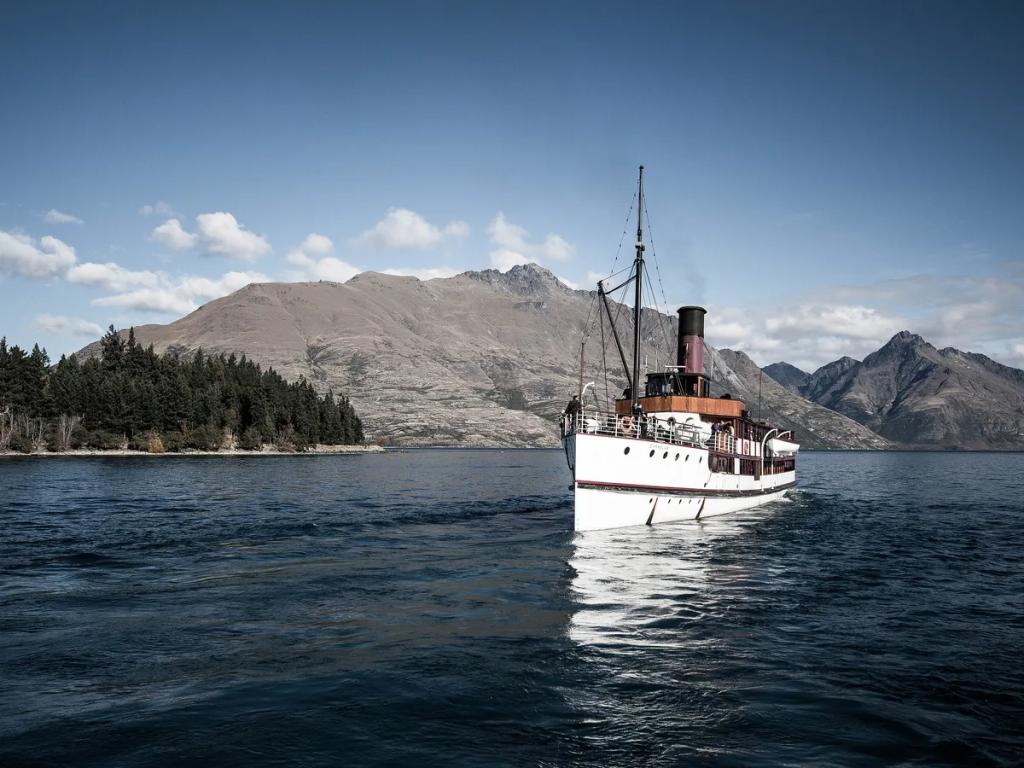
Queenstown runs on One NZ, Spark and 2degrees, and your eSIM rides one of them as its host. The town itself and the main highways are well covered with fast 4G and 5G in the centre. What makes New Zealand different is how completely and how quickly that coverage stops once you leave the road, and the fact that the country has built an entire safety culture around assuming it will.
New Zealand does not let visa-waiver travellers turn up unannounced, and this catches people at check-in rather than at the border.
Most visa-waiver nationalities need an NZeTA, the electronic travel authority, arranged in advance. Airlines check it before boarding.
It costs NZ$17 through the official app or NZ$23 on the website. The app is cheaper and it is the government's own.
You also pay the International Visitor Levy, currently NZ$100, at the same time. It funds conservation and tourism infrastructure, and for most visitors it is not optional.
Budget around NZ$117 to NZ$123 per person all in.
Apply early. Most come through within 72 hours, but it is not instant and there is no counter at the airport that will fix it for you.
The NZeTA is valid for up to two years and multiple visits, so it is a one-off for most trips. Australians are exempt.
Beware third-party sites that charge a markup to submit the same form. Use the official immigration channel.
This is the part that genuinely differs from Europe, and New Zealanders take it seriously.
Coverage follows the roads and the towns, and stops almost immediately in the backcountry. Not thins out - stops.
So the country uses personal locator beacons. A PLB is a satellite distress beacon, rentable for a few dollars a day from visitor centres, outdoor shops and some accommodation, and carrying one on a serious walk is normal rather than paranoid.
The Department of Conservation expects you to leave your intentions with someone before a multi-day walk, and the Great Walks system is built around that assumption.
On the Routeburn, the Milford Track and most of Fiordland, there is no signal at all. People are rescued here every season, and it is almost never because they were reckless - it is because the weather turned.
Download offline maps and check the DOC website for track and hut conditions, which change fast.
The practical version: your phone is for photographs and for the trailhead car park. The beacon is for the emergency.
The town, the lakefront and the airport are all well covered.
The road to Milford Sound loses coverage for long stretches, including through and around the Homer Tunnel, and Milford itself has very little. This surprises people on a day trip who expect to check in from the boat.
Fiordland generally is a coverage void, which is the whole point of it.
The Remarkables and Coronet Peak ski fields have patchy service, better at the base buildings than on the mountain.
Glenorchy and the head of the lake, 45 minutes up an astonishing road, thin out.
The Crown Range and the Cardrona valley towards Wanaka have gaps.
Central Otago's back roads through the vineyards are generally fine but not continuous.
New Zealand roads are slower than they look. They are winding, often single-lane each way, and frequently spectacular in a way that makes you stop.
Queenstown to Milford Sound is around four hours each way, and the day trip is a twelve-hour undertaking. Many people do it as a coach tour precisely so someone else drives it.
Queenstown to Christchurch is six hours or more, not the three that the distance implies.
Fuel stops are sparse once you leave the main routes, and in Central Otago you should fill up when you can rather than when you need to.
Drive on the left, and note that a large share of the crashes involving visitors happen in the first hours after a long-haul flight. Sleep before you drive.
- A DOC app or the DOC website for track conditions, hut bookings and alerts, checked before you leave signal.
- MetService, the national forecaster, which is what everyone here actually uses. Mountain weather changes fast.
- Maps with offline copies, downloaded for the whole Otago and Fiordland region rather than just the route.
- Uber and a couple of local ride apps operate in town, though Queenstown is small enough to walk.
- A translation app is unnecessary. English throughout, with te reo Maori place names you will enjoy learning to say.
Queenstown Airport (ZQN) is about 8 km from the centre, and the approach through the mountains is one of the more memorable commercial landings anywhere.
Buses, shuttles and taxis all run into town in fifteen minutes. Car hire is at the terminal.
Flights come mainly from Auckland, Christchurch, Wellington and eastern Australia. There are no long-haul services, so most visitors connect through Auckland or Christchurch.
Driving in from Christchurch or Dunedin is a genuinely good route rather than a chore, if you have the time.
The town itself is compact and walkable, and the lake, the gondola and the main restaurants are all within a few minutes of each other.
Less than you would think in town, where wifi is everywhere, and none at all in the places you will most want it. The pattern here is bursts of use in town and total absence in the mountains, so a modest plan plus thorough offline downloads beats a large plan on its own.
Layers, and mean it. Four seasons in a day is a cliche here because it is accurate. A warm morning can be sleeting by mid-afternoon at altitude.
A proper waterproof shell, not a fashion raincoat. Weather comes over the divide from the Tasman with real force.
Sun protection that seems excessive. The ozone layer is thinner over New Zealand and the UV index in summer is among the highest in the world. People burn here in conditions that would be harmless in Europe.
Walking boots with ankle support for anything beyond a lakeside stroll.
Insect repellent for Fiordland, for reasons covered below.
Ski gear in winter is rentable in town and there is no need to fly with it.
The Remarkables across Lake Wakatipu, from the Queenstown Gardens peninsula, at first light.
The Skyline Gondola viewpoint, the standard postcard over the town and the lake.
Milford Sound with Mitre Peak, ideally on a rainy day when hundreds of temporary waterfalls appear down the cliffs.
The Kawarau Bridge, where commercial bungy jumping was invented.
Glenorchy's jetty and boatshed, with the head of the lake behind.
Roys Peak near Wanaka, an hour away, for the most photographed ridgeline in the country. It is a hard three-hour climb and the queue at the top is real.
The Gibbston valley vineyards, which produce serious pinot noir twenty minutes from town.
Arrowtown in autumn, when the old gold-mining village turns gold itself.
Commercial bungy jumping was invented here in 1988, when AJ Hackett opened the world's first operation at the Kawarau Bridge. It is still running.
Lake Wakatipu breathes. The water level at Queenstown rises and falls about 10 to 12 centimetres roughly every 27 minutes, a standing wave called a seiche. Maori tradition explains it as the heartbeat of a sleeping giant lying in the lake, which is a better story and matches the shape of the lake exactly.
Milford Sound is not a sound. It is a fiord, carved by ice rather than a river, and it was misnamed by sailors.
New Zealand has no snakes and essentially nothing on land that can hurt you, which is why the sandflies get so much attention.
Fiordland sandflies are a genuine feature of the experience. Maori tradition says the goddess Hinenuitepo released them at Milford to stop people being so overcome by the beauty that they never left.
And the country's population of sheep still comfortably outnumbers its people, though by much less than it used to.
The Queenstown Winter Festival, in June, which opens the ski season with four days of events on the lakefront.
Ski season, roughly June to early October, across Coronet Peak, The Remarkables, Cardrona and Treble Cone.
The Arrowtown Autumn Festival, in April, when the colour is at its best.
Summer, December to February, is peak season for hiking, biking and the lake, and is when the town is fullest and dearest.
Shoulder months, March to May and October to November, are quieter and often the best value.
The love: Queenstown sits in genuinely spectacular country and puts an unreasonable amount of it within an hour of a small lakeside town. You can ski in the morning and be at a vineyard by two. The adventure operators are professional and heavily regulated, the food and wine scene punches far above the town's size, the hiking is world class, and Fiordland is a two-hour drive from a place with good coffee.
The complaints are consistent. It is expensive, and has become dramatically more so. It is very touristy, and in peak season the centre is queues and coach parties. It is small, and two or three days exhausts the town itself. Everything is bookable and booked, so spontaneity is punished. The weather ruins plans, particularly in Fiordland where the rain is measured in metres a year. And a few visitors find it an adventure theme park rather than a place, which is a fair reading of the town centre and an unfair one of the region.
Come in March or October, hire a car, drive to Glenorchy, and treat Milford as a full day rather than a stop.
Yes. Most visa-waiver travellers need an NZeTA, which costs NZ$17 via the official app or NZ$23 online, plus the NZ$100 International Visitor Levy - around NZ$117 to NZ$123 in total. Apply at least a few days ahead; processing is usually within 72 hours and airlines check it at boarding. It lasts up to two years.
Effectively no. The road there loses coverage for long stretches including around the Homer Tunnel, and Milford itself has very little. Fiordland as a whole is a coverage void. Download offline maps before you leave Te Anau, and do not plan to be reachable during the day.
For any serious backcountry walk, yes, and New Zealanders would consider it normal rather than cautious. PLBs rent cheaply from visitor centres and outdoor shops. Coverage stops abruptly outside the towns and roads, so a phone is not a safety device here - leave your intentions with someone and carry the beacon.
More than the map suggests. Roads are winding and slow: Queenstown to Milford Sound is about four hours each way, and Queenstown to Christchurch is six or more. Fuel stops are sparse off the main routes, and jet lag plus driving on the left accounts for a lot of visitor crashes in the first day.