Muscat runs on Omantel, Ooredoo and Vodafone Oman, and this eSIM uses Vodafone, on 4G/5G. Coverage along the coastal strip is excellent, with wide 5G through the capital area and solid 4G down the highways. The thing worth knowing before you arrive is about calling apps, and almost everything written about it online is now wrong.
This is the single most out-of-date piece of advice about Oman, and it is repeated everywhere.
Oman used to block VoIP. For years, voice and video calls over WhatsApp, FaceTime, Skype and Messenger were unavailable on Omani networks, and the standard workaround was a VPN. Countless travel articles, forum posts and eSIM guides still tell you to arrange one before you fly.
That changed at the end of 2024. Users began reporting working WhatsApp audio and video calls without a VPN, and in April 2025 the Telecommunications Regulatory Authority set out the current position: apps of this kind are not banned, and they operate under a framework agreed with the local providers.
So plan on calling normally. WhatsApp and FaceTime calls work on an ordinary Omani connection.
Two caveats worth keeping. This is a regulated arrangement rather than a blanket permission, so individual apps can behave differently, and enforcement has moved before. If a specific app matters to your trip, have a second option rather than assuming.
Do not confuse Oman with the UAE. Two hours up the coast, the Emirates still restrict VoIP calling on consumer apps. The countries are frequently described together and on this point they are not the same.
Muscat confuses people who arrive expecting a downtown.
It is a string of districts along the coast, spread over roughly 50 km between the mountains and the sea, joined by one main highway. Mutrah has the corniche and the souq, Ruwi is the commercial centre, Qurum has the beaches and malls, Al Khuwair the ministries, and Old Muscat the palace and forts.
You cannot walk between them. Not because it is unsafe, but because the distances are long and it is far too hot for most of the year.
Taxis are mostly unmetered, so agree the fare first. Otaxi and Marhaba are the local ride-hailing apps and remove the negotiation.
Renting a car is what most visitors end up doing, and it is easy: roads are superb, signage is bilingual, and driving standards are calm by regional norms.
The coastal strip is very well covered, all the way along the capital and out to Sohar and Sur.
The wadis are the real drop. Wadi Shab, Wadi Bani Khalid and the rest sit in steep rock canyons, and signal goes almost immediately once you are down in one. These are the places people most want photographs of and most need to tell someone where they are.
Jebel Shams and Jebel Akhdar, the high mountains, hold signal near the resorts and viewpoints and lose it on the trails.
The Wahiba Sands are patchy and largely dead once you are properly into the dunes. Desert camps generally have wifi of some description and it is often satellite-backed and slow.
The Musandam peninsula is a geographic exclave separated from the rest of Oman by the UAE, and your phone may well hand you to an Emirati network on the way there. Check what that costs before driving.
Ras al Jinz, the turtle reserve, is remote and dark by design, and phone use is restricted on the beach at night anyway.
Worth planning around rather than being surprised by, and the dates move each year.
Eating, drinking or smoking in public during daylight is not done, including by visitors. This is taken seriously and in Oman it is also a matter of ordinary courtesy.
Hours shift. Offices and many shops work shortened mornings, much closes in the afternoon, and the city comes alive after sunset.
Restaurants in hotels generally serve visitors through the day, often screened.
Iftar, the breaking of the fast at sunset, is genuinely worth being invited to, and Omanis are hospitable enough that it happens.
Outside Ramadan, note that Friday is the holy day, with the weekend running Friday and Saturday. Many places open late on Friday and the souq is quiet until the afternoon.
- Otaxi or Marhaba for rides, which saves haggling over an unmetered fare.
- Maps with offline copies, essential the moment you leave the coast road.
- A weather app, specifically for wadi flash flooding, which is the real hazard here and can arrive from rain that fell somewhere you cannot see.
- A translation app is useful but rarely necessary. English is widely spoken and all signage is bilingual.
- A prayer times app, which is how you predict when shops will briefly close.
Muscat International (MCT) is about 25 km west of Mutrah, modern, calm and quick to clear.
Taxis and the ride apps both work from the terminal. There is a public bus into the city, though almost no visitor uses it.
Car hire desks are in the arrivals hall, and the drive into town is straightforward.
Oman grants visa-free entry to citizens of a long list of countries for short stays, and others use the online eVisa. Check your own nationality before flying, because the list has been revised repeatedly in recent years.
Middling. Hotel and mall wifi is good, but if you are driving to the wadis, the mountains or the desert, maps and messaging run all day and the interesting places have no wifi at all. Give yourself more than a city-break allowance, and download offline maps for anywhere beyond the coast road.
Modest, and this matters more than in most Gulf destinations. Oman is conservative and quietly expects visitors to respect it. Shoulders and knees covered for both men and women in public, and long trousers rather than shorts away from the beach.
For the Grand Mosque, women need hair covered and arms and ankles covered; men need long trousers. It is one of the few great mosques that welcomes non-Muslim visitors, and the dress code is enforced at the door.
Swimwear at the pool and the resort beach only, not on public beaches.
Lightweight, loose, natural fabrics. Summer here is genuinely dangerous heat.
Shoes you can swim in for the wadis, where the rock is sharp and slippery.
Something warm for the mountains, which are 15 degrees cooler than the coast and cold at night in winter.
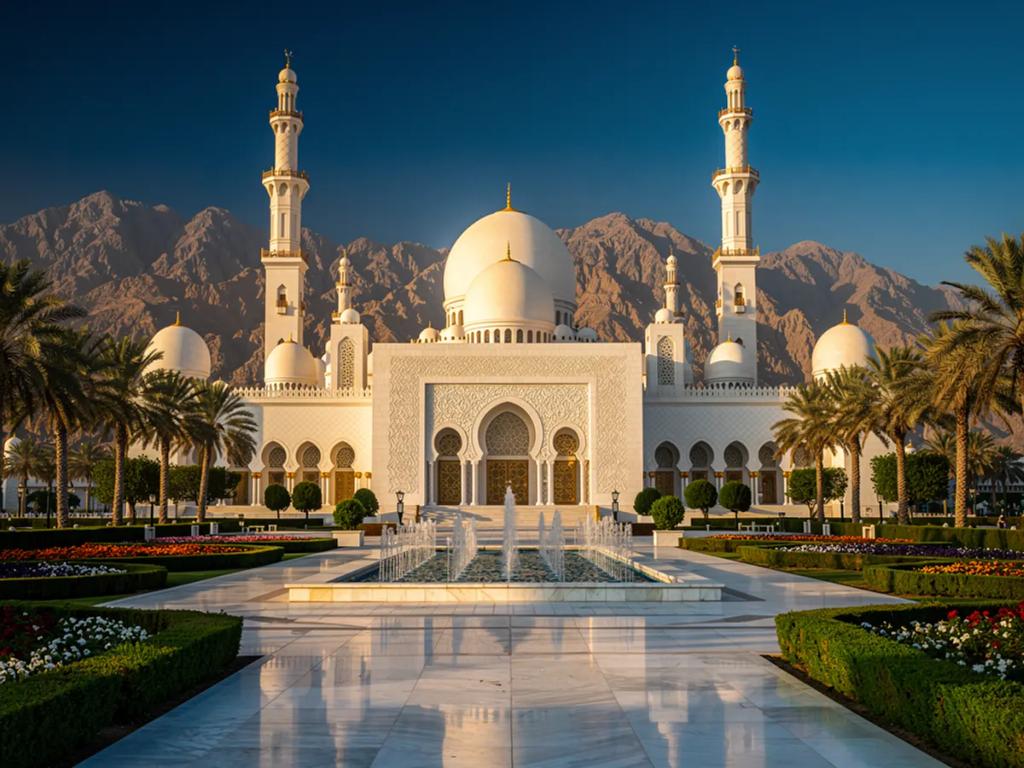
The Sultan Qaboos Grand Mosque, which is open to non-Muslim visitors on weekday mornings and is one of the most beautiful modern buildings anywhere.
Mutrah Corniche at dusk, with the dhows on the water and the fort above.
Mutrah Souq, one of the oldest markets in the Arab world, best in the evening when the frankincense smoke is heaviest.
The Royal Opera House, worth the tour even if you do not attend.
Wadi Shab, where the walk in and the swim through the canyon to the hidden waterfall is the best day in the country.
Jebel Shams, Oman's Grand Canyon, at sunrise from the rim.
Nizwa Fort and its Friday goat market, an hour and a half inland.
Bimmah Sinkhole, on the coast road towards Sur.
Oman is the oldest continuously independent state in the Arab world, never having been formally colonised, and it once ran an empire that reached Zanzibar.
Frankincense comes from here. The trees grow in Dhofar in the south, and the trade made this coast rich two thousand years before oil.
The falaj irrigation system is UNESCO-listed: channels that have moved mountain water to villages by gravity for well over a thousand years, and are still in daily use with water rights allocated by the minute.
Omani forts number in the hundreds and they are everywhere, because for centuries every valley defended itself.
Green turtles nest at Ras al Jinz year-round, one of very few places in the world where that is true.
And the national dress is worn by choice, not for tourists. The dishdasha with its distinctive tassel, and the kuma cap or the massar turban, are what Omani men wear to work.
The Muscat Festival, in January and February, with crafts, food and performance across the city parks.
Salalah's khareef, from June to September, when the monsoon turns the southern province green and Gulf visitors arrive in numbers. It is a thousand kilometres away and a completely different climate, and it is the one time of year to be in the south rather than the north.
National Day, 18 November, marked with flags across every building in the country.
Eid al-Fitr and Eid al-Adha, both major, both moving through the calendar.
November to March is the season. June to September on the northern coast is punishing and much of the tourism industry simply waits it out.
The love: Oman is the Gulf destination that did not build itself out of the ground in twenty years. It has forts, souqs, mountains, wadis and a coastline, and it has kept a texture the neighbouring cities traded away. Omanis are consistently described as the most genuinely welcoming people in the region, it is very safe, the driving is easy, and a week here gets you canyon swimming, desert camping, mountain roads and an empty beach without ever feeling processed.
The complaints are consistent. It is expensive, and the good hotels are priced like the Gulf. The heat closes half the year. Muscat itself is quiet, with no real nightlife and alcohol confined to hotels, which some visitors find dull. You need a car, and without one the country shrinks to a hotel and a mall. It is spread out, and the best of it is two or three hours from the capital. And a few people find it too sedate after Dubai, which is precisely why the people who like it, like it.
Come between November and March, hire a car on day one, and put the wadis before the shopping.
Yes. Oman blocked VoIP calling for years, which is why so much advice still tells you to bring a VPN, but calls have worked without one since around the end of 2024, and the regulator confirmed the current framework in 2025. Note that the UAE, which is often mentioned in the same breath, still restricts these apps.
Not for calling apps any more. Oman has also published clearer rules on VPN use itself, so do not assume one is a neutral tool here. For an ordinary trip you will not need one.
Largely no. The coastal strip and highways are very well covered, but the wadis are deep rock canyons and lose signal almost immediately, the dunes are patchy to dead, and mountain trails drop out away from the resorts. Download offline maps and tell someone your route, especially for wadi walks.
It can. Musandam is separated from the rest of Oman by UAE territory, so the drive there crosses Emirati networks and your phone may register on one. Check what that costs on your plan before setting off.