Telcel, AT&T and Movistar serve Guadalajara, and your eSIM will attach to one of them. Our Mexico City guide covers the national operator question and ride-hailing, and our Cancun, Monterrey and Cabo guides handle the rest of the Mexican picture. Guadalajara's own distinction is cultural rather than technical, and it is a large one: most of what the world recognises as Mexican was invented within an hour of here.
This is not a marketing claim. Both are legally and historically Jalisco's.
Tequila is a protected designation of origin. It can only be made from blue agave grown in Jalisco and a handful of municipalities in four neighbouring states. Everything else is mezcal or something else entirely.
The town of Tequila is an hour away, and the landscape around it - the paisaje agavero, rows of blue agave across red volcanic soil - is a UNESCO World Heritage Site.
You can visit the distilleries. Several of the large houses run tours, and there are tourist trains from Guadalajara that make a day of it. Book ahead in season.
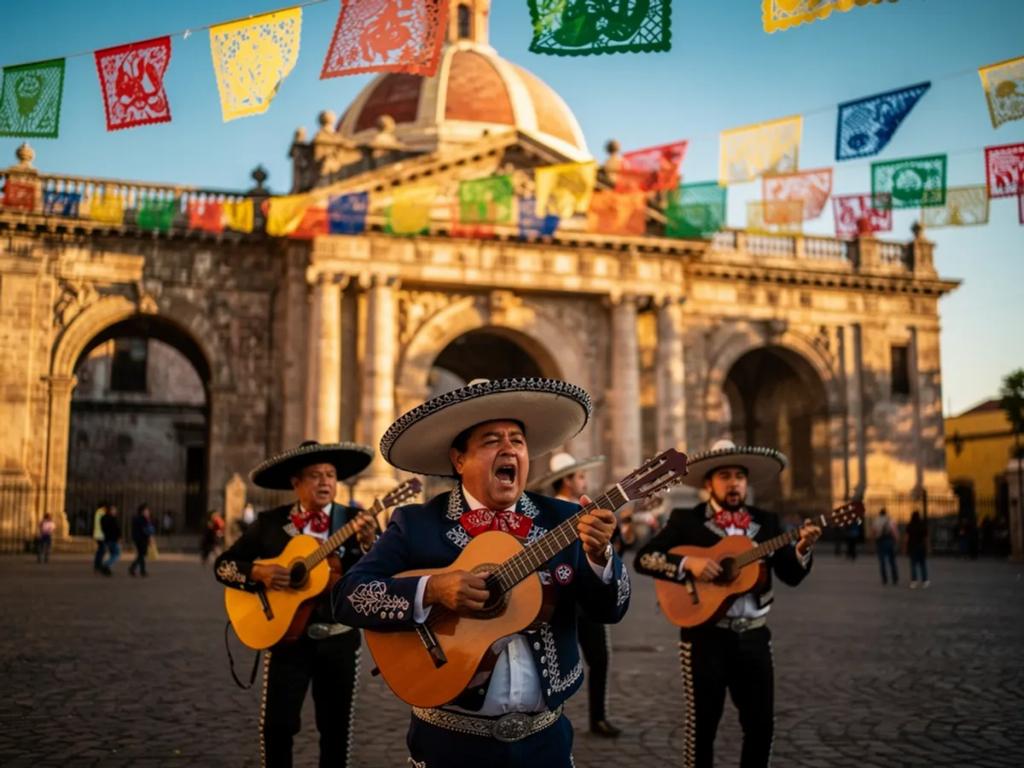
Mariachi originated in Jalisco, and is on the UNESCO intangible heritage list. Plaza de los Mariachis in the city is where groups gather and are hired, and it is a working plaza rather than a show.
Charrería, Mexican rodeo, is also from here and is also UNESCO-listed - it is the national sport, and Jalisco is its home.
So is the wide-brimmed sombrero, the charro suit and the jarabe tapatío, the dance foreigners call the Mexican hat dance.
Guadalajarans are called tapatíos, and the pride in all of the above is entirely justified and constantly on display.
Less photogenic and more of the local economy.
This is Mexico's technology hub, sometimes called the Mexican Silicon Valley - electronics manufacturing since the 1960s, and a substantial software and services sector now.
Large multinationals have engineering operations here, and the universities feed them.
Which means good infrastructure. Connectivity across the metropolitan area is strong, coworking is plentiful, and the city has a growing remote-working population - Guadalajara is a considerably cheaper base than Mexico City with much of the same convenience.
Zapopan and Providencia are where the modern business districts sit, and they feel very different from the colonial centre.
It also means the city is prosperous and calm by comparison with its reputation abroad, and visitors are often surprised by how ordinary and comfortable it is.
The metropolitan area is comprehensively covered, including the light rail.
The Tequila valley is fine in the town and along the highway, and thins among the agave fields and up towards the volcano.
Lake Chapala, an hour south and home to one of the largest North American expatriate communities anywhere, is well covered around the lakeside towns.
The Barranca de Huentitán, the canyon on the city's northern edge, drops out on the descent - and it is a serious hike back up at altitude.
Towards the coast, the road to Puerto Vallarta crosses the Sierra Madre and has gaps.
During the rainy season, afternoon storms cause local flooding and brief service degradation, as they do across highland Mexico.
The Mi Macro and light rail network covers the main axes cheaply, and Line 3 crosses the city usefully.
Uber and DiDi both operate and are inexpensive - our Mexico City guide covers the national picture.
The Centro Histórico is walkable and holds the cathedral, the theatre and the Hospicio Cabañas.
Chapultepec and Lafayette are where the restaurants, bars and boutiques are, and where most visitors end up in the evening.
Tlaquepaque and Tonalá, technically separate municipalities within the metropolitan area, are the crafts districts - Tlaquepaque is pedestrianised, pretty and full of ceramics and glass.
Zapopan has the basilica and the modern city.
Distances are real - the metropolitan area holds over five million people - so plan by district rather than assuming you can walk between them.
Birria comes from Jalisco. Slow-cooked stewed meat, traditionally goat, served with consommé - the tacos everyone now queues for in Los Angeles and London originate here.
Tortas ahogadas are the local obsession: a crusty roll of pork, drowned in a thin chilli-tomato sauce, eaten with a plastic glove and no dignity whatsoever. It is a hangover food and a religion.
Carne en su jugo, beef in its own broth with beans and bacon, is the other Guadalajara dish.
Tejuino, a fermented corn drink served cold with lime and salt, is sold from carts and is an acquired taste worth acquiring.
And the cantinas are proper cantinas, particularly in the centre, where a drink still comes with botana - free food that keeps arriving.
- Uber and DiDi, both cheap and widely used.
- A transit app for the light rail and Mi Macro lines.
- Maps, with offline copies for the Tequila valley and the canyon.
- A translation app. Spanish is essential outside hotels and the tech sector; English is more common here than in most of provincial Mexico but far from universal.
- Cards work widely in the modern districts and less so in markets and small cantinas - carry pesos.
Guadalajara International (GDL) is about 20 km south of the centre and is Mexico's third busiest airport, after Mexico City and Cancun, with good domestic connections and direct flights across the United States.
Uber and DiDi work from the airport, as do authorised taxis.
Budget 30 to 45 minutes into the centre outside peak.
By road, Puerto Vallarta is about four hours through the mountains, and Mexico City is around six.
Moderate. Ride apps and maps run continuously across a large metropolitan area, wifi is good, and Mexican data is reasonably priced. If you are here to work, the connectivity is genuinely strong - that is much of why the tech sector settled.
Layers. At 1,566 m the days are warm and the evenings cool sharply, in every season.
A rain jacket from June to October, when the afternoon storm is close to a daily fixture.
Smart-casual for the evening. Guadalajara dresses better than most Mexican cities and the Chapultepec restaurants notice.
Comfortable shoes for the centre and for Tlaquepaque.
Sun protection, because the altitude makes it stronger than the temperature suggests.
The Hospicio Cabañas, a UNESCO World Heritage Site, and specifically Orozco's Man of Fire on the dome of the chapel - one of the great murals of the twentieth century, best seen lying on the benches provided for the purpose.
The Guadalajara Cathedral's twin yellow spires, from Plaza de Armas.
Plaza de los Mariachis in the evening, when the groups are working.
The agave fields of the Tequila valley, in low light, rows running to the hills.
Tlaquepaque's pedestrian streets, all ceramics and courtyards.
Teatro Degollado, the neoclassical opera house.
The Barranca de Huentitán, the canyon on the city's edge.
Lake Chapala at sunset, an hour south.
Tequila is legally defined by geography. It must be made from blue agave grown in Jalisco or specified municipalities in four other states - a protected designation like Champagne, and the reason "tequila" made elsewhere is not tequila.
The agave landscape is a UNESCO World Heritage Site, listed for the fields, the distilleries and the industrial archaeology of the region.
Mariachi and charrería are both on the UNESCO intangible heritage list, and both come from Jalisco.
Orozco's Man of Fire dominates the chapel dome at the Hospicio Cabañas, which was an orphanage for a century and a half before becoming a museum.
Birria is Jalisco's, and the global birria taco boom of recent years is an export of this city's food.
And the jarabe tapatío - the "Mexican hat dance" - is named for Guadalajara's people, the tapatíos.
The Feria Internacional del Libro (FIL), in late November and early December, which is the largest Spanish-language book fair in the world and one of the biggest of any language. The city fills.
The International Mariachi Festival, in late August and September, with concerts and a parade.
Independence Day, 15 and 16 September, marked substantially.
Romería de la Virgen de Zapopan, in October, when over a million people accompany the Virgin's image from the cathedral to Zapopan on foot.
October to May is the dry season and the pleasant window. June to October is the rainy season, which is green and dramatic rather than unpleasant.
The love: Guadalajara is a large, prosperous, extremely liveable city with a proper colonial centre, world-class murals, the best food argument in Mexico, and the origin story of half the country's cultural exports within an hour's drive. It is cheaper and calmer than Mexico City with much of the same range, the climate is genuinely excellent year-round, and the tequila country makes an outstanding day trip.
The complaints are consistent. It sprawls, and the metropolitan area demands ride-hailing rather than walking. There is less conventional sightseeing than in Mexico City or Oaxaca. The colonial centre is small relative to the city around it. Air quality in the dry season is mediocre. And Guadalajara is often skipped for Mexico City or the beaches, which is why it stays as pleasant and unhurried as it is.
Come between October and May, spend a morning under Orozco's dome, take the day trip to Tequila, and eat a torta ahogada with the glove on.
Yes, and unusually so - this is Mexico's technology hub, with electronics manufacturing going back decades and a large software sector now. Coverage across the metropolitan area is strong, coworking is plentiful, and the city is considerably cheaper than Mexico City as a base. Our Mexico City guide covers the national operator comparison.
Yes. The town of Tequila is about an hour away, the surrounding agave landscape is UNESCO-listed, and several of the large distilleries run tours - there are also tourist trains from Guadalajara that make it a full day. Book ahead in high season, and do not plan to drive yourself afterwards.
No. Uber and DiDi are cheap and cover everything, and the light rail crosses the city usefully. A car helps for Tequila or Lake Chapala, but organised trips cover both.
Barely anywhere in the metropolitan area. It thins in the agave fields off the main highway, in the Barranca de Huentitán canyon on the city's northern edge, and on the mountain road towards Puerto Vallarta. Download offline maps for any of those.