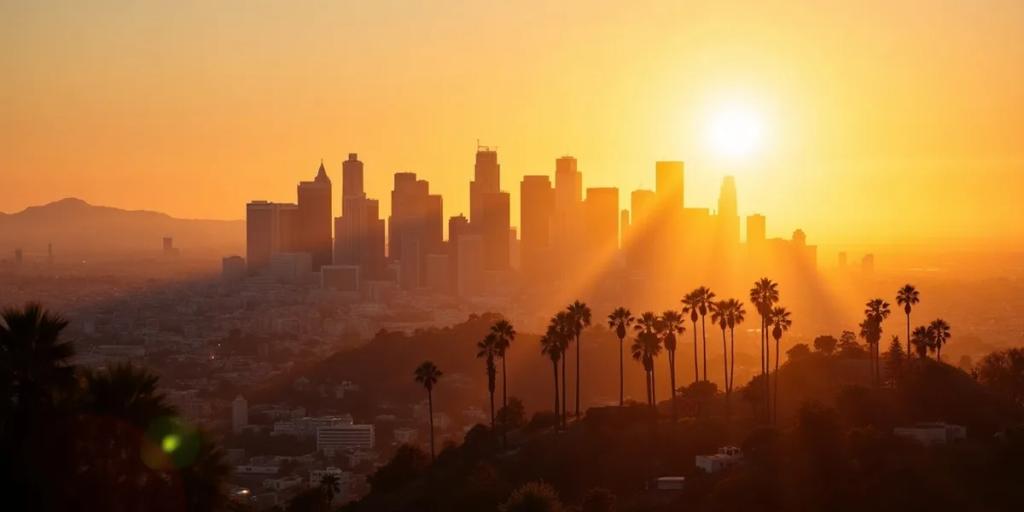
Los Angeles is a car city, and that changes what "staying connected" means: your phone is not a convenience here, it is the co-pilot. Travel eSIMs for the US typically ride T-Mobile or AT&T as the host network, and both blanket the LA basin - Downtown, Hollywood, Santa Monica, the Valley, and the freeway grid in between get solid 4G and fast 5G. The USA network comparison for tourists covers how the carriers differ, but inside the city proper you will rarely notice.
The honest map of LA dead zones follows the terrain, not the neighborhoods. Malibu's canyon roads (Topanga, Malibu Canyon, Kanan) drop to nothing between the ridgelines, and the Angeles National Forest - including the Angeles Crest Highway that every scenic-drive list recommends - is famously signal-free for long stretches. Download offline maps before either drive. Closer in, the popular Runyon Canyon hike is fine (you are ringed by city on three sides), and Griffith Park is mostly workable with brief dips in the deeper canyons. LA Metro's underground B and D subway lines have patchy in-tunnel coverage that is improving line by line - load anything you need before descending.
- Navigation is the trip. Waze was practically built for LA traffic and locals live by it; Google Maps' live traffic rerouting matters more here than in any walking city. An hour of active navigation only uses a handful of megabytes - the point is that you need it running all day, every day.
- Parking runs on your phone. LA's street meters use ParkMobile, and many lots are pay-by-plate via QR code - both need a connection right when you have parked in a hurry.
- Uber and Lyft are everywhere, and LA is one of the few cities where you can also hail a Waymo driverless car through its app across a large slice of the city, Santa Monica to Downtown.
- Theme-park days are all-day data days. The Disneyland app (Anaheim, about an hour out) handles virtual queues, Lightning Lane bookings, and mobile food ordering - miss a return-window push notification because you were offline and you miss the ride. Universal Studios Hollywood's app works the same way. Bring a power bank: a park day drains battery faster than data.
Rideshare and taxi pickups happen at the LAX-it lot rather than the curb, reached by a short walk or free shuttle - you will want data live to drop the pin and track your driver. The FlyAway bus runs to Union Station, and the LAX/Metro Transit Center now links the C and K light-rail lines to the terminals by shuttle. Metro uses the TAP system; add a TAP card to your phone's wallet rather than expecting to tap a bank card at the gate like New York.
More than a typical city break. All-day navigation is cheap on data, but park apps, rideshare, parking payments, and the passenger-seat scrolling that LA traffic guarantees add up - budget roughly 1GB per 2 days, and take extra headroom if a Disneyland or Universal day is planned. Heading up the coast afterwards? The West Coast road-trip guide covers coverage beyond the city, and the USA eSIM overview compares plan sizes.
Layers are the whole trick. The beach can sit under cool marine-layer cloud at 19C while the Valley hits 33C the same afternoon, and evenings turn chilly even after hot days - carry a light jacket year-round. Athleisure genuinely is the dress code: sneakers and leggings pass almost everywhere, including most restaurants. Pack one sharper outfit for reservation-grade dinners or a show, and real walking shoes for theme-park days. An umbrella only earns its suitcase space December to February.
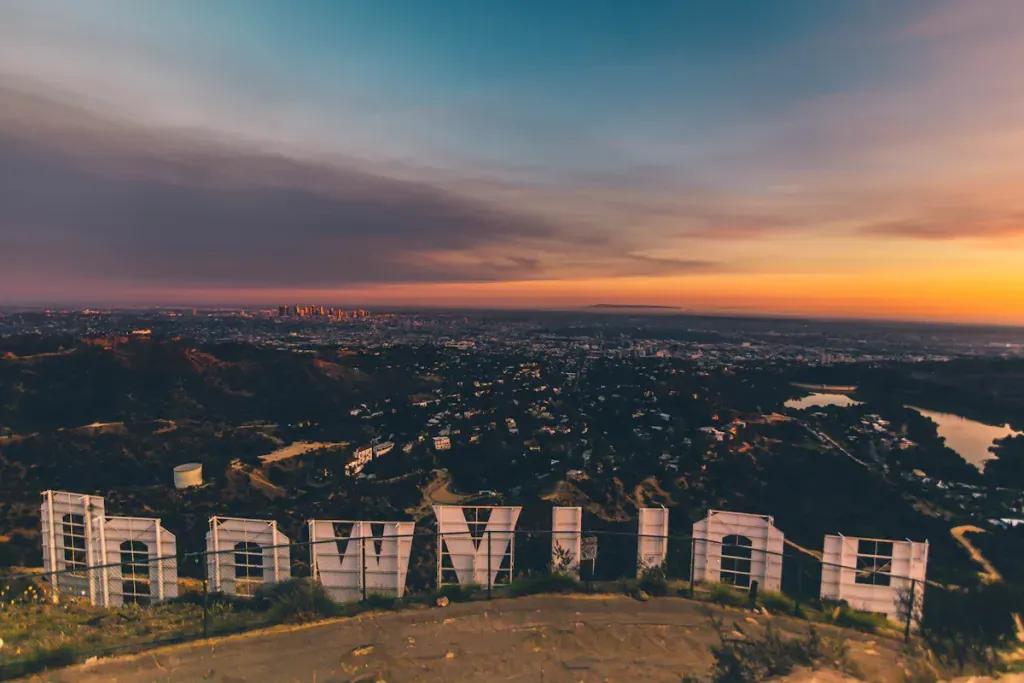
Griffith Observatory at sunset is the two-for-one: the Hollywood sign on one side, the skyline lighting up on the other - arrive an hour early, parking is the real fight. Know that there is no legal trail to a close-up of the sign itself; the classic angles are from Griffith or from Lake Hollywood Park below it, and drones are banned in Griffith Park. The Venice sign photographs best at dusk when it lights up, the Santa Monica pier ferris wheel glows for blue-hour shots from the sand, and LACMA's Urban Light lamp forest is emptiest early in the morning.
The city's original 1781 Spanish name - usually given as El Pueblo de Nuestra Señora la Reina de los Ángeles, and often quoted in even longer forms - ran to roughly 60 characters, though historians still argue over the exact wording. The Hollywood sign went up in 1923 reading "Hollywoodland", an ad for a real-estate development; the "land" was only dropped in 1949. And Los Angeles County alone, at nearly 10 million people, has more residents than 40 US states.
Awards season peaks with the Oscars at the Dolby Theatre in Hollywood in March, closing streets around Hollywood Boulevard for days. The LA Marathon also runs in March, from Dodger Stadium to Century City. The Rose Parade fills Pasadena every January 1 (January 2 when New Year's falls on a Sunday, by long tradition). And a word of honesty about Coachella: the April festival is in Indio, well over two hours from LA even without traffic - it is not an LA day trip.
The love is real: weather that behaves nearly year-round, ocean and mountains in the same day, and a food scene that runs from legendary taco trucks to some of the best fine dining in the US. So are the gripes: traffic is a lifestyle rather than an inconvenience, and the sprawl kills spontaneity - a "quick" cross-town detour is routinely 45 minutes each way. Homelessness is starkly visible, especially Downtown, and parking is rarely free and often not cheap. Plan LA in zones, one area per day, and the ledger tilts heavily toward love.
Yes. Virtual queues, Lightning Lane return times, and mobile food ordering all live in the park apps and update in real time - screenshots do not cut it. Plan for the app being open on and off for eight-plus hours, and pack a power bank, because battery is the real constraint.
Assume no. Malibu's canyon roads and the Angeles National Forest have long zero-signal stretches on every carrier, so download offline maps and tell someone your route before scenic drives. Signal returns quickly once you are back on the coast highway or the freeway grid.
Partly. Metro rail genuinely works for Downtown, Hollywood, and Santa Monica via the E line, but the city's scale means most itineraries lean on Uber, Lyft, or Waymo to fill the gaps - all of which need live data. Install your eSIM before you fly so it is working the moment you exit the terminal toward the LAX-it lot.