San Francisco packs a lot of city into seven square miles, and the networks treat it accordingly: AT&T, T-Mobile, and Verizon all run dense 5G here, and whichever of them hosts your travel eSIM, the tourist core - Union Square, the Embarcadero, Fisherman's Wharf, the Mission, Golden Gate Park - is fast, boring, reliable coverage. The US carrier comparison covers the differences if you are choosing a plan, but inside the city you will spend more time thinking about fog than signal.
The terrain, not the density, is the variable. San Francisco is a city of 40-plus hills, and a steep street can put a few blocks into radio shadow - a bar or two may vanish in a dip, then return at the next crest. A nuisance, not a problem. The genuinely good news is underground: Muni Metro has cellular service through its subway tunnels and stations, including the newer Central Subway, and BART has had coverage through its tunnels and even the Transbay Tube under the bay since 2010. Expect the occasional stutter between stations, but this is one of the few American cities where you can doomscroll under a body of water.
- Transit finally takes your bank card. The Bay Area's Tap and Ride rollout, live from late 2025, means you tap a contactless credit card or your phone wallet directly at Muni and BART gates - no Clipper card purchase needed for standard adult fares, and transfers between agencies discount automatically. Clipper still exists (and is required for youth, senior, and discount fares).
- Cable cars are the exception: a single ride is $9, and the smooth path is buying the ticket in MuniMobile before you board - the operator otherwise wants exact cash, and the busy terminals require pre-purchased fares during the day.
- Waymo is a tourist attraction now. San Francisco's driverless taxis are open to everyone - download the app, no waitlist - and riding one across the city has genuinely joined the cable car on visitor itineraries. Book it like an Uber; the empty driver's seat does the rest.
- Alcatraz sells out weeks ahead in summer. Tickets go on sale 90 days out through Alcatraz City Cruises (the only operator allowed to dock), and peak dates are gone long before you land. Book from home, before the flight, and keep the confirmation reachable for the Pier 33 check-in.
BART runs from a station inside SFO's International Terminal to downtown in about 30 minutes, and with Tap and Ride you just touch your phone at the gate. Waymo also began serving SFO in early 2026 via the Rental Car Center, though the rollout is gradual - check the app rather than counting on it. Either way, your eSIM should be installed before you fly: the ride into town is exactly when hotel directions, BART route checks, and "just landed" messages all hit at once.
This is a walking city with a navigation twist: the street grid ignores the hills, so you will check maps not just for where but for how steep. Add heavy photo uploads (the city is absurdly photogenic) and a Waymo or two, and around 1GB per 2-3 days covers most visitors, with headroom for video calls. The USA eSIM overview compares plan sizes if you are sizing a longer West Coast trip.
Layers are the entire religion. A single afternoon can run fog, sun, and stiff wind within ten blocks, and the famous sight of a shivering tourist buying an overpriced fleece at Fisherman's Wharf in July is a cliche because it happens daily. Bring a real jacket year-round - yes, including summer, when the fog (locals call it Karl) owns the mornings, especially west of Twin Peaks. September and October are the warm months; dress for 15-21C the rest of the time and peel layers when the sun wins.
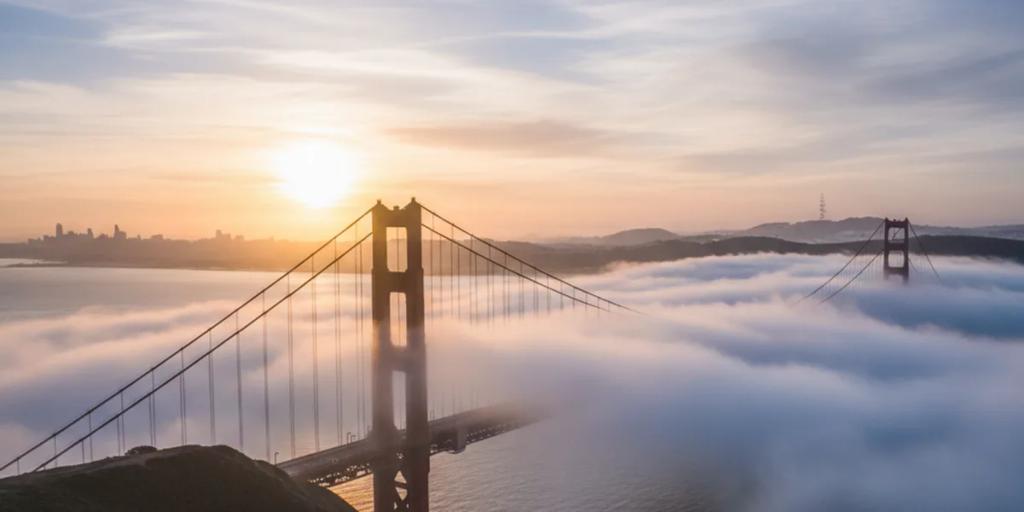
For the Golden Gate Bridge, Battery Spencer on the Marin side puts you nearly level with the tower tops - sometimes above the fog line, which is the shot. Fort Point, directly beneath the south end, gives the underbelly angle. Honesty about Karl: summer mornings are often socked in, and afternoons clear more reliably. The Painted Ladies from Alamo Square want golden hour with the skyline behind. Shoot Lombard Street from the bottom, at Leavenworth, looking up the switchbacks. Grab the cable car hanging off the Hyde line with the bay behind it, and finish at Twin Peaks at dusk - hold onto your hat, the wind is serious.
The Golden Gate Bridge is not golden: the color is International Orange, and it is not repainted end to end on a cycle - crews touch up whichever sections need it most, continuously. The cable cars became the first moving National Historic Landmark in 1964 (New Orleans' St. Charles streetcar has since joined the club). And the American fortune cookie most likely debuted not in China but at Golden Gate Park's Japanese Tea Garden in the early 1900s. Bonus from Alcatraz: the prison ran warm showers partly so inmates never acclimated to the bay's frigid water - an anti-escape measure.
The Chinese New Year Parade (usually February, early March in some years) is often billed as the largest celebration of its kind outside Asia, with a 288-foot golden dragon through downtown. Bay to Breakers in mid-May is a 12K race run substantially in costume, city crossing included. Pride in late June is one of the world's largest. Outside Lands fills Golden Gate Park in early August, and Fleet Week in early October puts the Blue Angels directly over the bay - the best free airshow seat is any waterfront park.
The love is earned: the bridge-bay-hills drama around every corner, a food scene that keeps inventing things, and a city small enough to walk end to end if your calves cooperate. The complaints deserve straight answers too. Street conditions downtown are uneven - some blocks around Union Square and parts of SoMa can feel rough while the block next door is fine, and tourist areas differ street by street. Prices sting. Summer disappoints anyone expecting a California beach holiday. And while car break-ins have fallen dramatically from their peak, the local rule stands: never leave anything visible in a parked car, not even a jacket.
Mostly yes, and unusually so for the US: BART's tunnels including the Transbay Tube have had cellular coverage since 2010, and Muni's subway tunnels now carry service too. Brief dropouts between stations happen, so keep tickets and directions loaded anyway.
Since the Tap and Ride rollout you can tap a contactless bank card or phone wallet straight at the gate for standard adult fares, with automatic transfer discounts. Clipper is only necessary for discounted fares - or buy cable car tickets in MuniMobile, which is its own system.
Cafe Wi-Fi is plentiful, but the things that define a San Francisco visit - Waymo rides, transit taps, Alcatraz check-ins, navigating hills between neighborhoods - all happen away from it. A US eSIM installed before departure keeps your home number alive for bank codes and costs less than one wharf fleece.