Florida is a driving state, and staying connected here is really about the road. AT&T, T-Mobile and Verizon all blanket the metro corridors - your travel eSIM rides one of them as its host - and along I-95, I-4 and the Gulf coast you will barely see the bars move. The honest story is what happens between the cities, because the best of Florida (the Keys, the springs, the Everglades) is exactly where the towers thin out.
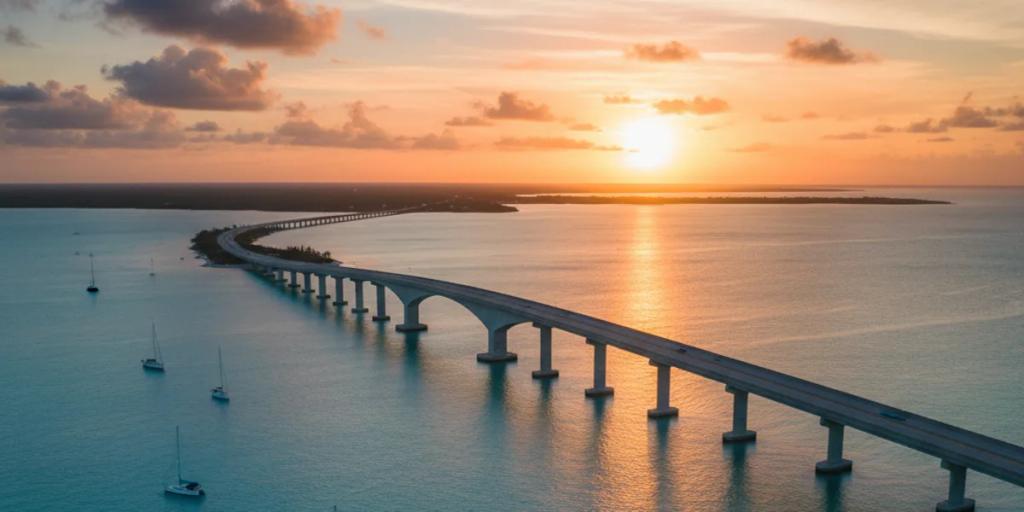
The Overseas Highway to Key West is better than its remoteness suggests: US-1 island-hops for about 180 km and the towers hop with it, so along the highway and in the towns (Key Largo, Islamorada, Marathon, Key West) data is generally solid. Step off the road - a fishing charter, a backcountry paddle - and it thins fast, and carrier maps disagree about the gaps, so treat mid-Keys signal as good-not-guaranteed. The Everglades interior is a genuine dead zone: past the visitor centers toward Flamingo, expect nothing on most networks - download offline maps before the park gate. And I-75 across Alligator Alley (Naples to Fort Lauderdale) still has stretches where coverage drops for long minutes - every carrier has soft spots over Big Cypress, so load the route before you commit to the causeway.
One quirk that catches almost everyone: Florida spans two time zones. Most of the state is Eastern Time, but the western Panhandle - roughly everything west of the Apalachicola River, including Panama City, Destin and Pensacola - is Central. Your phone switches automatically mid-drive, which is charming until it silently moves a flight alarm by an hour.
- Tolls are the big one. Many Florida toll roads are fully cashless - no booths, just cameras - and a rental car without a plan gets billed by plate through the rental company's toll program, often with convenience fees of several dollars per day on top of the tolls. Ask the counter how their SunPass or toll pass works, or route around toll roads entirely; sorting this at the airport needs data.
- FL511 (app and fl511.com) is FDOT's live traffic service: crashes, closures, and - in season - hurricane evacuation info. On a state this long, checking it before a 4-hour leg is not optional paranoia.
- Theme-park apps are data-hungry. If Orlando is on the itinerary, virtual queues, ride waits and mobile food orders all live in the parks' own apps and assume you are online all day. Budget for it and move on.
- Uber and Lyft work in every metro, but between cities you are driving; radar apps earn their keep in summer, when the 3pm thunderstorm is a matter of when, not if.
- Tap-to-pay is universal, from Keys tiki bars to springs-side kayak rentals - no cash errand on arrival.
Florida road trips usually start at one of the big gateways - Miami, Orlando, Tampa or Fort Lauderdale - and go straight to a rental counter, because outside the city cores this is an unapologetically car-dependent state. That first hour is when the eSIM earns its keep: rental confirmations, toll-pass decisions, the first navigation request. Install it before you fly and the airport Wi-Fi login never happens.
More than a city break. Road-trip Florida is navigation-heavy (hours of live traffic and reroutes), radar-heavy in summer, and upload-heavy because the water really is that color. Budget 1GB per 2 days, with headroom if a theme park or daily reels are involved; offline maps for the Everglades and the Keys cover the thin stretches. A United States plan covers the whole state on one eSIM, and the USA eSIM comparison breaks down the plans and host networks.
Light everything - breathable fabrics, sandals, a hat - plus a packable rain shell, because the summer downpour arrives most afternoons on a schedule you could set a watch by. Bring one warm layer year-round: Florida air conditioning is set to aggressive, and restaurants can feel 15 degrees colder than the parking lot. For Gulf-coast sunsets, pack repellent - no-see-ums (tiny biting midges) own the beach at dusk, ordinary mosquito spray barely impresses them, and picaridin plus covered ankles helps.
The Southernmost Point buoy in Key West draws an hour-long queue by mid-morning - go at sunrise and you get it, and better light, to yourself. For the classic Overseas Highway shot, walk the old Bahia Honda rail bridge section in Bahia Honda State Park and shoot the new bridge over that impossible turquoise. In winter, Crystal River is where the manatee photos happen - they crowd the warm springs from roughly November to March, and a guided sunrise swim gets the calm water. Rainbow and Silver Springs photograph like glass from a kayak at midday, when the sun hits the bottom. And the Gulf sunset ritual is real from Clearwater to Naples - just know the famous Naples Pier is mid-rebuild after Hurricane Ian, so shoot from the sand beside it until it reopens.
Florida has plenty of fossils but not a single dinosaur - during the age of dinosaurs the peninsula was underwater, so the oldest finds here are marine, like a 100-million-year-old sea turtle. St. Augustine, founded by the Spanish in 1565, is the oldest continuously occupied European settlement in the continental US - decades before Jamestown. Florida also has more golf courses than any other state (about 1,200), and records more lightning per square mile than anywhere else in the country.
The Daytona 500 opens the NASCAR season in mid-February, and February-March also brings the Grapefruit League - MLB spring training scattered across ballparks from Tampa Bay to the Treasure Coast. Fantasy Fest turns Key West gloriously unhinged for ten days in late October. And EPCOT runs festivals nearly year-round (Flower & Garden in spring, Food & Wine in autumn), which quietly shifts Orlando crowd patterns even if parks are not your thing.
The love: a beach for every taste (Atlantic surf, Gulf calm, Keys snorkeling), wildlife you will actually see (manatees, dolphins, gators from a safe boardwalk), winter weather the rest of the continent envies, and road-trip variety - reef to swamp to Spanish fort in a day's drive. The gripes are equally real: summer is a wall of humidity, storms and mosquitos; hurricane season means travel-insurance roulette June to November; you cannot function without a car, and the cashless toll maze fleeces the unprepared; and peak winter season brings peak prices and packed beaches. Come in the dry season with the tolls figured out and Florida overdelivers.
Along US-1 itself, generally yes - the towers follow the road and the towns, so navigation holds up for most of the drive. Coverage varies by host network on a few mid-Keys stretches and drops fast on the water, so download the route and any boat-day tickets before leaving Key Largo.
Yes - a USA plan is nationwide, so the same eSIM works from Pensacola to Key West with no regional add-ons. The thing to plan around is geography, not the plan: the Everglades interior and parts of Alligator Alley are dead zones for every network, travel eSIM or local SIM alike.
You crossed Florida's internal time-zone line. The western Panhandle, roughly west of the Apalachicola River, runs on Central Time while the rest of the state is Eastern. Phones on any US network switch automatically - just double-check alarms, bookings and pickup times the day you cross in either direction.