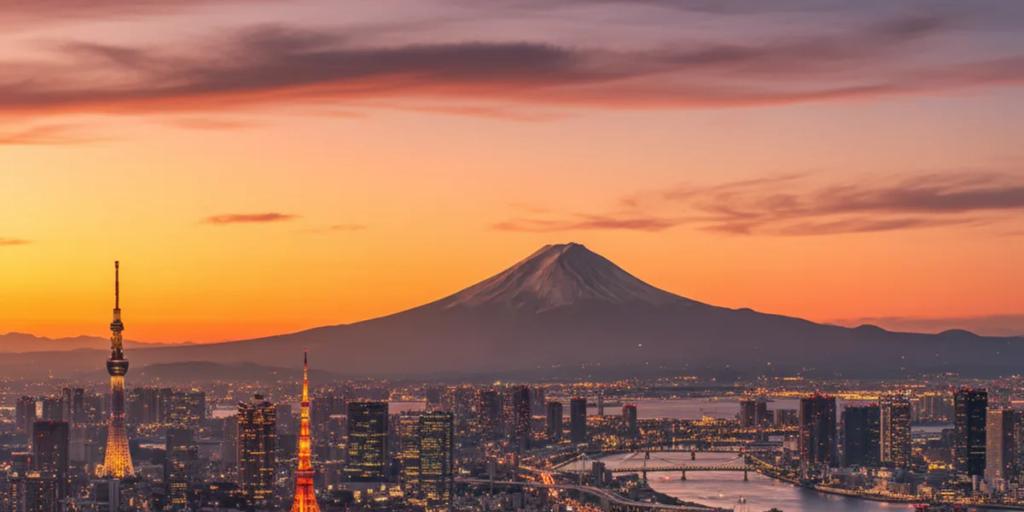
Tokyo is arguably the best-connected megacity on earth. Four national networks - NTT docomo, au (KDDI), SoftBank and Rakuten Mobile - lay dense 4G and 5G over every ward, and this eSIM uses au (KDDI), NTT Docomo, Rakuten Mobile or SoftBank, on 4G/5G. In practice that means fast data from the top of Tokyo Skytree to the basement food halls, and across every neighborhood where you will genuinely be lost without it.
Tokyo's party trick: the metro has mobile coverage underground. Stations and nearly all tunnel sections on the Tokyo Metro and Toei subway lines carry a usable signal, so maps, transfer apps and messages keep working three levels below Ginza. Expect an occasional stutter between older deep stations rather than the long blackouts of most European metros. The other thing nobody warns you about: Japanese addresses are block-based, not street-based. Streets mostly have no names, so even locals navigate by phone. Your maps app is not a convenience in Tokyo - it is the addressing system.
- Suica or PASMO on your phone is the single biggest quality-of-life upgrade. On iPhone, add a Suica in Apple Wallet in about a minute - no Japanese Apple ID needed - and top it up with a foreign Mastercard or Amex (most Visa cards also work since late 2023, though a few issuers still fail). There is also a Welcome Suica app for visitors on iOS. On Android it is honestly worse: mobile Suica needs FeliCa hardware that most phones sold outside Japan lack, so Android travelers should pick up a physical card instead.
- Google Maps plus a transit app (Japan Transit Planner or Navitime) untangles the multi-operator rail maze and tells you which car to board for your exit.
- Tabelog beats Google for restaurants - locals rate hard there, and anything above 3.5 is a find. Menus increasingly have English, but a translation app earns its data at older izakaya.
- GO is the taxi app that actually works in Tokyo (Uber exists but mostly dispatches the same taxis at a markup).
- Safety Tips, the JNTO-endorsed alerts app, is worth installing: Japan's earthquake early-warning system blasts phones on local networks with a distinctive alarm seconds before shaking starts. An eSIM on a Japanese network should receive these broadcasts, but the app adds English explanations and does not depend on carrier settings.
From Haneda, the Keikyu line or Tokyo Monorail has you in central Tokyo in about 30 minutes; from Narita, the Keisei Skyliner or Narita Express takes 40-60 minutes. One habit to unlearn: unlike London, you cannot tap a foreign bank card at most rail gates - Tokyo runs on IC cards (Suica/PASMO), which is why sorting the phone version on the ride in is the move. That ride is also when the hotel directions, first transfers and "we landed" messages hit your plan, so install the eSIM before you fly.
More than a European city break. Maps run constantly (see the address problem above), you will translate menus and signs, and Tokyo generates photo uploads like nowhere else. Budget roughly 1GB per 1-2 days if you navigate and translate freely; video calls or heavy social posting push it higher. Top-ups take a minute from your dashboard, and our best eSIM for Japan comparison covers how the plans and host networks stack up - including the SoftBank vs docomo question.
Tokyo dresses neat-casual and nobody expects you to compete, but scruffy beachwear stands out anywhere except actual beaches. Summer is a survival exercise: breathable fabrics, a small towel for sweat (everyone carries one), and the vending machine every block is your hydration plan. Winters are mild but crisp - a real coat, not a parka. Expect to remove shoes at temples' inner halls, traditional restaurants and ryokan, so slip-ons help. Visible tattoos are still refused at many onsen and sento; check the venue's policy or bring cover stickers.
For the Shibuya Crossing overhead shot, the rooftop Crossing View deck at Mag's Park (MAGNET by SHIBUYA109) reopened in March 2026 after renovation - about 1,800 yen with a drink, open until 22:00, best just after sunset when the screens light up. The renovated Shibuya Tsutaya's Starbucks and Share Lounge floors face the crossing too. Shoot Senso-ji at dawn: the grounds are open before the shops, and you get the Kaminarimon lantern without a crowd. The Mount Fuji shot behind Chureito Pagoda is not in Tokyo - it is a roughly two-hour trip to Fujiyoshida plus 400 steps, and Fuji hides in haze many days, so treat it as a weather-dependent day trip. teamLab (Borderless in Azabudai Hills, Planets in Toyosu) sells timed tickets online that sell out days ahead. Tripods are banned in most temples, gardens and station areas - handheld night mode does fine.
Shinjuku Station is the Guinness-certified busiest railway station in the world, moving over three million people a day through 200-plus exits. Tokyo has more Michelin stars than any other city - 160 starred restaurants in the 2026 guide, ahead of Paris. And the city was called Edo until 1868, when the emperor moved in and renamed it "eastern capital".
Grand sumo comes to Ryogoku Kokugikan three times a year - January, May and September, 15 days each - and tickets go on sale about a month out and sell fast, especially weekends and finals. Sanja Matsuri fills Asakusa with portable shrines the third weekend of May. The Sumida River Fireworks light up the fourth Saturday of July (25 July in 2026) with a million spectators. Cherry blossom season peaks roughly late March to early April - honest window, not a bookable date.
The love: Tokyo is astonishingly safe, the food is world-class at every price point from 300-yen onigiri to kaiseki, and the trains run with a precision that rewires your brain. The gripes are real too: July-August humidity is brutal, rush hour on the Yamanote line is a physical experience, a stubborn minority of small izakaya and ramen counters remain cash-only, and while menus and signage keep improving, deeper conversations still hit a language wall. Weekday mornings and outer neighborhoods like Yanaka fix most of the crowd complaints - the overtourism debate here centers on etiquette, not hostility.
Yes - stations and nearly all tunnel sections on the subway network have mobile coverage, which still surprises visitors from cities where the metro is a dead zone. Brief drops can happen between older deep stations, so keep offline maps as a backup, but you can genuinely navigate, message and stream underground.
On iPhone, yes: add Suica in Apple Wallet with no Japanese Apple ID, and top up with foreign Mastercard, Amex and most Visa cards. On Android, mobile Suica needs Japanese-market FeliCa hardware that most overseas phones lack, so buy a physical card instead. Either way it works across trains, buses, konbini and vending machines.
Almost, but not quite. Cards and IC payments cover trains, chains, konbini and most restaurants, but some small izakaya, ramen shops, shrine offerings and old-school markets are still cash-only. Carry 5,000-10,000 yen as a buffer; 7-Eleven ATMs take foreign cards when you need a top-up, and an eSIM installed before you land means the maps-and-payments setup works from the first train.