Beijing has been an imperial capital for most of the last 800 years, across the Yuan, Ming and Qing dynasties, and its networks match its scale: China Mobile, China Unicom and China Telecom keep 4G and 5G solid across the whole sprawl, and this eSIM uses China Telecom or China Unicom, on 4G/5G. What makes Beijing different is how much of the trip must be arranged through that connection before you ever stand in line. This is a city you book, not a city you turn up to.
Beijing's headline sights sell timed entry tied to your ID - for a foreign visitor, your passport number goes into the booking. The Forbidden City is the strictest case: tickets release seven days ahead at 20:00 Beijing time on the Palace Museum's official channels, there are no ticket windows on site, and peak dates vanish within minutes - set an alarm for exactly a week out (and note it closes most Mondays). The National Museum, Mao's mausoleum and Great Wall sections like Mutianyu run similar reservation systems, mostly via Chinese-language sites and WeChat mini-programs. Working data plus a translation camera turns those pages from a wall of characters into a five-minute task.
The blocks you have heard about are real: on any local network or Wi-Fi in Beijing, including your hotel's, Google, WhatsApp, Instagram and Gmail do not load. What saves the trip is where your eSIM's traffic surfaces - roaming data normally exits to the internet outside the mainland, so those apps tend to behave as they do at home. Routing differs between plans, so load a trustworthy VPN before departure as a fallback; you cannot download one once inside. For navigation, prefer Apple Maps or Amap - other Western map apps can misplace you in the hutong maze.
- Alipay or WeChat Pay handle nearly every payment, from a 10-yuan jianbing at a breakfast cart to Forbidden City tickets. Both take international Visa and Mastercard, but card setup and every payment scan need working data.
- The subway puts every bag through an X-ray scanner at the station entrance - budget an extra minute - and the smooth way through the gates is Alipay's transit QR code (a one-time passport setup). Foreign bank-card tap has been arriving at Beijing gates since late 2024, but treat it as a bonus, not the plan.
- DiDi works in English and spares you tonal pronunciation battles with taxi drivers; distances here deceive, and a ride that looked walkable can be 8 km.
- WeChat mini-programs hold free-but-reserved museum entry, and queues at famous restaurants run on digital ticket numbers.
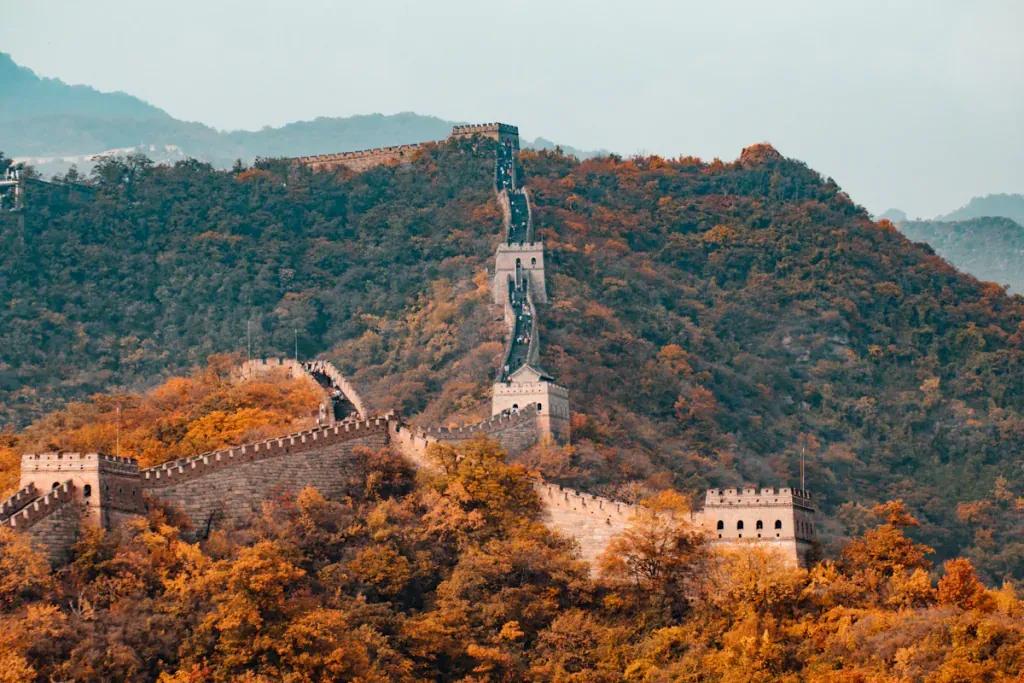
Choose deliberately. Badaling is the easiest reach - a suburban railway run from the city - the most restored, and by far the most crowded. Mutianyu costs a little more effort (a booked car or the tourist shuttle, then a cable car) and repays it with the same postcard watchtowers and a fraction of the people. Jiankou, the wild crumbling section in the photographs, is genuinely hazardous and not officially open. Signal up there is better than you would guess: developed sections carry solid 4G and increasingly 5G, so navigation, translation, even a video call from a watchtower all work; on unrestored stretches, bars come and go.
Beijing has two major airports. From Capital (PEK), the Airport Express reaches the Line 2/13 interchange at Dongzhimen in roughly 25 minutes; from Daxing (PKX), the dedicated express runs to Caoqiao in under 20. Airport Wi-Fi portals verify you by SMS, which goes far more smoothly when your own number is still alive alongside a data eSIM installed before departure.
Beijing is a heavy-data city even by Chinese standards: ID-tied bookings, payment scans, camera translation of menus and museum panels, DiDi, and messaging home that runs over your eSIM rather than Wi-Fi. Budget about 1GB per day or two, more if you upload Great Wall footage or video-call from the road. Top-ups are painless from your dashboard, which beats rationing megabytes the evening the Forbidden City tickets drop.
Winter here is dry, often sunny, and genuinely harsh - the northwest wind cuts through anything less than a real down jacket, hat and gloves. Summer means strong sun, 30-35C heat and sudden July storms, so pack sun protection and a compact umbrella; air quality has improved dramatically, though some visitors still carry a mask for the occasional hazy day. And bring seriously comfortable shoes: the Forbidden City alone covers 72 hectares, and a Wall day adds thousands of steep, uneven steps.
The shot of the trip is from Jingshan Park, the hill directly north of the Forbidden City: climb to the pavilion for sunset and the golden roofscape stretches down the central axis below you - arrive 45 minutes early for a spot at the rail. At the Temple of Heaven, come at opening and shoot the park before the halls: tai chi groups, sword dancers and ribbon twirlers fill the cypress avenues with better scenes than any monument. At Mutianyu, walk toward the higher watchtowers and shoot back along the ridge. Around Nanluoguxiang, skip the main drag - one hutong over is where courtyard life actually happens - and 798's decommissioned factories give you the city's other face. Central Beijing is a strict no-fly zone for drones.
Legend insists the Forbidden City has 9,999 and a half rooms, just short of heaven's mythical 10,000 - the Palace Museum's own 2012 count settled on 9,371 room-bays, which is still absurd. The 7.8 km Central Axis those roofs sit on became a UNESCO World Heritage site in July 2024. And Quanjude, the most famous Peking duck house, has been roasting since 1864.
Chinese New Year (late January or February, moving with the lunar calendar) fills Beijing's parks with temple fairs - Ditan Park's is the classic - and the Lantern Festival caps it two weeks later. The date to avoid is fixed: National Day Golden Week, 1-7 October, when domestic travel peaks and the big sights run at crush capacity. The Beijing Marathon closes streets one Sunday in late October or early November (2 November in 2025).
The love: nowhere else stacks this much imperial history in one place, the Great Wall is a genuine day trip, the food runs from lacquered duck to street-corner jianbing, and walking home at 2am feels unremarkable. The friction is equally real: the reserve-everything culture punishes spontaneity and rewards whoever has working data and a calendar reminder, winter is brutally cold, Golden Week crowds overwhelm, and blocked apps plus thin English outside tourist zones make an unprepared phone a genuine first-day liability.
On the Palace Museum's official website or WeChat mini-program, with your passport number, when tickets release at 20:00 seven days ahead. Book the moment your window opens and carry the passport itself on the day - it is your ticket. If your date shows sold out, recheck late evening when unpaid orders get released.
At the developed sections, yes - Badaling and Mutianyu have reliable 4G and growing 5G, enough for maps, translation and video calls from the towers. On wild, unrestored stretches coverage turns patchy, so carry offline maps if you hike beyond the restored ends.
Possibly. China's 240-hour (10-day) visa-free transit covers 55 nationalities entering at ports including Beijing en route to a third country, and citizens of many European countries currently get 30 days visa-free. Policies change - confirm your passport's current terms with an official source before you fly.