Cusco runs on Peru's four networks - Claro, Movistar, Entel and Bitel - and your eSIM rides one of them as its host. Claro and Movistar have the widest reach beyond the cities, which is the distinction that matters the moment you leave Cusco for the Sacred Valley. In the city itself coverage is good, with 4G throughout and 5G in parts of the centre.
Cusco is the gateway to the most tightly rationed site in South America, and this shapes the trip more than anything else.
Machu Picchu is timed-entry and capped daily. Tickets are sold by circuit through the Peruvian Ministry of Culture's official platform, cost roughly USD 39-64 depending on which circuit you choose, and regularly sell out weeks ahead between May and September. You do not turn up and buy one.
The Inca Trail is harder still. Only 500 permits are issued per day, and that number includes the porters, cooks and guides on your team - so the tourist allocation is a fraction of it. Permits go months in advance, and the trail closes for the whole of February for maintenance.
So the practical sequence for a visitor is:
- Book before you fly, not when you arrive.
- Carry the tickets offline. Screenshot every QR code and confirmation. Signal at the site is variable, and a ticket you cannot open is a ticket you do not have.
- Your passport number is tied to the ticket, and passports are checked at the gate against the booking. Bring the physical passport, not a photo of it.
Cusco sits at 3,400 m. That is higher than almost any city most visitors have been to, and it is high enough that a meaningful number of people feel genuinely unwell on their first day.
Soroche - altitude sickness - typically starts to bite above about 2,400 m, and Cusco is well past that. The standard local advice is two days minimum acclimatising before any moderate activity, and three or more before going above 4,000 m, which several of the popular treks do.
A counterintuitive fact worth knowing: Machu Picchu is lower than Cusco, at about 2,430 m. People arrive braced for the citadel and are floored by the city.
Practically:
- Arrive and do nothing. The first afternoon is for coca tea and a slow walk, not the Sacred Valley.
- Consider the Sacred Valley first. Ollantaytambo and Urubamba sit several hundred metres lower, and many experienced travellers acclimatise there rather than in Cusco.
- Your phone is part of the plan - pharmacies, clinics and your accommodation are all a call away, and iPeru runs a tourist assistance line.
The Inca Trail. Four days over a 4,215 m pass with essentially no coverage. This is the clearest download-everything-first situation in this whole set of guides - your operator will brief you, and you should treat the trek as offline.
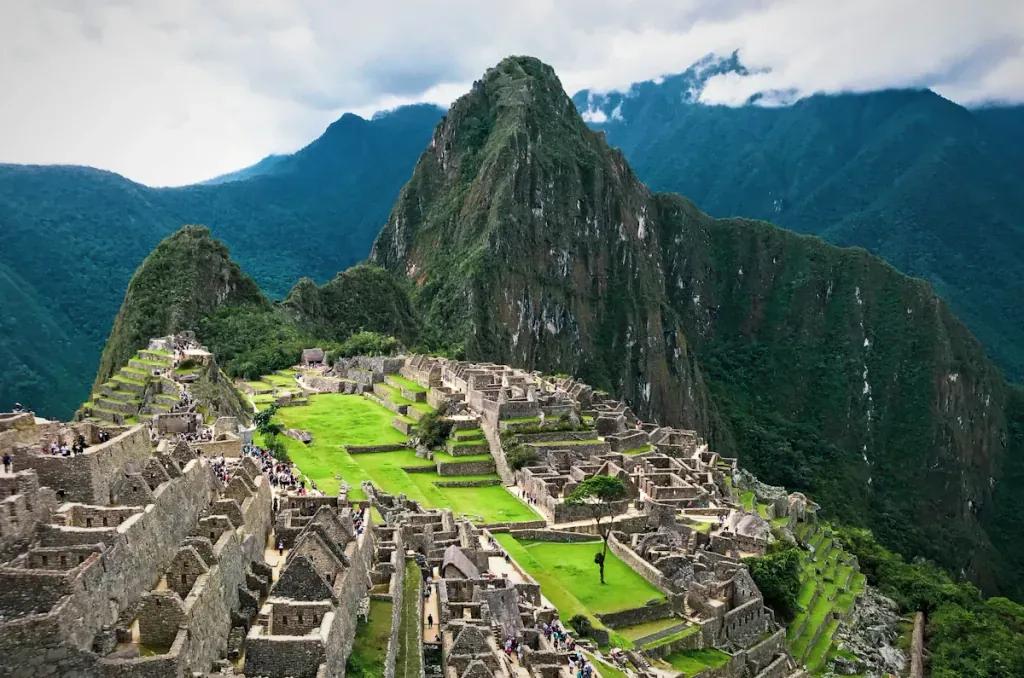
Machu Picchu itself is patchy: some signal around the entrance and the town of Aguas Calientes below, and much less inside the site among the terraces and under the ridge.
The train to Aguas Calientes runs down a steep river gorge from Ollantaytambo. Long stretches have nothing, which is fine - the window is better than the phone.
The Sacred Valley's side valleys. Coverage follows the main road and the towns; Maras, Moray and the smaller communities thin out.
Rainbow Mountain and the high passes above 4,500 m - sparse, and cold enough that your battery will drain faster than you expect.
- Your tickets, downloaded. As above, this is the important one.
- Ride-hailing. Uber, inDrive and Cabify operate in Cusco, and they remove the fare negotiation that street taxis expect. Fares are low.
- A translation app. Spanish is the working language; Quechua is widely spoken in the highlands, and English drops off quickly outside the tourist core.
- A weather app in the wet season, because afternoon rain from November to March is reliable enough to plan around - mornings are the window.
- An offline map of the Sacred Valley before you go out for the day.
Alejandro Velasco Astete (CUZ) sits inside the city, about 15 minutes from the Plaza de Armas - unusually close, and it means you are at 3,400 m within minutes of landing. Most arrivals are domestic connections through Lima.
Take it slowly from the moment you land. The taxi ride to your hotel is not the time to plan an afternoon.
Peru is more cash-oriented than card-oriented once you leave the tourist restaurants; carry soles, and use ATMs rather than street changers.
Front-loaded. You will download tickets, maps and route information, then spend days where none of it is reachable anyway.
For a week including the Sacred Valley and Machu Picchu, 1GB per 3 days is a fair baseline with the pre-download habit. If you are trekking, the trek itself uses almost nothing - the data is spent before and after. Plans top up from your dashboard.
Layers, and more sun protection than you think. At 3,400 m the sun is fierce even at 18C - the UV index here is among the highest of any inhabited place, and people burn on cloudy days. High-factor sunscreen, hat, sunglasses.
Nights are cold year round, near freezing in the dry season, and many older buildings are unheated. A proper warm layer is not optional.
Wet season means afternoon rain from November to March - a waterproof, and shoes with grip for wet Inca stone, which is polished and lethal.
Walking shoes throughout. Cusco is steep, cobbled and relentlessly uphill in at least one direction.
The Plaza de Armas from above, from the San Blas neighbourhood or the steps toward Sacsayhuamán - terracotta roofs, colonial arcades and the cathedral, with mountains behind.
Sacsayhuamán's walls, where Inca stonework of enormous interlocking blocks sits above the city. Early morning, before the buses.
The twelve-angled stone on Hatun Rumiyoc - a single block fitted to its neighbours on twelve faces without mortar, and the emblem of Inca masonry.
Machu Picchu at opening, on the earliest circuit you can book - the light and the cloud coming off the ridge are the reason to take the first slot.
Moray and the Maras salt pans, an hour out into the Sacred Valley - concentric agricultural terraces and thousands of white salt pools on a hillside.
San Blas at dusk, the artisan quarter with its white walls and blue doors.
Cusco was the capital of the Inca empire and was laid out, according to tradition, in the shape of a puma - with Sacsayhuamán as the head.
Its colonial buildings sit directly on Inca foundations, because the Spanish built on top of walls they could not demolish. Those foundations have outlasted several earthquakes that flattened what was built above them.
The Inca stonework fits so precisely that a knife blade will not pass between the blocks - cut without mortar, and shaped to interlock.
And Quechua is still spoken by millions of people across the Andes, a living language of the empire rather than a historical curiosity.
Inti Raymi, 24 June, is the Festival of the Sun - a re-enactment of the Inca winter solstice ceremony at Sacsayhuamán, and the biggest event in the Andean calendar. The city fills; book everything months out.
Corpus Christi in June brings saints' images processing through the streets.
Dry season, April to October, is peak in every sense - the best weather, the highest prices, and the Machu Picchu tickets that sell out first.
February is the wettest month and the month the Inca Trail closes entirely.
The love: Cusco is one of the most extraordinary cities in the Americas - an Inca capital wearing a colonial overcoat, at an altitude that makes the light and the air feel different. The Sacred Valley on its doorstep is beautiful and full of sites that would be headline attractions anywhere else. The food scene has become genuinely excellent. And Machu Picchu, however photographed, does not disappoint.
The complaints are consistent. The altitude ruins some people's first two days, and travellers on short itineraries lose a meaningful share of their trip to it. The booking system is unforgiving - arriving without tickets in high season means not going. The centre is intensely touristed, with persistent street selling and restaurant touts around the Plaza. Prices in the tourist core have risen a long way above the rest of Peru. And the trek and train logistics take real planning.
Give it two days to acclimatise, book everything before you leave home, download the tickets, and Cusco delivers.
Patchily. There is some coverage around the entrance and in Aguas Calientes below, and considerably less inside the site. Download your ticket and its QR code before you travel - a ticket you cannot open at the gate is a ticket you do not have.
Essentially no. Four days over a 4,215 m pass with no meaningful coverage. Treat the trek as fully offline and download everything beforehand.
Claro and Movistar have the widest coverage beyond the cities, which is what matters in the Sacred Valley and the highlands. In Cusco itself all four networks work.
Local advice is a minimum of two days of light activity before anything moderate, and three or more before going above 4,000 m. Note that Cusco at 3,400 m is actually higher than Machu Picchu at 2,430 m - the city is the harder adjustment.