Marrakesh sits on all three of Morocco's mobile networks - Maroc Telecom, Orange Maroc and inwi - and your eSIM uses one of them as its host. Coverage in the city is genuinely good: Marrakesh was in the first wave when Morocco flipped on 5G on 7 November 2025 (it is an AFCON host city, so it got priority), and 4G was already dense before that. Gueliz, Hivernage, the palmeraie, Jemaa el-Fnaa - all fast. So the network is not your problem here. The medina is.
Here is the honest version nobody puts in the brochure. The souks north of Jemaa el-Fnaa are kilometers of narrow, high-walled, often covered alleys, and they defeat your phone twice over: the roofing and tight walls weaken signal in patches, and GPS accuracy - which needs sky - degrades until the blue dot drifts through walls and swears you are three lanes over. Even with a full-strength connection you will get lost in there, and that is fine; getting lost is half the point. The move that works: drop a pin at the medina gate nearest your riad and navigate back to the gate, not through the maze. Expect young men offering to guide you at every wrong turn; a firm, cheerful "la, shukran" is the standard defense.
- Careem and inDrive both operate in Marrakesh and are the practical way to price a ride. Uber returned to Morocco in late 2025 in a limited, licensed form that includes Marrakesh, but its footprint is still small - open it, do not count on it. Ride-hailing remains legally contested in Morocco, so app availability can wobble.
- Petit taxis (the beige ones) carry meters that drivers are often reluctant to use with tourists. Ask for "le compteur" or agree a price before the door closes - having an inDrive quote on screen anchors the negotiation instantly.
- Jardin Majorelle is online-only, timed-entry - ticket offices closed in early 2023, and you book a specific 30-minute arrival window on the official site, ideally days ahead in high season. Your QR code and any slot change both live on your phone.
- WhatsApp calls work. Morocco blocked VoIP calls (WhatsApp, Skype, Viber) for most of 2016, and old blog posts still scare people about it; the regulator lifted the ban in November 2016 and calls have worked since, give or take occasional reports of carriers throttling call quality.
- Cash still rules the souk. Cards and tap-to-pay are fine in Gueliz restaurants, riads and supermarkets; inside the medina, dirhams do the talking.
Menara airport is absurdly close - about 6 km from the medina. The ALSA airport bus (line 19) runs to Jemaa el-Fnaa for a modest fare, while taxis at the rank are famous for quoting several times the fair price for the ten-minute hop; agree the number before you get in, or book through an app. The arrivals moment is also when the riad's standard "call us from the gate, we will send someone" instruction kicks in - which only works if your data already does. Set up the eSIM at home, not in the arrivals hall.
More maps than average (see: medina), a steady drip of translation (French carries you far, Darija further), constant photo uploads, and timed-ticket admin. For most travelers 1GB per 2-3 days is comfortable; budget extra if you video-call home or post every rooftop sunset. Day-tripping to Essaouira, Agafay or over the Atlas? The same Morocco eSIM covers the whole country, though not every gorge - more on that below.
Modest dress is not legally required, but it measurably reduces hassle: shoulders and knees covered gets you fewer comments in the souks and is expected anywhere religious. Go light, loose and natural-fiber for the heat - the medina in July is an oven. A scarf is the single best multi-tool in your bag: sun cover, shoulder cover, dust filter on a windy day. And wear proper closed shoes; souk lanes are uneven, occasionally wet, and shared with donkey carts.
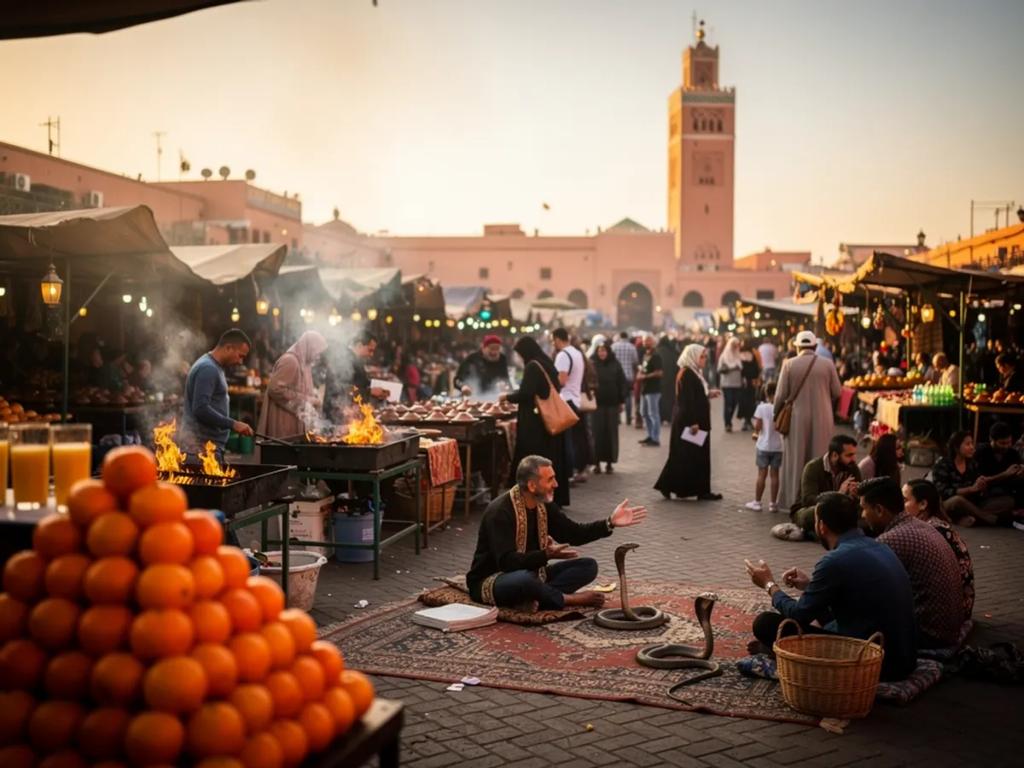
Book Jardin Majorelle's first slot of the day - the cobalt blue is at its most electric in low morning sun and the paths are still empty. Bahia Palace also wants morning, when light rakes across the zellige courtyards. Ben Youssef Madrasa is all symmetry: shoot the courtyard dead-center from floor level. The classic Jemaa el-Fnaa shot is from a terrace cafe at dusk as the food-stall smoke catches the last light - and know that photographing the square's performers, snake charmers and water sellers is a paid transaction; they will demand money, sometimes aggressively, so agree a price first or point the lens elsewhere. Leave the drone at home: Morocco effectively bans them and confiscates them at the border.
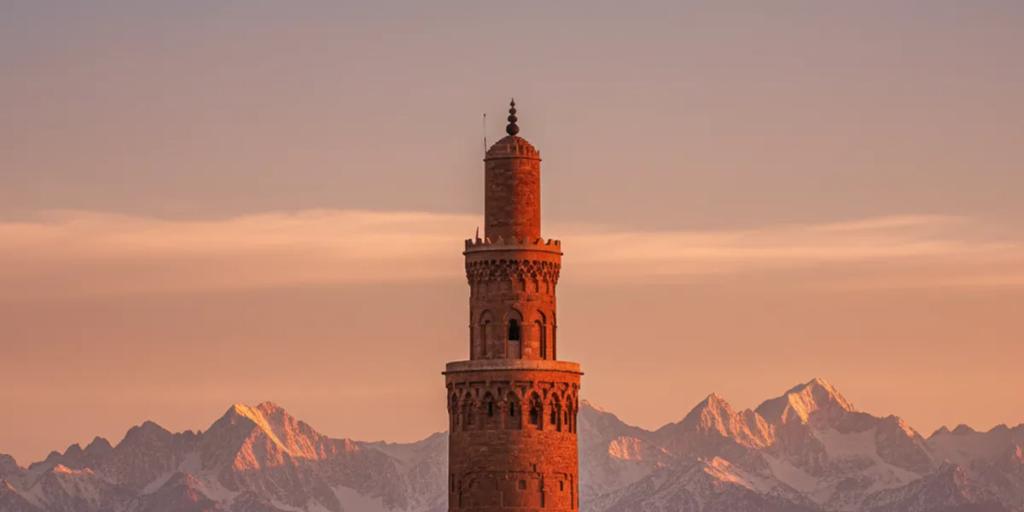
Marrakesh named the country: European names for Morocco (Maroc, Marruecos, Marokko) all descend from Murrakush, and the whole kingdom was commonly called the Kingdom of Marrakesh into the early 20th century. The Koutoubia minaret, roughly 77 meters and nine centuries old, still effectively caps the old city's skyline - heritage rules keep construction below it. The red-ochre wash on every building is widely described as a planning requirement; the "Red City" stays red by rule, not habit. And Majorelle blue is a named color Jacques Majorelle reportedly trademarked before his death in 1962.
Ramadan and the Eids move each year with the lunar calendar and reset the city's rhythm - quieter days, electric evenings after iftar, transport booked out around Eid. The National Festival of Popular Arts, one of Morocco's oldest festivals, fills El Badi Palace and Jemaa el-Fnaa with music and dance in early July (the 55th edition ran 2-6 July 2026). The Marrakech du Rire comedy festival returned in June 2026 rebranded as the Marrakech Comedy Festival. The Marrakech International Film Festival lands in late November into early December and brings real-deal red carpets.
The love is deserved: the souks are a full-sensory experience no mall will ever replicate, riads are calm oases exactly when you need one, and the Atlas is a day trip from your breakfast table. The complaints are deserved too. Hustle fatigue is real - faux guides attach themselves uninvited, and the classic "that street is closed, the tannery is this way" line is a detour-for-commission trick, not information. June through August heat is brutal. Motorbikes rip through souk alleys inches from your elbows. And the two-tier economy is open practice: tourists pay more, everywhere, and haggling is the rule, not rudeness.
Your data connection mostly survives; GPS accuracy does not. The covered alleys are too narrow and too roofed for a reliable position fix, so the blue dot drifts badly right when you need it. Pin the gate nearest your riad, navigate gate-to-gate, and treat the deep souk as a compass-and-landmarks zone.
The trailhead villages themselves - Imlil, the Ourika valley road - generally have usable coverage, but it thins fast in the gorges and on the trails between them. Download offline maps before leaving Marrakesh and do not plan to be reachable mid-hike. Coverage follows roads and villages, not canyons.
Riad Wi-Fi is usually fine in the courtyard and weaker behind half-meter stone walls in your room - but that is not really the issue. The moments Marrakesh demands data are outside: finding the riad in the first place, pricing a taxi, translating in the souk. A data plan on an eSIM-compatible phone covers exactly the gaps Wi-Fi cannot.