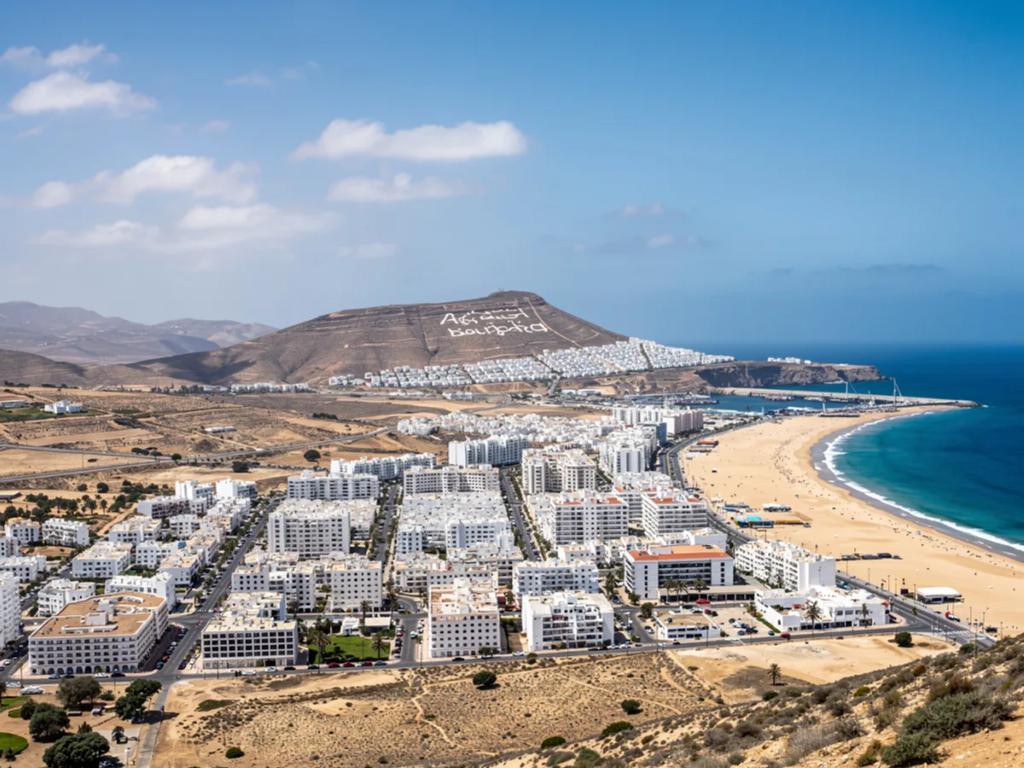
Agadir runs on Morocco's three networks - Maroc Telecom (IAM), Orange Maroc and inwi - and your eSIM connects through one of them. Maroc Telecom has the widest reach countrywide, which matters here because Agadir trips almost always include day trips out of town. In the city itself all three are strong: Morocco switched on 5G in November 2025 with Agadir in the first wave of cities covered, so the beach promenade, the marina, Talborjt and the hotel zone all get fast data. Unlike Marrakech or Fez, Agadir has no ancient medina of signal-eating alleys - the city was rebuilt on a modern grid after the 1960 earthquake, and coverage is boringly reliable as a result.
The catch is everything outside the city. Paradise Valley, the palm gorge about an hour into the Atlas foothills, drops to no service for long stretches once you leave the main road - download offline maps and tell someone your plan before you go. The same goes for Atlas day trips generally: coverage follows the highways and villages, not the canyons between them. Up the coast, Taghazout village itself is well covered, but surfers chasing quieter breaks toward Tamri and Imsouane should expect patchy signal at the more remote spots - screenshot the surf forecast and directions before leaving town.
- inDrive is the ride app that actually works in Agadir. Careem serves Casablanca, Rabat and Marrakech but not Agadir, and Uber only launched here in July 2026, so its coverage is still thin - worth checking, not worth relying on. Note that ride-hailing sits in a legal grey area in Morocco, so availability can fluctuate.
- Petit taxis (the orange ones) have meters, but drivers often quote flat rates instead - agree on the price or insist on the meter before you get in. Having inDrive open gives you an instant benchmark for what the ride should cost.
- Souk El Had, the huge walled market, is closed Mondays and easy to get lost in - a live map pin helps you find your gate again. Bring cash: cards and tap-to-pay work fine in resorts, malls and chain restaurants, but the souk and smaller cafés are dirham territory.
- Translation apps earn their data here - French works widely, English is fine in the tourist zone, but Darija (and a translation app) goes further at the souk and in villages.
Al Massira airport is about 24 km from the city. Grand taxis at the terminal charge a fixed rate of roughly 400 MAD to the center (more in the evening), and the ALSA shuttle bus runs about hourly for around 50 MAD. Either way the airport road is exactly when booking confirmations and directions get needed - install your eSIM before you fly and skip the arrivals-hall scramble.
Beach-resort days are light on data; the heavy days are the excursions - navigation to Paradise Valley or Taghazout, surf-cam checks, translation at the souk, and uploading drone-worthy coastline photos. For most travelers 1GB per 2-3 days is comfortable, with extra headroom if you video-call home or work remotely, since resort Wi-Fi in Agadir is genuinely inconsistent - fast in one hotel lobby, unusable in the next room over. If your trip continues to Marrakech or Essaouira, the same Morocco eSIM covers the whole country on the same networks.
Agadir is Morocco's most relaxed city about dress: swimwear is completely normal on the main beach and at hotel pools. Off the sand the rules shift - cover shoulders and knees at Souk El Had and in inland villages, where the vibe is far more conservative than the promenade. Evenings bring a cool ocean breeze even in August, so carry a light layer for dinner, and pack a windbreaker if a Taghazout surf trip is on the list - the coast north of town gets properly windy.
The signature shot is the "God, Country, King" inscription (in Arabic) on the Kasbah hillside - it lights up after dark, so shoot it from the marina or promenade at dusk while there is still color in the sky. For the full beach crescent, ride the cable car up to Agadir Oufella (Morocco's first, opened 2022, roughly 10:00-18:00 but hours shift seasonally) and shoot late afternoon when the bay curves into golden light. In Paradise Valley, go midday - that is when sun actually reaches the pools at the gorge floor. Taghazout surf silhouettes want golden hour. Leave the drone at home: Morocco effectively bans them, and customs confiscates drones on arrival.
Agadir was flattened by an earthquake on 29 February 1960 - a leap-day quake - and rebuilt from scratch just south of the ruins, which is why it is Morocco's most modern-feeling city. The tree-climbing goats you have seen online are real: they browse argan trees in the UNESCO-listed argan biosphere around Agadir. And this is the Amazigh (Berber) heartland - Tamazight is an official language, so you will see trilingual signs in Arabic, Tifinagh script and French.
Timitar Festival is the big one - Agadir's Amazigh and world music festival each July, with mostly free open-air concerts (the 2026 edition runs 23-25 July). Ramadan reshapes the city's rhythm for a month - dates shift each year (it falls in late winter through the late 2020s), and while the tourist zone keeps serving, evenings after iftar are the liveliest hours. Eid holidays follow, when transport books out fast.
The love: sun you can plan around, a genuinely walkable beach promenade, surf culture up the coast, and none of the medina-maze intensity - it is the easiest possible introduction to Morocco. The gripes are the flip side of the same coin: the resort zone can feel international-anywhere rather than Moroccan, and travelers chasing "exotic Morocco" leave underwhelmed compared to Marrakech or Fez. The souk hustle is lighter here but not absent - taxi overquoting is routine - and afternoons on the beach can turn surprisingly windy.
Yes. Morocco launched 5G nationwide in November 2025 and Agadir was among the first cities covered, partly because it hosted AFCON matches. You need a 5G-capable, eSIM-compatible device; otherwise you fall back to 4G, which is still fast across the city.
Assume no in Paradise Valley - the gorge blocks signal for long stretches, so download offline maps first. Taghazout village is well covered, but remote breaks up the coast toward Imsouane get patchy. Plan anything critical (directions, meeting points) before you leave Agadir.
It varies a lot, even within the big beachfront resorts - solid in common areas, weak in rooms is a frequent complaint. It also does nothing for you at the souk, in taxis, or on day trips, which is where data in Agadir actually gets used.