Istanbul is a megacity of 16 million spread across two continents, and its three networks - Turkcell, Vodafone Turkey and Türk Telekom - cover it densely with 4G/LTE, plus the 5G that switched on commercially in April 2026. Your eSIM connects through one of these as its host network, and everyday coverage is strong across the places you will actually be: Sultanahmet, İstiklal Avenue and Galata, the Bosphorus shore roads, and Kadıköy on the Asian side.
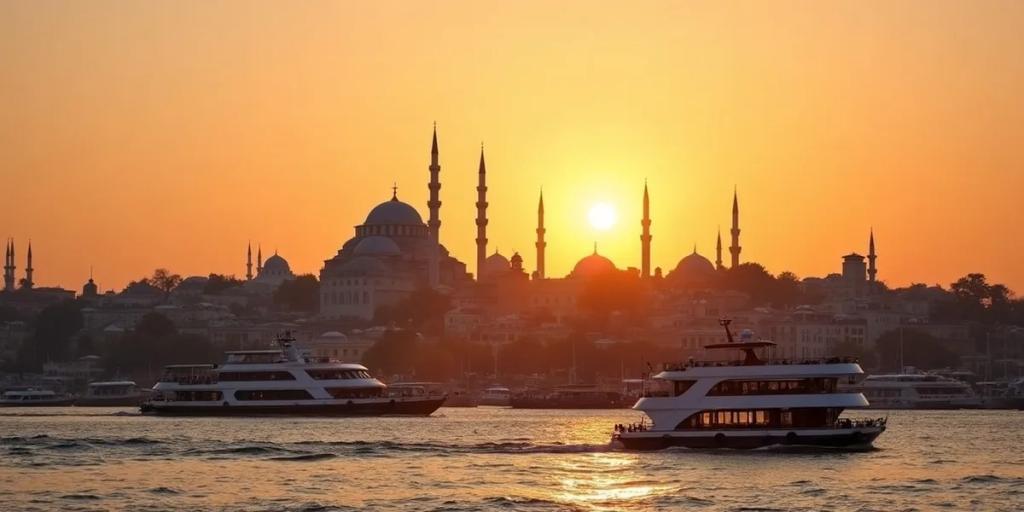
The honest exceptions are the covered markets. The Grand Bazaar is 4,000 shops under thick Ottoman masonry, and deep inside its 61 streets your bars can dip - the same goes for parts of the Spice Bazaar and the older hans around them. Signal returns at the gates and courtyards, so load your map (and your currency converter, for the haggling) before you dive in. Underground, metro stations are generally covered, but data can stutter mid-tunnel on the deeper lines and on the Marmaray run under the Bosphorus - queue up anything you need before the doors close. Out on the water it is the opposite: the public ferries cross between two densely covered shorelines, so you can post the Bosphorus crossing as it happens.
- İstanbulkart is the city transit card, and its app handles balances and top-ups - useful, because kiosk queues at big stations are real. Most turnstiles on the metro, trams, Marmaray and ferries now also take contactless bank cards or phone tap, at a higher per-ride fare than the card.
- BiTaksi is the taxi app locals use, and Uber in Istanbul dispatches licensed yellow taxis rather than private cars. Either way the app keeps the meter honest - street-hailed taxis overcharging tourists is the city's most common complaint.
- WhatsApp is Turkey's default channel: your hotel, airport transfer, food delivery and any guide will message you there, not by SMS.
- Translate earns its keep - Turkish uses Latin letters but shares nothing with English, so camera-mode translation gets a workout on menus and market signs.
From Istanbul Airport (IST) on the European side, the M11 metro and Havaist buses run into the center; from Sabiha Gökçen (SAW) on the Asian side, the M4 metro connects toward Kadıköy and the Marmaray. Both routes want either an İstanbulkart or a contactless tap, and the ride in is exactly when you need maps, your hotel's WhatsApp pin and ferry timetables - reason enough to install the eSIM before you fly rather than gamble on airport Wi-Fi.
Istanbul trips are heavy on maps (two continents, ferries, funiculars and eleven metro lines), heavy on translation, and heavy on photo uploads. For most travelers 1GB per 2-3 days covers navigation, WhatsApp and social posting; budget more if you video-call home or stream on the ferry. Plans top up from your dashboard, and the Turkey eSIM guide covers the country-wide picture if you are continuing to Cappadocia or the coast on the same Turkey plan.
Istanbul is a smart-casual city with real seasons - light layers plus a windproof for ferry decks in summer, a proper coat and grippy shoes for the wet, occasionally snowy winter. Active mosques are the rule that matters: shoulders and knees covered for everyone, a headscarf for women, shoes off at the door (plastic bags provided). The Blue Mosque lends scarves and wraps free at the entrance, but carrying your own scarf means never queueing for one. Comfortable soles are non-negotiable - Galata and Balat are steep and cobbled.
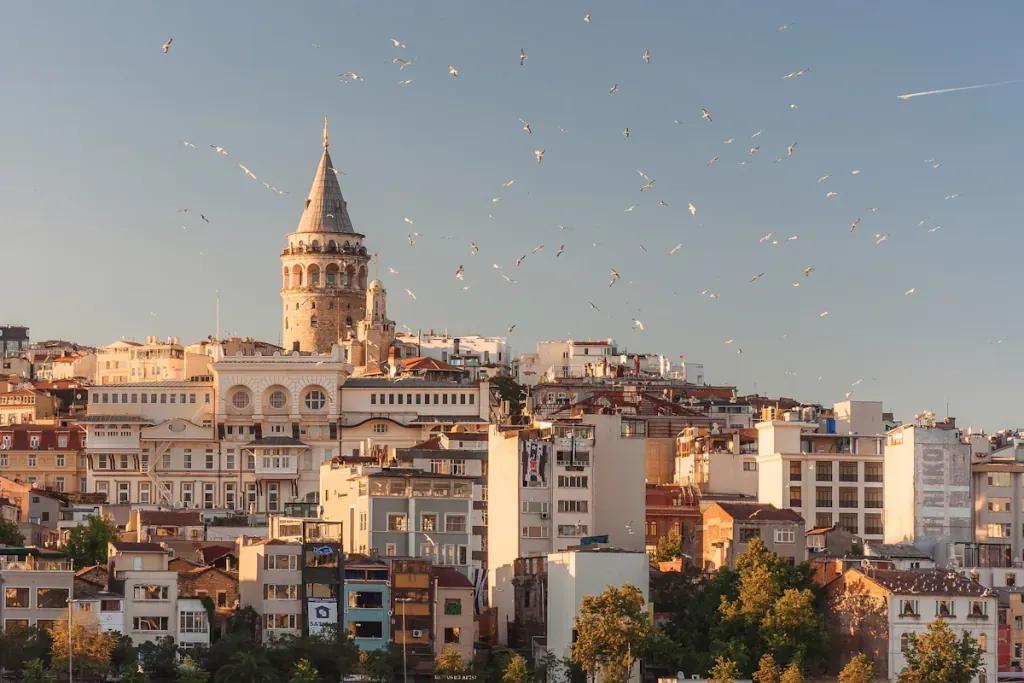
The postcard line-up of the Blue Mosque and Hagia Sophia works from the fountain in Sultanahmet Park between them - face either building at first light before the tour groups land. Galata Tower shoots best from the narrow Karaköy backstreets below it: hold the phone low and shoot upward so the tower fills the alley gap. On any Bosphorus ferry, stand at the stern with a simit - the gulls trail the boat and will swoop right into frame. For the colored houses of Balat, the rooftop cafes above Kiremit and Merdivenli streets give the classic angle for the price of a tea. Drone flying is tightly restricted in Istanbul, effectively off-limits over the historic peninsula without permits.
Istanbul is the only major city that sits on two continents, and millions commute between Europe and Asia daily by ferry, metro and bridge. The Grand Bazaar, begun in 1455, is among the oldest and largest covered markets on earth. And the tulip is a Turkish export: the bulbs that sparked Dutch tulip mania reached the Netherlands from Ottoman Istanbul in the 16th century - the flower even names an era of Ottoman history.
April is the Tulip Festival, when the city plants tens of millions of bulbs and Emirgan Park on the Bosphorus becomes the centerpiece - the first half of the month is peak bloom. Ramadan shifts about 11 days earlier each year (the next runs roughly 8 February to 8 March 2027, final dates moon-dependent): expect festive iftar crowds around Sultanahmet at sunset and packed transport before the Eid holidays. Republic Day on 29 October brings flags, projections and Bosphorus fireworks.
The love is deserved: nowhere else stacks Roman, Byzantine and Ottoman history this densely, the food runs from fish sandwiches at the dock to serious Anatolian cooking, and a commuter ferry between continents at sunset costs less than a coffee. The complaints are real too: Sultanahmet's crowds and its carpet-shop and "let me practice my English" hustle wear thin fast, street-hailed taxis playing meter games remain the top tourist gripe (stick to the apps), and the hills are relentless. Base yourself in Karaköy, Kadıköy or Balat and dip into the old city early - the ledger tilts your way.
Turkey has an IMEI registration rule: foreign phones using a local Turkish SIM get blocked from the networks after roughly 120 days unless you pay a substantial registration fee. A short trip will not hit the deadline, but an eSIM connects as roaming, so there is nothing to register, no shop paperwork, and your home number stays live for bank codes.
Stations are generally covered and much of the network is usable, but expect dropouts mid-tunnel on deeper sections, including the Marmaray tube under the Bosphorus. Load your route and any tickets before descending and the crossing takes under five minutes anyway.
Yes - the crossings run between two heavily covered shores, so data holds up well mid-strait on the standard city ferries. Longer touristic cruises up toward the Black Sea mouth can get patchier past the second bridge, so download offline maps if you book one.