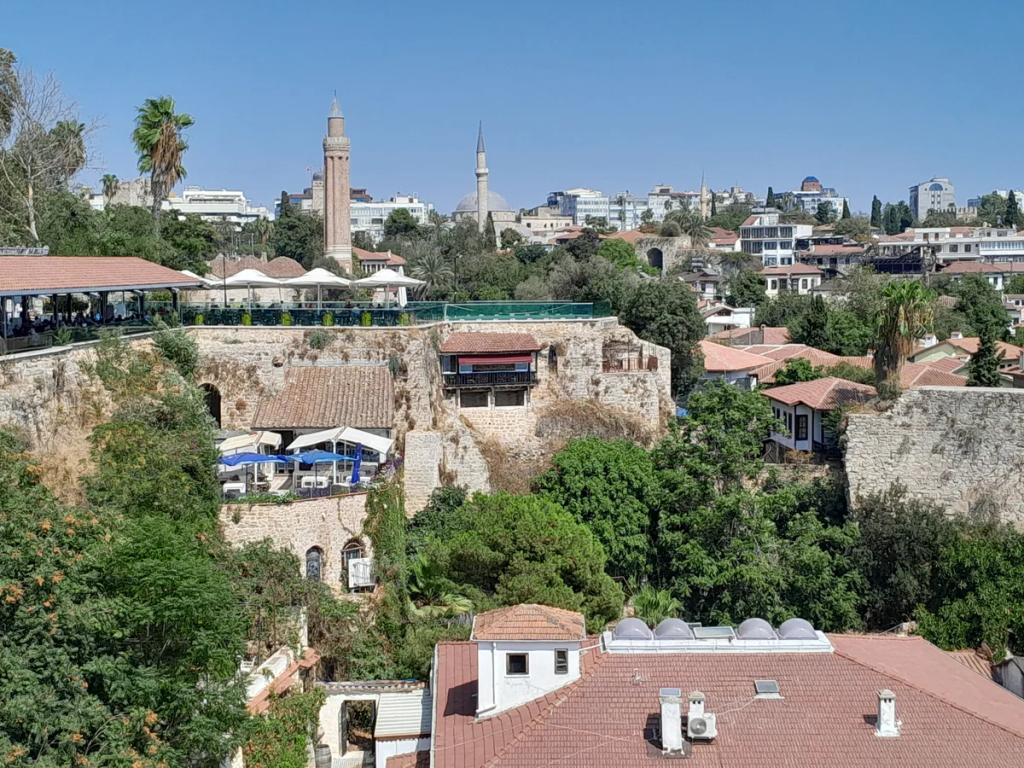
Antalya is the capital of the Turkish Riviera, a city where Roman ruins sit twenty minutes from all-inclusive pools. Turkey's three carriers - Turkcell, Vodafone Turkey and Türk Telekom - all run strong 4G/LTE along this coast, with 5G live commercially since April 2026, and your eSIM piggybacks on one of them. Coverage is excellent where visitors actually spend time: the Konyaaltı and Lara beachfronts, the Kaleiçi old town, the airport corridor, and the whole resort strip east through Belek, Side and Alanya.
The coast is not the problem - the geography behind it is. Kaleiçi, the walled old quarter above the Roman harbor, is tight stone lanes under overhanging Ottoman balconies, and your bars can sag a notch between the courtyard restaurants; step toward the harbor rim or Hadrian's Gate and full speed returns. The real dead zones are the day trips into the Taurus mountains: the gorges at Göynük Canyon and the Tazı Canyon viewpoints above Köprülü can go quiet between the rock walls, and the mountaintop ruins of Termessos sit inside a national park where reception is patchy at best. Download offline maps and tour meeting details before the minibus leaves the coast road. On boat trips, data generally holds while the gulet hugs the shoreline, which is most of the day.
- Antalyakart is the city's transit card, covering the buses, the AntRay tram line and the vintage tram along the cliff edge - and the network is cashless, so you cannot pay the driver in lira. Contactless bank cards also work at the readers for a higher per-ride fare, while the Antalyakart app manages balances so you skip the top-up machine queue.
- BiTaksi covers ride-hailing in greater Antalya (Martı operates here too); Uber in Turkey books licensed taxis rather than private cars, so BiTaksi is the safer first install. With taxi pricing a perennial visitor complaint, an app showing the fare estimate up front pays for itself on day one.
- The dolmuş minibuses that shuttle along the coast to Kemer or Side are gloriously analog - flag them down, pay the driver, shout your stop. Some take cards, but keep small cash and use your data for the route, since stops are unmarked.
- WhatsApp runs the tourism economy here: boat captains, waterfall-tour operators, rafting outfits and hotel transfers all confirm pickups by message, and losing data on the morning of a tour is how pickups get missed.
Antalya Airport (AYT) sits about 13 km from the center, and the AntRay tram connects it toward town - buy or tap an Antalyakart at the airport stop, or use a contactless card at the gate. Most package travelers get scooped up by resort transfer buses instead, and that is precisely when the driver's WhatsApp, your booking confirmation and the first map search all want data at once. Installing your eSIM before departure means you land connected instead of negotiating airport Wi-Fi with your luggage.
A resort-based Antalya trip is lighter on navigation than a big-city break, but the day trips flip that: canyon tours, ancient sites and boat days mean maps, tour-operator WhatsApp threads and a camera roll begging to be uploaded from the beach. For most travelers 1GB per 2-3 days is comfortable, with headroom if you stream by the pool instead of trusting hotel Wi-Fi. Top-ups are a dashboard tap away, and our Turkey eSIM guide covers the national picture if Antalya is one stop on a longer Turkey plan.
Pack for two dress codes. On the coast, anything goes - swimwear, linen, sandals - but July and August are a genuine furnace, so light fabrics and a real sun kit (high SPF, hat, refillable bottle) are survival gear, not accessories. Mosque visits require covered shoulders and knees with a headscarf for women, and Kaleiçi's evening restaurant scene leans smart-casual. If Termessos or the canyons are on your list, bring proper closed shoes: the ruins involve a steep, rocky uphill climb that flip-flops will not forgive.
The classic Antalya frame is Kaleiçi's old harbor shot from above - the tea gardens around Tophane and Republic Square sit right on the cliff edge, and at sunset the Taurus mountains glow pink behind the moored boats. At the Lower Düden waterfall, the river plunges some 40 meters straight off a sea cliff; the park above is free, but the jaw-dropping angle is from the water on a Kaleiçi boat tour, spray included. Shoot Hadrian's Gate from the outside footpath so the three marble arches frame the old town behind you. And Aspendos rewards climbing to the top gallery: shoot down into the cavea while your travel partner stands center-stage, tiny against 15,000 seats.
Antalya began as Attaleia, founded around the 2nd century BC by King Attalus II of Pergamon as a naval base, and it still carries his name. The flames of the Chimaera at Yanartaş, an evening hike from Çıralı, are methane seeps that have burned for thousands of years and are widely linked to the fire-breathing monster of Greek myth. And Antalya now ranks among the world's most-visited cities, placing in the global top ten alongside Istanbul with around 17 million international arrivals a year.
The Aspendos Opera and Ballet Festival stages full productions inside the 2nd-century Roman theatre each year, running mid-September into early October in recent editions - an 1,800-year-old venue still doing its job. The Golden Orange Film Festival, Turkey's longest-running film festival (since 1963), takes over the city in late autumn. Ramadan shifts about 11 days earlier annually (roughly 8 February to 8 March in 2027), felt more gently here than inland. And winter is not off-season so much as a different season: Belek's golf courses and football-camp pitches fill with European clubs and players chasing the mild months.
The case for Antalya is genuinely rare: world-class ruins, cliff-edge waterfalls and long beaches within one bus ride, at prices that undercut most of the Mediterranean, plus winters warm enough to eat outside. The gripes deserve equal airtime: the all-inclusive belt through Belek and Side can feel like anywhere-on-earth resort sameness, July and August heat punishes sightseeing, the airport-transfer and taxi hustle is the most consistent visitor complaint, and Kaleiçi's restaurant touts work every passing tourist. Come in May-June or September-October, base near the old town, and you get the postcard without most of the friction.
Because Turkey ties local SIMs to your phone's IMEI: after roughly 120 days a foreign handset on a Turkish SIM gets blocked unless you pay a hefty device-registration fee. Holidaymakers rarely hit the limit, but the paperwork and queue are real either way - an eSIM operates as roaming, so the rule never applies and your home number keeps receiving bank codes.
On the water, mostly yes - the standard gulet and pirate-boat routes stay close to a well-covered shoreline. Inland is the opposite: Göynük and Tazı canyons and the Termessos national park all have weak or absent reception in stretches, so download offline maps and screenshot your tour operator's pickup details before leaving the coast.
In the lobby, usually; on the beach loungers, it is a lottery, and some resorts still paywall the faster tiers. The bigger issue is everything outside the gate - dolmuş routes, tour pickups, taxi apps and translation all happen away from the router. Treat resort Wi-Fi as a bonus, not your plan.