Sicily is not a city break. It is an island the size of a small country, and the classic trip is a loop: Palermo's markets, Cefalu's beach, Agrigento's temples, the baroque southeast around Ragusa and Noto, then up the Ionian coast past Syracuse and Catania to Taormina, with Etna smoking over all of it. Four networks serve the island - TIM, Vodafone, WindTre and Iliad - and whichever one carries your eSIM, the cities, the coasts and the autostrade get solid 4G and growing 5G. The variable is everything in between.
Here is the honest version: Sicily's interior is some of the thinnest mobile territory in Italy. The hill towns of the Madonie and Nebrodi ranges, the empty wheat country in the island's middle, and the state roads connecting them can drop you to 3G or nothing for stretches at a time, whichever network you are on. On Etna, coverage is solid around Rifugio Sapienza and the cable car, then increasingly patchy toward the craters. None of it ruins a trip if you prepare like a local: download offline maps for the whole route before leaving the coast, and treat signal in the deep interior as a bonus, not a plan.
- A rental car is close to mandatory outside the big cities. The rail network is slow and hugs the coast - Palermo to Catania takes around three hours - and the interior has essentially no useful transit. The one train worth riding for its own sake is the Circumetnea, a charmingly slow narrow-gauge line circling Etna through lava fields and pistachio country.
- ZTL zones are the rental-car trap: Palermo and Catania both run camera-enforced restricted traffic zones in their historic centers, and the fines find your rental company months later. Check your accommodation's ZTL status before driving to the door; park outside the zone when in doubt.
- Etna runs on booking apps and alert levels: the Funivia dell'Etna cable car and the guided 4x4-plus-walk above it sell tickets online, and how high you may go depends on the volcano's mood. Below the cable car's top station you roam freely; above it a certified volcanological guide is required by law, and the ceiling moves with the official alert level - since the eruption cycle that began on Christmas Eve 2025, summit access has been closing and reopening, so check conditions the day before.
- Scala dei Turchi is ticketed now: after years closed for erosion, the white marl cliffs reopened in summer 2025 with capped, timed entry booked online (around 6 euro, small hourly groups). Slots vanish fast in summer.
- Beach clubs book online in season: at the popular lidi around Mondello, Cefalu and San Vito lo Capo, July and August sunbeds increasingly sell through the clubs' sites and booking apps rather than at the gate.
Palermo's airport has a direct train to the center in under an hour; from Catania's airport, the Alibus shuttle reaches the station in about twenty minutes. Either way you will be juggling pickup instructions, rental-car counters and first navigation the moment you land, and Sicilian airport Wi-Fi is not the ally you want for that. Set the eSIM up at home and switch it on when the wheels touch down.
More than a city trip, mostly because of the driving: hours of live navigation, rerouting around the inevitable closed road, and checking restaurant hours in towns that keep their own schedule. Add translation - English runs thinner here than in Rome or Milan, especially inland - and photo uploads, and a comfortable budget is around 1GB every two days on the road, less if you pre-download maps aggressively. Top-ups take a minute from your dashboard, and our best eSIM for Italy guide compares how the four Italian host networks perform.
Two wardrobes, one suitcase. Churches - Monreale's golden mosaics above all - expect covered shoulders and knees, so pack a scarf or light overshirt for sightseeing days. Etna is the opposite problem: the summit zone sits above 2,900 meters and is genuinely cold and windy even in August, so bring real layers and closed shoes (the cable car station rents jackets if you gambled and lost). Everything else is beach-to-baroque smart casual, plus the most comfortable shoes you own for Palermo's market cobbles and a dozen archaeological sites.
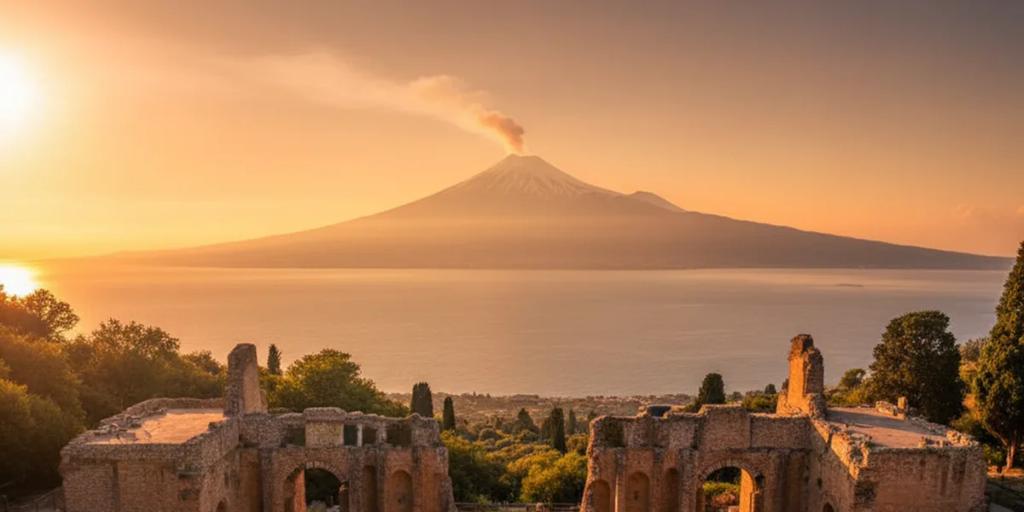
The shot of Sicily is Taormina's Greek theatre with Etna framed behind the broken stage wall - arrive at opening, because morning light hits the volcano cleanly and the tour groups land mid-morning. Scala dei Turchi's white curves photograph best from the free beach viewpoint even if you skip the ticketed climb. In Palermo, the Ballaro and Vucciria markets are pure color and chaos - shoot early, ask before pointing a lens at a stallholder, and buy something. Ragusa Ibla is best from the upper town's viewpoint stairs at dusk when the domes light up; in Cefalu, walk the old harbor jetty and frame the town against La Rocca's cliff.
Sicily holds seven UNESCO World Heritage sites, from the Valley of the Temples to the late-baroque Val di Noto towns. Etna is Europe's tallest active volcano at roughly 3,400 meters, a figure that changes as eruptions rebuild the summit. The arancini war is real: arancini (pointed) in the east, arancine (round) in Palermo, both correct. The Godfather village scenes were shot in Savoca, not Corleone - the real town had grown too modern. And Archimedes was a Syracusan.
Sant'Agata in Catania (3-5 February) is routinely ranked among the world's largest religious festivals, with hundreds of thousands following the saint through the night. Palermo answers with the Festino di Santa Rosalia in mid-July, a centuries-old procession and fireworks blowout. The third weekend of May carpets a Noto street in petals for the Infiorata, from May to late June Syracuse's Greek theatre stages the INDA classical drama season, and Agrigento's almond blossom festival brightens early March.
The love: food that justifies the flight on its own - Palermo street food, Bronte pistachios, cannoli everywhere - stacked on Greek, Roman, Arab and Norman layers you can walk through in a day, with proper beaches attached. The gripes: distances are real and the driving is work, since the autostrada network has gaps and the southeast runs on slow state roads; August is a furnace with crowds to match, and Taormina's White Lotus fame has pushed prices and the summer crush to Amalfi levels; and service moves at island pace, which is either the point or an irritation depending on the traveler. Come in May, June, September or October and most of the ledger flips positive.
Around Rifugio Sapienza and the cable car, yes - enough for tickets, maps and photos. Above the top station it turns patchy, and the summit zone is unreliable on every network, which is one more reason the guided groups carry radios. Download the area offline and confirm bookings before you climb.
On the autostrade and coastal roads, almost always. On interior routes through the Madonie, the Nebrodi and the island's empty middle, expect dead stretches on any network. The fix costs nothing: save offline maps for the whole loop before leaving the coast, and let the eSIM handle rerouting whenever coverage returns.
You can, but Italian law requires passport registration for physical SIMs, meaning a counter queue at exactly the moment you want to be collecting your rental car. A data eSIM installed before you fly skips the paperwork and keeps your home number live for bank and booking codes.