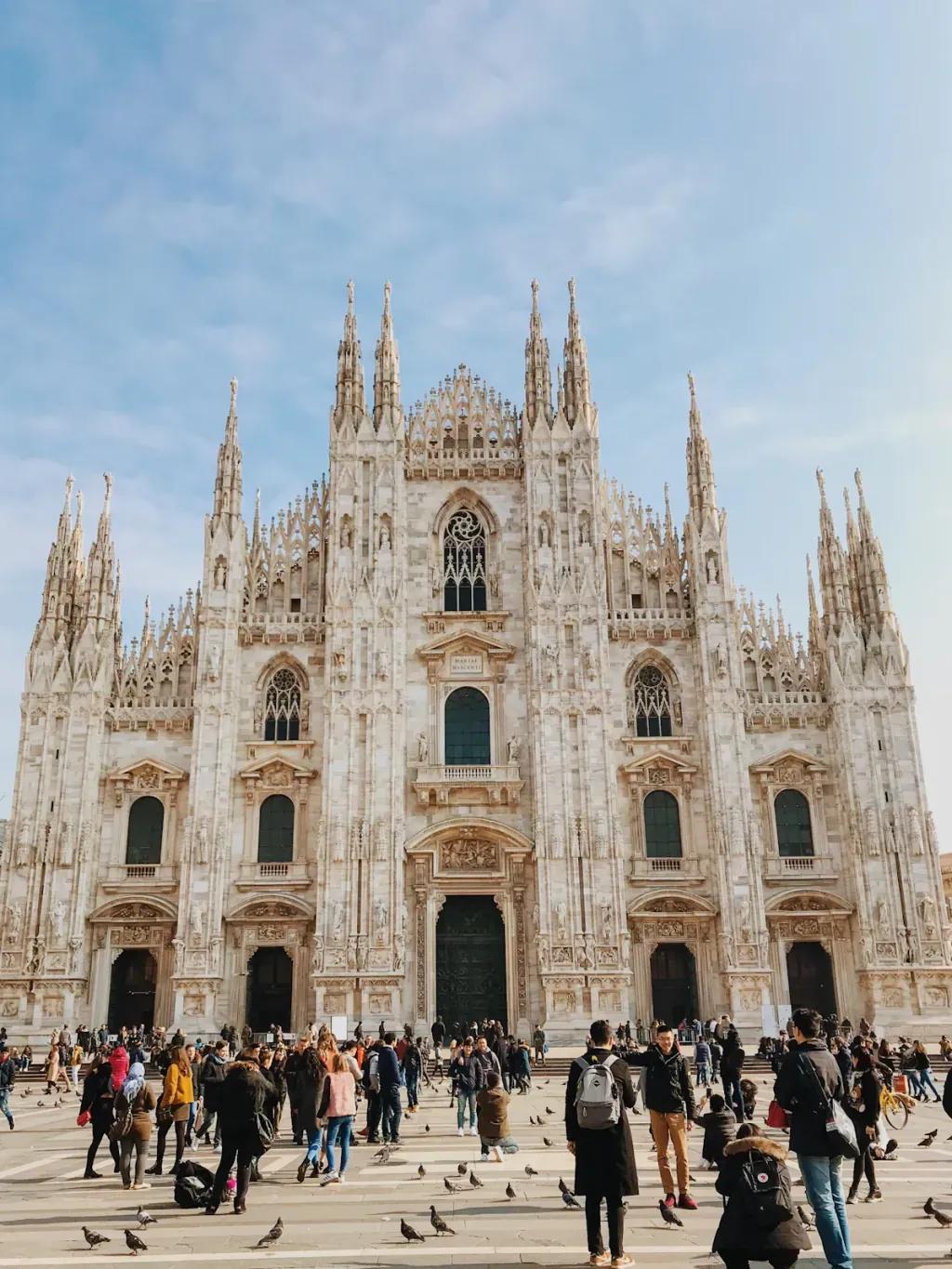
Milan is Italy's business and fashion capital, and its mobile infrastructure acts like it. TIM, Vodafone, WindTre and Iliad all pour their best 5G into this city, and whichever of them hosts your eSIM, data is fast from the Duomo to the Porta Nuova towers to the Navigli. The showpiece is underground: the metro has mobile coverage across the network, and the new M4 line was built with 5G in all 21 stations and every tunnel between them - operators call it Europe's first fully 5G metro line.
Milan's weak spots are about crowds, not architecture. During Fashion Week the Quadrilatero della Moda fills with thousands of people livestreaming the same three streets, and speeds around Via Montenapoleone can sag at show times. The Navigli do a milder version every warm Friday and Saturday evening, when the canal banks become one long aperitivo and everyone posts it at once. Indoors, the Duomo's marble bulk and some bar basements cost a bar or two of signal. None of it breaks a trip; just do not save your only copy of a ticket for the moment you are standing in the crush.
- The metro is tap-to-ride: hold your contactless card, phone or watch to the ATM gate to enter, and tap out with the same one on exit. Buses and trams need only a tap on boarding. Use the same card all day and the system caps your fare automatically; the ATM Milano app adds journey planning and disruption alerts.
- The Last Supper is a months-ahead operation: Leonardo's Cenacolo admits small timed groups, every visitor needs a named reservation, and there are no walk-up sales. Official tickets drop in quarterly blocks and peak months sell out almost immediately - plan this before you plan your flights.
- Trenord for the lakes: Como is as little as about 40 minutes away on the faster trains, and Trenord sells tickets in its app - which beats the station machine queue on a sunny Saturday when half of Milan has the same idea.
- BikeMi is the city bike share (classic and e-bikes), unlocked and paid through the app. Area C, Milan's congestion charge, applies to cars - without a rental car, ignore it completely.
- La Scala sells out far ahead for big productions; tickets and last-minute options live online. Dress reasonably - the house expects decorum, and shorts or flip-flops risk being turned away.
Linate airport is the cheat code: it sits directly on the M4 metro, so you can tap a contactless card at the airport gate and be at San Babila in roughly 15 minutes, with 5G the whole way. From Malpensa, the Malpensa Express train reaches Cadorna or Centrale in about 40-55 minutes; buy it in the app. Bergamo arrivals take the coach to Centrale. Whichever way you land, the ride in is when directions, check-in codes and the first map searches all hit at once - install the eSIM before departure and that just works.
Milan trips burn data on logistics more than navigation: train tickets bought on the platform, timed-entry confirmations re-opened at doors, restaurant bookings, and a steady stream of Galleria and rooftop photos heading to the cloud. For most visitors 1GB every 2-3 days is comfortable; size up if you post video or work remotely between museums. Top-ups are a dashboard tap if a lakes day runs long, and for how the four Italian host networks compare, see our Italy eSIM breakdown.
Honest answer: Milan notices. No city in Italy reads outfits harder, and while nobody needs runway clothes, scruffy activewear feels out of place at aperitivo - smart-casual with decent shoes covers almost everything. The Duomo enforces covered shoulders and knees, and its rooftop is windy even in summer, so bring a layer for the terraces. Winter is damp, grey and near freezing: insulated layers and a scarf, not just a coat. Summer calls for breathable fabrics; the Po valley humidity is no joke.
The Duomo rooftop terraces are the shot Milan is known for: a ticketed walk among the marble spires, with the golden Madonnina close overhead - go at opening or in the last entry slot for soft light and thinner crowds. In the Galleria Vittorio Emanuele II, film someone doing the local ritual: three heel-spins on the bull mosaic for luck (so popular the mosaic was restored again in 2026). At blue hour, the Navigli give you neon reflections and aperitivo crowds in one frame from any of the small bridges. For modern Milan, shoot the tree-covered Bosco Verticale towers from the Biblioteca degli Alberi park below. San Siro on match day is worth capturing, but honestly: it is a concrete giant, and the magic is the noise, not the light. Drones over the center need permits; assume no.
The Duomo took roughly six centuries to finish - started in 1386, final details done in 1965 - and it was Napoleon who ordered the facade completed (1807-1813); a statue of him stands on one of the spires. The Galleria, opened in 1877, is one of the world's oldest active shopping arcades; its architect died falling from the scaffolding the day before inauguration. And Leonardo da Vinci spent about 17 years in Milan, painting the Last Supper and engineering canal locks for the city's waterways.
Fashion Weeks (womenswear late February and late September, menswear January and June) double the city's glamour and its hotel prices - book far ahead or aim elsewhere in the calendar. Design Week in April, built around the Salone del Mobile furniture fair (the world's biggest), takes over the whole city with installations and parties, not just the fairgrounds. February 2026 brought the Milano-Cortina Winter Olympics; the games are done, but the infrastructure push they funded is what you are riding today. And a Derby della Madonnina between Inter and Milan changes the mood of the whole city for a weekend.
The case for Milan: the aperitivo culture is the best in Italy, the design and fashion energy is real rather than a slogan, and Como and the mountains are an hour or less away by train. The case against: it is not classically pretty - industrial edges and postwar blocks sit beside the showpieces, and visitors expecting Florence can feel shortchanged. It is also Italy's most expensive city, August is muggy and half-closed, and the photo-menu restaurants ringing Piazza del Duomo are exactly the trap they look like. Come for the city Milan actually is and it delivers; come expecting Rome and it will not.
Yes, and it is among Europe's best. The network has mobile coverage underground, and the newest line, M4, carries 5G for all four operators through every station and tunnel from Linate airport into the center - you can often keep a video call alive underground.
Yes. Tap in and out at metro gates with the same card, phone or watch, and just tap on boarding for buses and trams. Daily fare capping applies when you keep using the same card - no app or registration required.
Yes - your plan covers the whole country on the same host network, so nothing changes when you leave Milan. Coverage in the Como shoreline towns is generally solid, though it can thin on hiking trails above the lake. Buy your Trenord return in the app and keep it loaded for onboard checks. If your phone is new to eSIMs, set it up before you travel.