Venice has no cars, no metro and no streets in the normal sense, but it does have all four Italian mobile networks - TIM, Vodafone, WindTre and Iliad - with solid 4G and growing 5G across the main islands, the Grand Canal, the Lido and the lagoon routes to Murano and Burano. Whichever network your eSIM lands on, staying online is rarely the problem. Finding your way is - which is why you will burn more data here than the city's size suggests.
The calli - the alleys threading between tall brick buildings, some barely shoulder-width - can knock your connection down to a bar until you pop out onto a campo or a canal edge, and ground-floor interior rooms in older buildings do the same. The stranger effect is GPS: the narrow canyons bounce the satellite signal around, so the blue dot in your maps app lags and drifts, sometimes placing you a canal over from where you stand. Treat maps as a rough compass, follow the "Per Rialto / Per San Marco" signs painted on walls, and accept that getting briefly lost is the actual itinerary.
- The access fee portal comes first: on selected 2026 dates (mostly Fridays through Sundays plus holidays, early April to late July, 08:30-16:00), day visitors pay Venice's Contributo di Accesso - 5 euro booked at least four days ahead, 10 euro closer in - via the official cda.ve.it portal. You get a QR code, and stewards run spot checks at entry points including Santa Lucia station. Staying overnight? You are exempt but must still register for an exemption code. Either way, you need that QR on your phone the moment you arrive.
- AVM Venezia is the transport app: it sells vaporetto (water bus) tickets straight to your phone. A single ride costs 9.50 euro for 75 minutes, which makes the passes easy math - 25 euro for one day, 35 for two, 45 for three; three rides in a day and the pass has already won.
- Water taxis are the sticker shock: private boats routinely run 120 euro and up from the airport, shared ones about 30-40 per person. Gorgeous, occasionally worth it - but know the number before you step aboard.
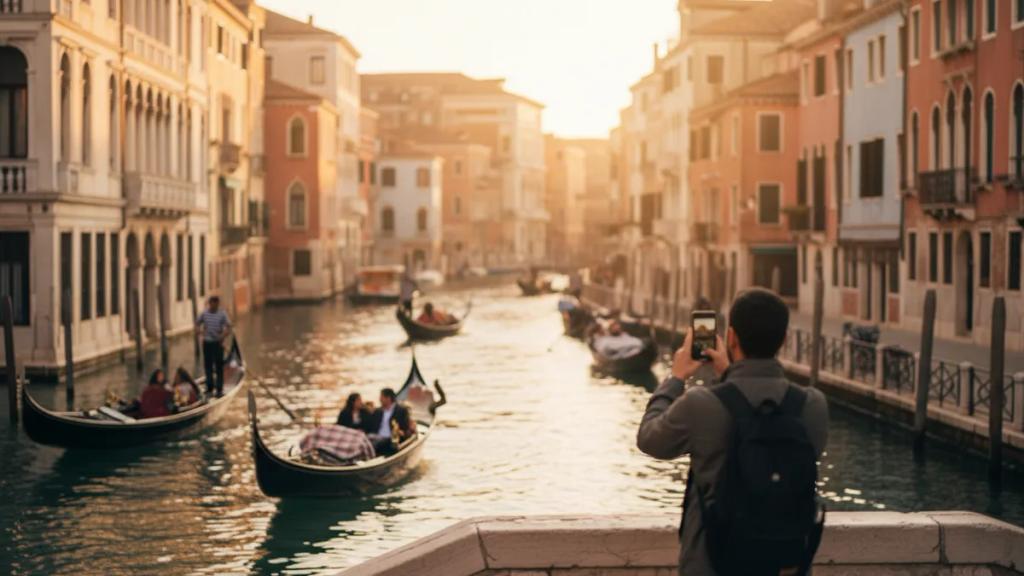
- Gondolas have fixed city tariffs: around 90 euro for a 30-minute daytime ride and 110 euro after 19:00, per gondola (up to five people), posted at the stations. Knowing the official rate is the difference between a splurge and a scam.
From Marco Polo airport, Alilaguna boat lines run to San Marco and other stops for about 18 euro, land buses reach Piazzale Roma in around 20 minutes, and the water taxi is the 120-euro-plus grand entrance. The train drops you at Santa Lucia, straight onto the Grand Canal - and straight into a possible access-fee spot check. QR codes, booking confirmations and that first bewildering map search all pile up in the opening half hour, so have the eSIM installed and working before the plane door opens.
More maps than anywhere else in Italy. The labyrinth plus the GPS drift means your navigation app stays open half the day, and the photo uploads never stop because the city does not have a bad angle. Around 1GB every couple of days sits right for most people, more if you post stories from every bridge. Top-ups take a minute from your dashboard, and our best eSIM for Italy comparison explains how the four host networks differ if you want to choose deliberately.
Comfortable shoes are non-negotiable: a normal Venice day is 15,000-plus steps, and every one of the city's roughly 400 bridges is stairs, not ramp. Swimwear and bare torsos away from the Lido beaches are genuinely fineable (250 euro under the #EnjoyRespectVenezia rules), and so is picnicking on monument steps. Between October and January pack waterproof shoes - the MOSE barriers stop the major floods, but lesser acqua alta still puddles the low spots and the raised walkways still come out. An evening at La Fenice deserves smart-casual.
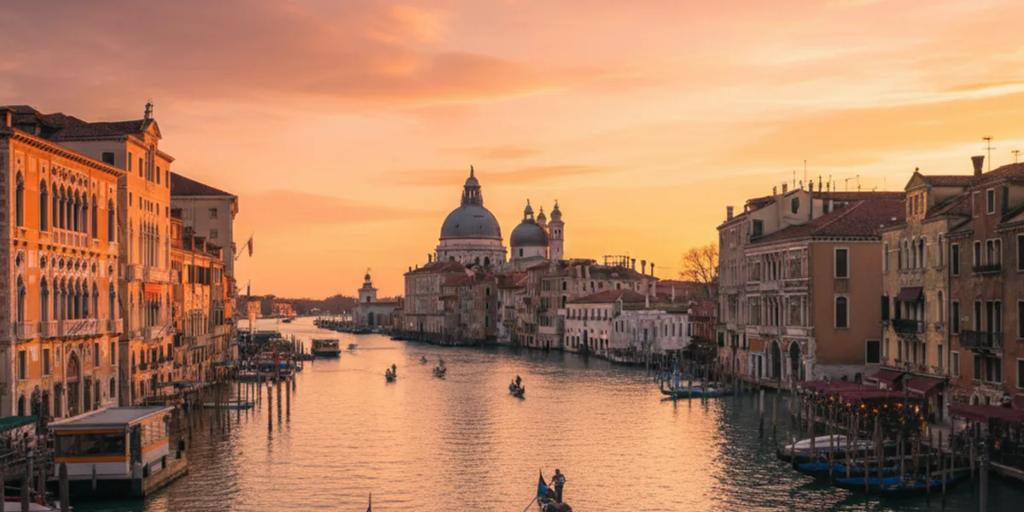
Rialto at dawn is the only time the most famous bridge in Venice is quiet - by 09:00 it is a scrum, at 06:30 it is yours. The classic Salute-at-sunset shot is taken from the wooden Accademia bridge, looking down the Grand Canal as the light goes gold. For the view of Venice itself, skip the San Marco campanile queue and take the vaporetto to San Giorgio Maggiore: its bell tower looks back at the whole city, with a fraction of the line. In Dorsoduro, shoot the Squero di San Trovaso gondola boatyard from across its canal. And give Burano a half day: the rainbow fishermen's houses photograph best in early afternoon sun.
The city stands on 118 islands stitched together by around 400 bridges, with zero cars in the historic center - everything from ambulances to parcels moves by boat. The gondola is deliberately lopsided: its left side is about 24 centimeters longer than the right, which cancels the turning force of the single oar. Venetians also gave the world the word quarantine - quaranta giorni, the forty days plague-era ships waited at the Lazzaretto islands. And yes, Venice is slowly sinking, but the MOSE barriers, working since 2020 and raised dozens of times each winter, have bought the city real time.
Carnival fills the two-plus weeks before Lent (movable - late January into February) with masks, costumes and the city's most crowded, most photogenic days. The Biennale runs May to November, alternating art in even years and architecture in odd ones - 2026 is an art year. Locals will tell you the real one is the Festa del Redentore, the third weekend of July, when a votive boat bridge crosses to Giudecca and Saturday night fireworks light the whole basin. Then September stacks the Venice Film Festival on the Lido (2-12 September in 2026) against the Regata Storica's costumed rowing pageant on the first Sunday.
There is nowhere remotely like Venice: a functioning city with no cars, silence broken by water and footsteps, and light that painters spent five centuries failing to exhaust. The complaints are just as real. The San Marco-Rialto corridor at midday is the poster child of European overtourism - the access fee exists precisely because of it - and cruise-arrival days make it worse. Prices carry a Venice premium: the same espresso costs triple seated on a piazza terrace, and a mediocre canal-view lunch can sting. Come in the shoulder months, sleep in the city so you own the early mornings, and Venice pays it all back.
Practically, yes. On 2026 fee dates day visitors need the paid QR code from the official cda.ve.it portal, and overnight guests need a free exemption code after registering - checks happen at the station and other entry points. Screenshot it in advance, but if plans shift or the email needs re-opening at a checkpoint, you want live data right there.
The narrow calli scatter the satellite signal, so your position drifts and lags - a known Venice quirk, not a fault of your eSIM or phone. Data coverage stays fine; it is the positioning that wanders. Use maps for general direction, then trust the painted wall signs pointing to Rialto, San Marco and the station.
Yes. Murano, Burano, Torcello and the Lido are covered by the same Italian networks, and signal holds up on the boat crossings, so you can buy your next vaporetto ticket in the AVM Venezia app mid-lagoon. If this is your first eSIM, sort the installation before you travel so it is live at the airport boat dock.