Osaka is where Japan's dense network infrastructure meets a city built for appetite. All four national carriers - NTT docomo, au (KDDI), SoftBank and Rakuten Mobile - blanket the city with 4G and 5G, and your eSIM connects through one of them as its host. In practice you will have fast data from the Dotonbori neon to Umeda's underground labyrinth, and you will use more of it than expected, because in Osaka the phone is a food-finding instrument first and a map second.
Almost nowhere, honestly. Japan wired its subways years ago: Osaka Metro has mobile antennas in every station and in the tunnels between them, so you can check restaurant reviews mid-ride on the Midosuji Line without a hiccup. The one pattern worth knowing is vertical, not horizontal - Umeda's multi-level underground malls and department store basements can knock 5G down to slower bands, and high-rise elevator cores briefly kill data. Step toward an exit or a window and it comes straight back.
- ICOCA is Kansai's rechargeable transit card, and iPhone users can add one directly in Apple Wallet (every iPhone since the 8 has the FeliCa chip, wherever you bought it) and top up with a foreign card. Overseas Android phones generally cannot - Google Wallet's Japanese transit cards need Japan-market FeliCa hardware - so Android travelers should grab a physical ICOCA at the airport instead.
- The USJ official app is not optional if Universal Studios Japan is on your list: Super Nintendo World uses Area Timed Entry Tickets that you claim in the app after scanning your park ticket, and free slots evaporate by mid-morning on busy days. That is an inside-the-park, on-your-data task.
- Tabelog and Google Maps do the real work in Osaka. Locals rank restaurants on Tabelog with notorious strictness (3.5 is genuinely good), and cross-checking a kushikatsu joint's rating while standing in Shinsekai is the local move.
- Taxi apps: GO and DiDi both operate in Osaka and Uber hails regular taxis; you will mostly not need them, because the Metro and JR Loop Line cover the city well.
- Tap-to-ride: Osaka Metro added contactless credit card entry at its gates ahead of Expo 2025, so a foreign Visa or Mastercard works at many turnstiles - though ICOCA is still the friction-free default across every train, bus and konbini.
From Kansai International (KIX), the JR Haruka limited express runs to Tennoji, Osaka and Shin-Osaka, while the Nankai Rapi:t (the dark-blue retro-futurist one) goes to Namba - pick whichever is closer to your hotel, both take roughly 35-50 minutes. The ride in is exactly when you will want live data for hotel directions and the first "where do we eat tonight" search - install your eSIM before you fly and skip the airport Wi-Fi registration screens entirely.
Osaka's usage pattern is distinctive: less navigation-while-lost than maze cities, far more lookup-while-hungry. A typical day burns data on Tabelog pages, queue-time checks for the famous spots, Google Lens translations of handwritten menus in Shinsekai and Tenma, and uploading canal-neon photos that beg to be posted immediately. Around 1GB per 2 days covers that comfortably; budget more if USJ is planned (the app, wait-time checks and Nintendo World ticket refreshes all happen live) or if you video-call home. Our Japan eSIM guide compares the host networks if you want the detail, and plans top up from your dashboard mid-trip.
Whatever you like - Osaka is famously unpretentious, and nobody here will judge sneakers and a T-shirt the way a Ginza doorman might. The real enemy is summer humidity: June through September means sweat-through-everything air, so pack breathable layers and use the konbini's cold towels shamelessly. Winters are mild but windy along the rivers; a normal jacket does it. One local rule worth adopting: on escalators, Osaka stands on the right and walks on the left, the exact opposite of Tokyo. Standing on the wrong side is the fastest way to out yourself.
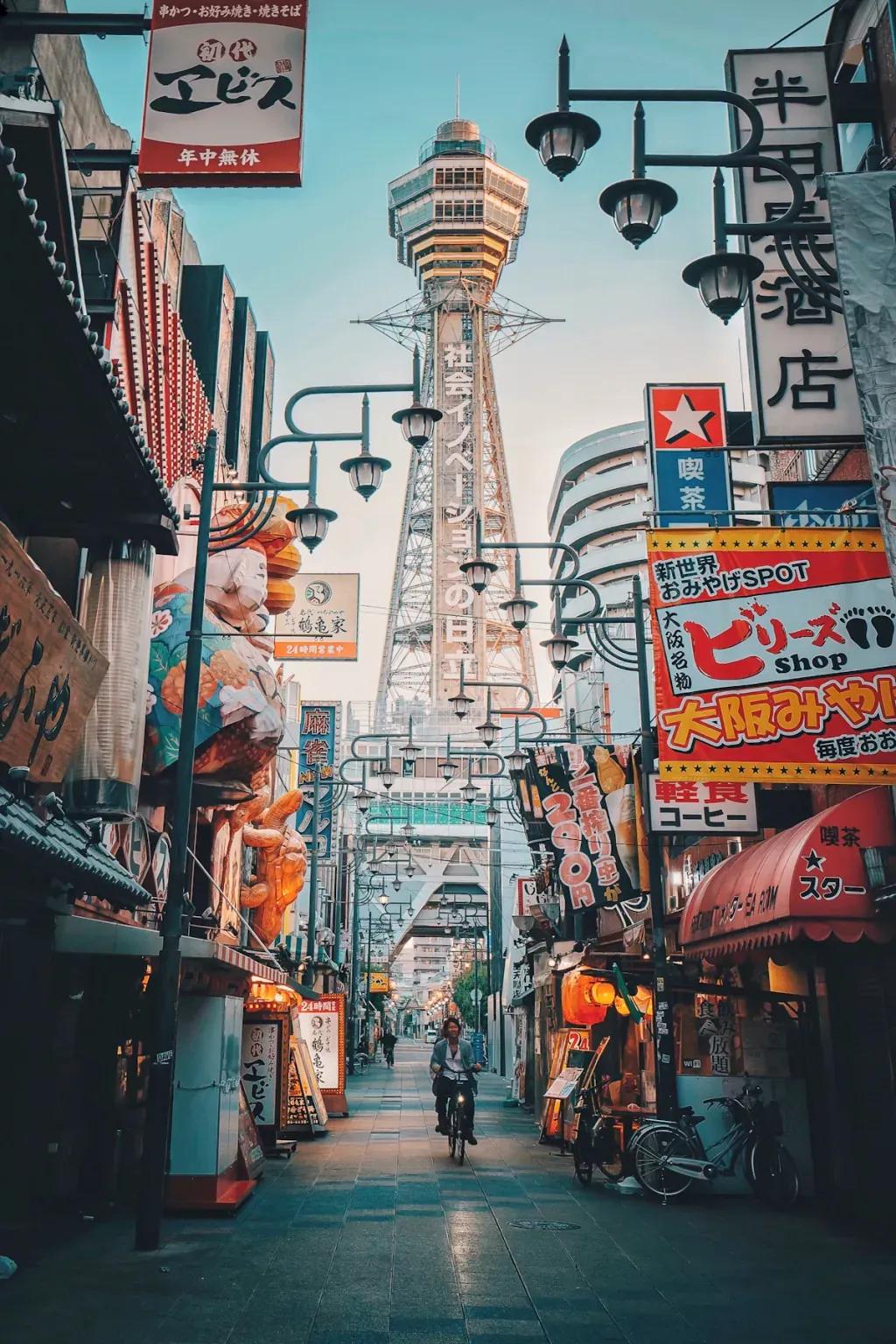
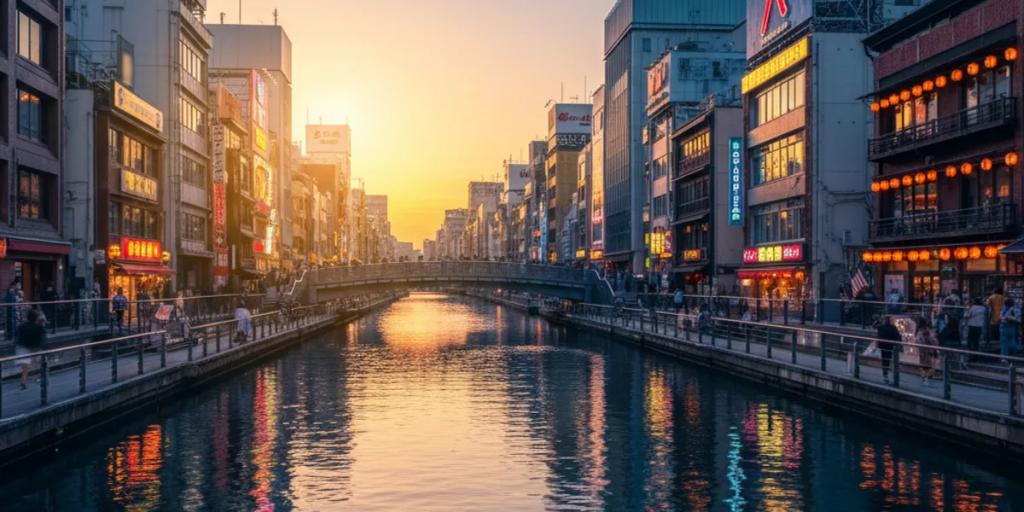
The Glico running man is the shot, and the trick is position: stand on Ebisubashi bridge's south side after dark, frame the sign with its canal reflection, and strike the runner's pose - everyone does, that is the point. Osaka Castle looks best from across the moat in the Nishinomaru side at golden hour, when the white walls catch the low sun. Shinsekai delivers retro-neon frames of Tsutenkaku tower from the arcade streets below, best in the blue hour before full dark. And the Umeda Sky Building's glass escalator tube, crossed at dusk, photographs like science fiction. One correction: the endless red torii gates are Fushimi Inari in Kyoto, a 40-minute train ride away - a great half-day trip, not an Osaka shot.
Osaka's food obsession has a name: kuidaore, roughly "eat yourself bankrupt", and the city treats it as a civic virtue. The Glico sign has marked Dotonbori since 1935; today's sixth-generation version, LED since 2014, animates its background. Conveyor-belt sushi was invented here too - Yoshiaki Shiraishi opened the first kaiten-zushi restaurant in the Osaka area in 1958. And the famous merchant greeting "mokarimakka" ("making any money?") is real Osaka dialect, though these days it is more folklore than daily speech.
Tenjin Matsuri, held every July 24-25 on fixed dates, is one of Japan's three great festivals: a costumed land procession, then a lantern-lit boat procession on the Okawa River with roughly 5,000 fireworks overhead on the 25th. Sumo's Grand Tournament comes to Osaka every March for fifteen days. In cherry blossom season, the Japan Mint opens its Sakura no Torinuke walkthrough for one week in April (free, but advance online reservation is now required - slots go fast). And from November into the new year, the Midosuji Illumination lights the city's main boulevard end to end.
The love: Japan's best street food scene by common consent, locals who are louder, funnier and more likely to talk to you than the national stereotype suggests, and prices that undercut Tokyo for food and hotels. The honest gripes: Osaka is not classically beautiful - it is a working merchant city, and travelers expecting Kyoto's temples per square meter can feel shortchanged. Dotonbori on a weekend night is a slow-moving human river, summer humidity is genuinely punishing, and USJ's queue economics sting: on peak days, Nintendo World without an Express Pass means app-refresh vigilance and long standby lines. Come hungry rather than sightseeing-minded and the city makes sense.
Yes, properly. Osaka Metro has carrier antennas in all stations and in the tunnels between them, so data works on moving trains, not just platforms. Deep basement shopping levels around Umeda are the only places you may notice speeds dip.
On iPhone, yes - add ICOCA (or Suica) in Apple Wallet in about a minute and top up with your home credit card. On most Android phones bought outside Japan, no: the required FeliCa support is missing or disabled, so pick up a physical ICOCA card at KIX or any station instead.
Not as it was. Expo 2025 closed on 13 October 2025 and the site has been in dismantling through 2026, with most pavilions gone. A roughly 200-meter segment of the Grand Ring, the record-setting timber circle, is being kept as a permanent landmark, with parkland planned around it - check current access before making the trip out, as Yumeshima remains an active construction zone.