Claro, Movistar, Tigo and WOM all cover Bogota, and your eSIM will use whichever is strongest. Coverage across the city is comprehensive and Colombian data is cheap. Our Cartagena guide covers the Colombian taxi question - fares are agreed rather than metered, and what that means for your phone. Bogota's own distinguishing feature is not a problem to work around. It is that on Sundays, the city closes its main roads and hands them to about a million and a half people on bicycles.
This is Bogota's great civic invention and the thing most worth planning a trip around.
Every Sunday and public holiday, from 7am to 2pm, roughly 120 kilometres of the city's main avenues close to motor traffic entirely.
Around a million and a half people use it - cycling, running, skating, walking dogs, pushing prams. Whole families. It is not a race or an event; it is simply what Bogota does on a Sunday morning.
It has run since 1974, which makes it the original. Open-streets programmes in dozens of cities worldwide are modelled on it, usually explicitly.
Bicycles are easy to hire, and hotels in Chapinero and La Candelaria will point you at the nearest option.
Recreovia goes with it - free open-air aerobics and dance classes in the parks along the route, with instructors and sound systems, which is as joyful as it sounds.
Plan around it rather than through it. Cross-city driving on a Sunday morning is slow and some routes are simply closed, so taxis take longer and cost more.
Bogota has around 600 km of permanent bike lanes too, more than any other city in Latin America, so the cycling infrastructure is not just a Sunday thing.
Bogota sits at 2,640 metres, which makes it one of the highest capital cities in the world. Our Cusco guide covers what altitude does to you physically, and the same applies here on arrival - take the first day gently.
But the weather is the surprise. Visitors packing for Colombia pack for the Caribbean, and Bogota is 8 to 19C every day of the year.
There is no summer. The temperature barely moves between January and December; what changes is how much it rains, and it rains a good deal.
Afternoons turn grey and wet with considerable reliability, and evenings are genuinely cold - single figures, with no heating in most buildings.
Layers, and a waterproof. A warm jacket is not optional, and this is the single most common packing error for this city.
The sun is fierce when it appears. Thin air at altitude near the equator burns quickly, even at 17C.
TransMilenio is the bus rapid transit system that carries most of the city, running in dedicated lanes with raised stations.
It was internationally influential when it opened in 2000 and has been copied widely - the BRT model owes it a great deal.
It is also crowded to a degree that has become politically contentious, and peak-hour journeys are a crush.
That crush is where phones go missing. Not violently, but opportunistically, and it is the single most likely place for a visitor to lose one.
Keep it in a front pocket or an inside pocket, not in a hand and not in a back pocket, and do not stand by the doors with it out.
A metro is finally being built. Bogota's first metro line has been under construction for years and is expected towards the end of the decade - the city has argued about it since the 1940s.
Ride apps work well. Uber, Cabify, DiDi and inDrive all operate and are inexpensive, and using them avoids the street-hail question our Cartagena guide covers.
Worth explaining, because it is the local framework for personal safety and it is more useful than a list of warnings.
"No dar papaya" translates roughly as "don't give papaya", and it means: do not present an opportunity. A visible phone, an open bag, a laptop on a cafe table, jewellery on a busy street - all papaya.
The corollary is that Colombians are relaxed about places foreigners are nervous about, because they are simply not giving papaya. It is a behavioural discipline rather than a state of alarm.
In practice: use ride apps rather than hailing, keep the phone away while walking, don't display valuables, be more careful after dark and in La Candelaria's quieter streets, and take advice from your accommodation about specific neighbourhoods.
Bogota has changed enormously over the past two decades, and the vast majority of visits are completely uneventful. The phrase is not a warning about danger so much as an instruction about attention.
The city is comprehensively covered, TransMilenio included.
Monserrate, the mountain shrine at 3,152 m above the city, has coverage at the top and patchy service on the funicular and cable car.
The eastern hills behind the city thin quickly on the trails.
Zipaquira, an hour north, is covered in town - and the Salt Cathedral, being a working salt mine 180 metres underground, obviously is not.
The paramo at Chingaza and Sumapaz, the high moorland ecosystems outside the city, drops out entirely.
On the road to Villa de Leyva or the coffee region, coverage follows the highway through the mountains with gaps in the valleys.
- Uber, Cabify, DiDi or inDrive - all operate and all are cheap.
- TransMilenio's app or a transit app, if you are braving it.
- Maps, with offline copies for anything outside the city.
- A translation app. Spanish is essential - English is limited outside hotels and the business districts, though Colombian Spanish is famously clear and relatively easy for learners.
- Nequi or Daviplata dominate local payments and need a Colombian account; cards work widely instead.
El Dorado International (BOG) is about 15 km west of the centre and is one of the busiest airports in Latin America.
Use a ride app or the official taxi desk inside the terminal rather than accepting an approach outside it.
Budget 30 minutes to an hour to Chapinero or La Candelaria depending on traffic, which is heavy.
Bogota is the hub for the whole country - Cartagena, Medellin, the coffee region and the Amazon all connect through here.
Most nationalities enter visa-free for tourism; check your own.
A moderate plan. Ride apps and maps run constantly, the city is large, and data is inexpensive here. Hotel and cafe wifi is good. Download offline maps before heading into the mountains, where it stops.
A warm jacket and a waterproof. This is the whole packing advice for Bogota and most visitors get it wrong.
Layers, because a sunny 19C midday becomes a wet 10C afternoon with regularity.
Comfortable waterproof shoes. Streets flood in the afternoon rain.
Sun protection anyway, because the altitude makes the UV strong whenever the cloud breaks.
Something smarter for the evening. Bogota dresses well, particularly in Zona G and Zona Rosa, and it has a serious restaurant scene.
Nothing tropical. You will not need it until you fly to the coast.
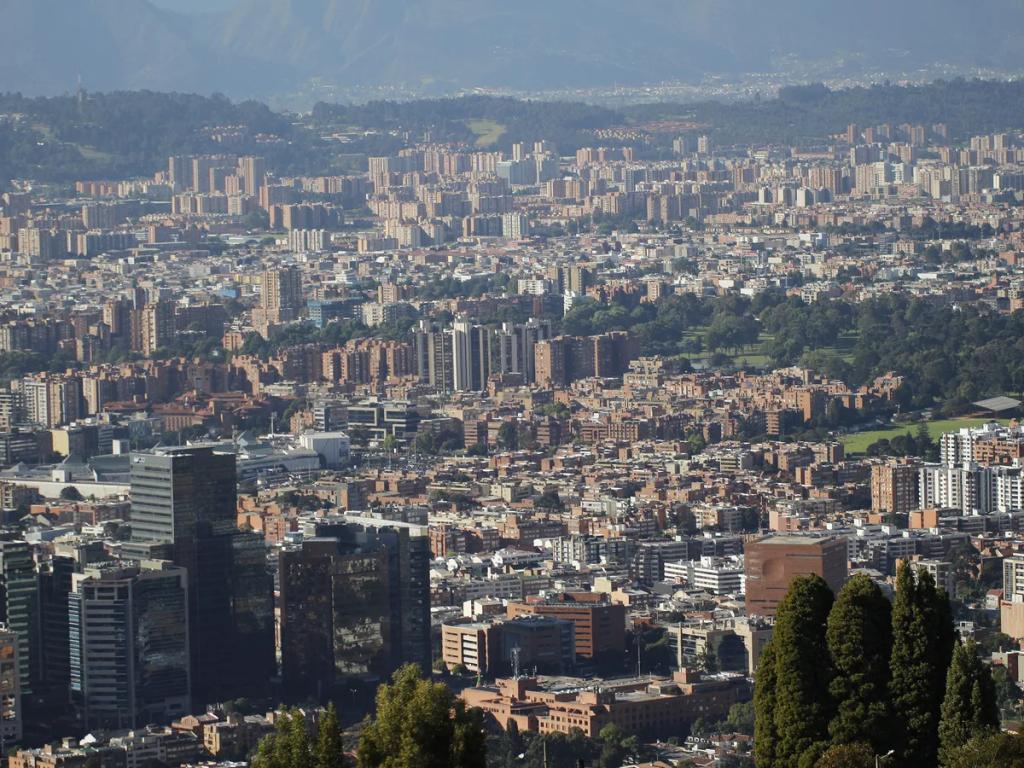
The city from Monserrate, reached by funicular or cable car, with Bogota spreading across the plateau below - go on a clear morning.
Ciclovia, on a Sunday, from a bridge over one of the closed avenues.
The Museo del Oro, whose collection of pre-Hispanic goldwork is among the finest museums in the Americas - the Muisca raft alone is worth the visit.
La Candelaria's painted colonial streets, particularly Calle del Embudo.
The Botero Museum, free, holding works the artist donated to the city along with his own collection of Picasso, Renoir and others.
Zipaquira's Salt Cathedral, a church carved 180 metres down inside a working salt mine.
Graffiti in La Candelaria and Chapinero, which is legal, commissioned and genuinely world-class.
Villa de Leyva, three hours north, a perfectly preserved colonial town with an enormous cobbled square.
Ciclovia has run since 1974 and is the model for open-streets programmes around the world. Roughly 120 km of roads, every Sunday, for over fifty years.
Bogota has more bike lanes than any other Latin American city - around 600 km of permanent infrastructure.
The Museo del Oro holds tens of thousands of pre-Hispanic gold objects, and the story of El Dorado comes from a Muisca ritual on Lake Guatavita just outside the city, where a chief was covered in gold dust and rowed onto the water.
Bogota is one of the highest capital cities in the world, at 2,640 m, and Monserrate above it stands at 3,152 m.
The Salt Cathedral at Zipaquira is carved inside a working mine, and around 3,000 people attend Mass there on Sundays.
And Colombian Spanish from Bogota is widely considered among the clearest in the Spanish-speaking world, which is why so many language schools are here.
Ciclovia, every Sunday and public holiday - weekly rather than annual, and the best thing about the city.
Rock al Parque, in June or July, one of the largest free rock festivals in Latin America, held in Simon Bolivar park.
The Ibero-American Theatre Festival, one of the biggest theatre festivals in the world, held in even years.
Christmas lights, from December, when the city illuminates on a considerable scale.
December to March is marginally drier. April, May, October and November are the wettest. There is no bad season and no good one - it is 8 to 19C regardless.
The love: Bogota is a serious city with an intellectual and cultural life that few visitors expect - superb museums, a genuinely excellent restaurant scene, world-class street art, a huge and free Sunday cycling ritual, and the Andes on the doorstep. It is cheap, the coffee is obviously exceptional, and Colombians are among the warmest hosts anywhere. La Candelaria is beautiful and Monserrate gives you the whole plateau at once.
The complaints are consistent. The weather disappoints everyone who packed for Colombia rather than for Bogota. The traffic is heavy and the city is enormous. The altitude flattens some visitors for a day. It is grey, and the afternoon rain is relentless in the wet months. Security awareness is a background tax on attention that some find wearing. And many travellers skip it for Medellin or Cartagena, which is a defensible itinerary and misses the country's best museums.
Come any month, take the first day slowly, be out on a bicycle by eight on Sunday morning, and give the Gold Museum a full morning.
Every Sunday and public holiday from 7am to 2pm, about 120 km of Bogota's main avenues close to cars and roughly 1.5 million people cycle, run and skate on them. It has run since 1974 and is the model copied worldwide. Plan around it in the sense that driving across the city is slow and some routes are shut - and then join it, because it is the best thing here.
8 to 19C every day of the year, with frequent afternoon rain and cold evenings in unheated buildings. Bogota is at 2,640 m and has no summer. Packing for tropical Colombia is the single most common mistake visitors make.
In the crush on TransMilenio at peak hours. Keep it in a front or inside pocket, not in your hand and not by the doors. The local principle is no dar papaya - do not present the opportunity - and it applies to walking with your phone out anywhere in the city.
Take the first day gently, drink more water than usual, and expect alcohol to hit harder. Our Cusco guide covers altitude properly. Bogota at 2,640 m affects people less than Cusco does, but arriving from sea level and going straight out for a heavy night is a poor plan.