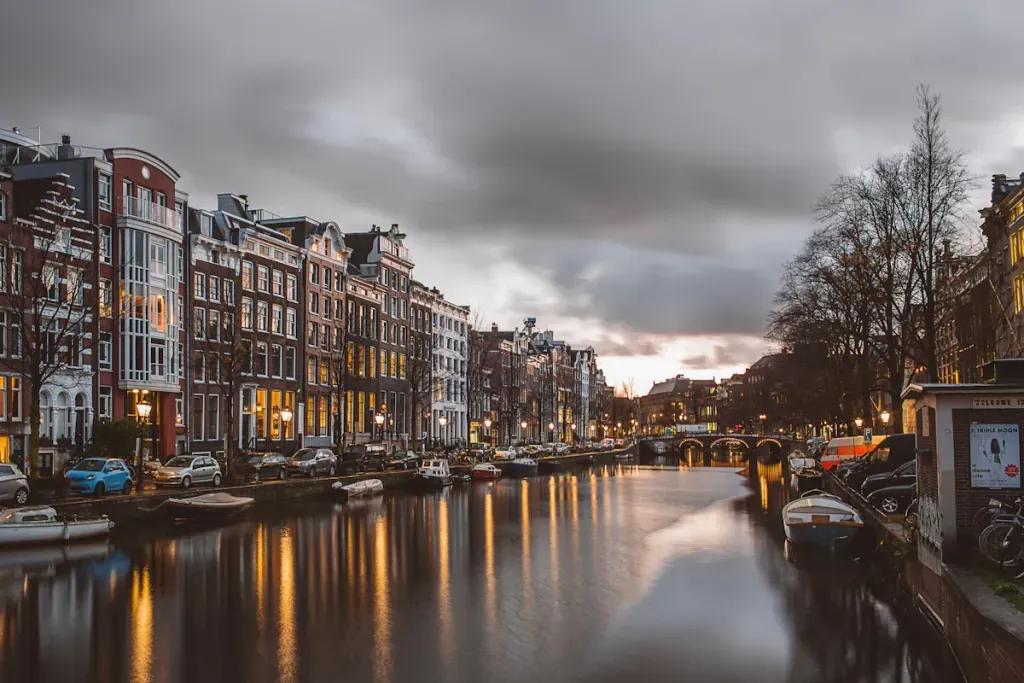
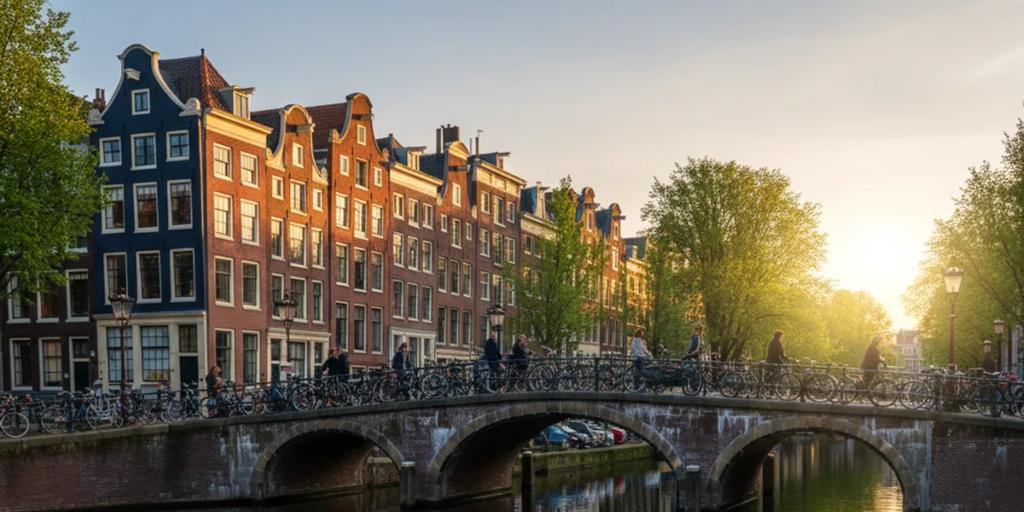
The Netherlands runs some of the most consistently fast mobile networks in Europe, and Amsterdam is where they show off. Your eSIM connects through one of the three national carriers - KPN, VodafoneZiggo, or Odido (the former T-Mobile Netherlands, rebranded in 2023) - and all three blanket the city with dense 4G and 5G. Canal belt, Jordaan, De Pijp, Noord across the IJ: it all just works.
Almost nowhere, honestly. Unlike most European capitals, coverage holds up in the metro, including the deep Noord/Zuidlijn stations, and on the train tunnels in and out of Schiphol. The genuine connectivity risks here are different ones: battery drain from a full day of navigation, and the law - using a phone in your hand while cycling is banned in the Netherlands and actively fined, so mount it or pull over. If you rent a bike, that rule applies to you.
- OVpay changed everything: every tram, metro, bus, and ferry in the city, plus NS trains nationwide, now takes a contactless bank card or phone wallet - tap in, tap out, done. No ticket machine, no transit card to buy. You still want data for 9292, the national journey planner that stitches together every operator's timetable.
- Anne Frank House tickets exist only online, released six weeks ahead every Tuesday at 10:00 Amsterdam time, and peak-season slots can vanish within hours. The Rijksmuseum and Van Gogh Museum are timed-entry too. Book from your phone the moment plans firm up; nothing is sold at the door.
- Bike rental is app-based at most modern shops and sharing schemes, with unlock codes and return confirmation happening on your screen.
- Tap-to-pay is near universal and plenty of places have gone card-only, so the classic arrival errand of finding an ATM is mostly obsolete here.
Schiphol to Amsterdam Centraal is a 15-20 minute direct train, and since OVpay you just tap the rail gates with the same bank card you flew in with. That ride is exactly when the accommodation directions, the "landed!" messages, and the first 9292 lookup hit your plan - so install and activate the eSIM before you fly rather than gambling on airport Wi-Fi with your luggage in hand.
Amsterdam trips are maps-and-photos heavy but translation-light (English is effectively a second language here). Navigation across the canal belt, 9292 lookups, museum ticket emails, and steady photo uploads fit comfortably in 1GB per 2-3 days for most people. Cyclists tend to use more, since turn-by-turn audio runs the whole ride. If you video-call home or post stories constantly, size up or top up from your dashboard mid-trip - and check your phone is eSIM-capable on our compatible devices list before you buy.
Layers, always. Amsterdam weather is a roulette wheel: a sunny morning can turn to sideways drizzle by lunch, any month of the year. Locals wear a waterproof jacket and simply bike through it - umbrellas lose to the wind here, which is why you rarely see one. Shoes should survive cobbles and pedals. Dress codes barely exist; smart-casual covers everything from canal-side dinners to the Concertgebouw.
The leaning canal houses of the Jordaan are best at golden hour, which lands luxuriously late in summer - shoot along Brouwersgracht or Bloemgracht with the water low in your frame to catch the reflection. The "dancing houses" on the Damrak want to be photographed from across the water by the station side. Two honest warnings: photographing the windows in the Red Light District is strictly forbidden, and enforced. And the "I amsterdam" letters were removed from Museumplein back in 2018, so skip that pilgrimage. Tulips are a day trip, not a city sight: Keukenhof blooms roughly mid-March to mid-May, while the floating Bloemenmarkt in town now sells mostly bulbs and souvenirs.
Those tilting facades are not subsidence - many canal houses were built leaning forward on purpose, so goods hoisted by the hook still visible on the gable would not scrape the front. The city has around 165 canals crossed by well over a thousand bridges, roughly triple Venice's count. And Schiphol, the entire airport, sits about four meters below sea level.
King's Day (27 April) is the one to plan around: the whole city becomes an orange street party and boat parade, and hotels fill months out. Pride's canal parade in early August is unique in the world - the floats are literally boats on the Prinsengracht. Amsterdam Light Festival strings art installations along the canals from late November into January, and Museumnacht opens dozens of museums until 2am on the first Saturday of November.
The love is real: a 17th-century canal ring you can wander for days, an absurd museum density, and the genuine freedom of seeing a city at bicycle speed. The complaints are real too. The center around Damrak and the Red Light District can feel crushed - the city government agrees, having run an actual "stay away" campaign aimed at party tourists in 2023 and levying Europe's highest tourist tax. Hotel prices sting accordingly. And pedestrians: bike lanes are not sidewalks, and stepping into one while staring at your phone is the fastest way to meet a local. Look twice, stay curious, and base yourself outside the core.
Yes, and unusually well. The metro network, including the deep Noord/Zuidlijn line, has coverage, and NS trains keep signal through the Schiphol tunnel. You can realistically navigate, message, and stream door to door, which is not something most European capitals can claim.
Yes. OVpay means every GVB tram, metro, bus, and ferry, plus NS trains across the country, accepts contactless tap-in and tap-out with a bank card, Apple Pay, or Google Pay. Just tap with the same card or device both times so the fare calculates correctly, and keep data handy for the 9292 journey planner.
Only if you need a Dutch phone number, which almost no visitor does. A data eSIM installed before you land gets you online the moment the plane's doors open, keeps your home number active for bank codes and WhatsApp, and skips the phone-shop errand entirely.