Rhodes is the biggest island in the Dodecanese and its mobile infrastructure reflects that: Greece's three carriers, Cosmote, Vodafone Greece and Nova, all run strong 4G here, with 5G concentrated around Rhodes Town. A travel eSIM connects through one of these as its local partner, and along the whole tourist geography - Rhodes Town, the east-coast run through Faliraki, Kolymbia and Tsambika down to Lindos, and the Ixia-Ialyssos hotel strip on the west - fast data is the default.
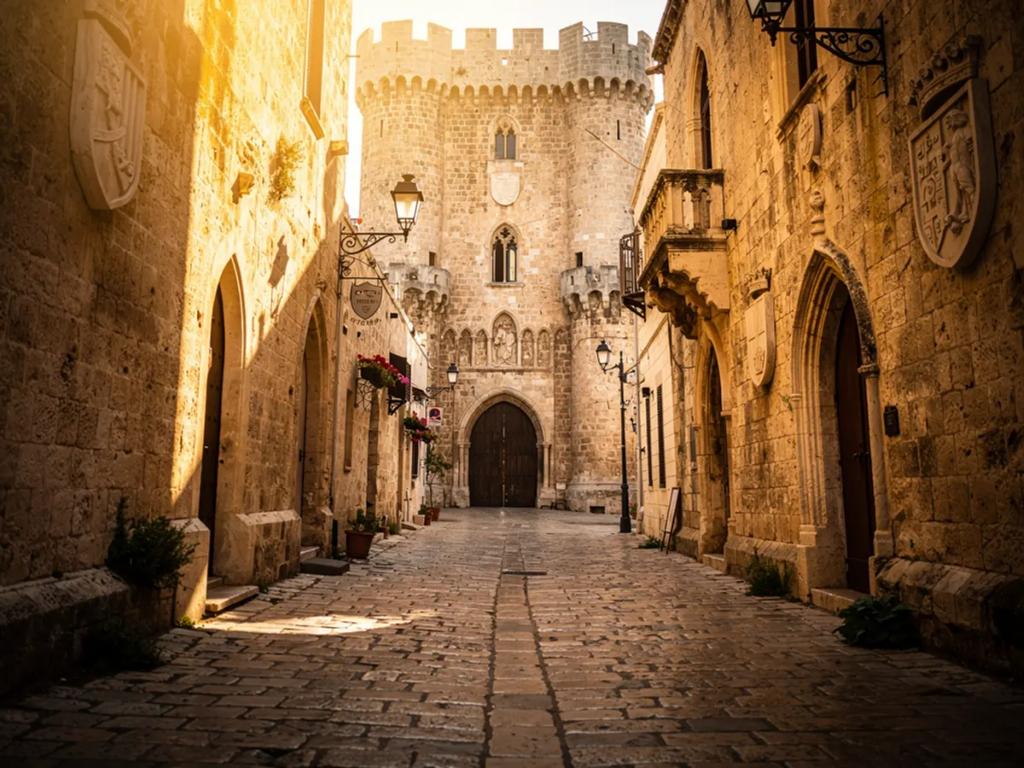
The exception is the very thing you came to see. The Knights of St John built the old town to survive cannon fire, and metres-thick stone walls, vaulted passageways and enclosed courtyards do to radio waves roughly what they did to Ottoman artillery. Out in the open lanes and squares you are fine; step into the Palace of the Grand Master, the Archaeological Museum or one of the covered arcades and your connection can vanish until you are back under open sky. Download an offline map of the walled town before you wander in - its unnamed alleys are exactly where you need navigation most. Elsewhere on the island, expect thinner service in the mountain interior around Embonas and on the empty far south toward Prasonisi.
Rhodes sits only about 18 km off the Turkish coast, and that proximity has a billing consequence: on the north and east shores, especially around Rhodes Town's beaches, a phone left on automatic network selection can quietly jump to Turkcell, Turk Telekom or Vodafone TR. Turkey is outside the EU and outside any Greece or Europe plan, so that silent hop can mean no data or surprise charges. The fix takes thirty seconds: switch off automatic selection and pin the connection to a Greek carrier for the length of your stay.
- Ride-hailing barely exists on Rhodes. Getting around means the town buses, the island-wide KTEL coaches, rental wheels, or taxis from ranks and phone dispatch - so screenshot your hotel address and keep the taxi rank locations saved offline.
- Bus timetables live online. Paper schedules are rare; routes and seasonal changes for the Lindos and airport coaches are published on the web, which makes checking the last bus back a data task.
- Timed e-tickets in high season. The Palace of the Grand Master and the Acropolis of Lindos sell tickets online, and buying on your phone while approaching the gate beats the midday queue.
- Cards work almost everywhere. Greek law obliges businesses to accept card payments, so tap-to-pay covers restaurants and shops; keep small cash for sunbeds, kiosks and the odd taverna in the hills.
- Ferry bookings. Day boats to Symi and the Marmaris crossing run on e-tickets and QR codes in summer.
Diagoras Airport sits about 14 km southwest of Rhodes Town near Paradisi. Buses run into the Mandraki area and taxis queue outside, and that first half hour - transfer confirmations, host messages, the map to your door - is peak data demand. Set the eSIM up at home and activate on landing rather than trusting arrivals-hall Wi-Fi.
Rhodes trips lean on navigation (the old town maze, coastal drives to Lindos) and photo uploads. Around 1GB per 2-3 days handles maps, messaging and social sharing for most people; double it if you stream by the pool or video-call home nightly. Top-ups are available mid-trip, and the Greece network comparison explains how the three carriers differ island by island.
Summer Rhodes is shorts-and-sandals territory, with three caveats. Monasteries and churches - Filerimos, Tsambika, the chapels inside the old town - expect shoulders and knees covered, so pack a light cover-up. The Lindos acropolis climb is steep, shadeless and paved in stone polished slippery by centuries of feet: grippy shoes, a hat and water, ideally before 10am or after 5pm in July-August. Do the climb on foot - the donkey taxis are under genuine animal-welfare scrutiny, with 100 kg load caps introduced in 2024. Evenings can turn breezy on the west side, so a light layer earns its spot.
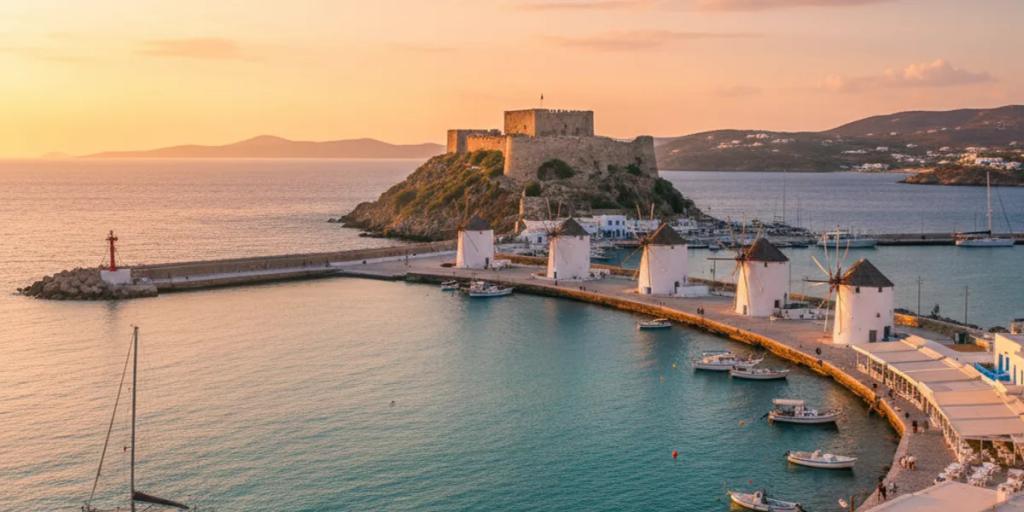
The Street of the Knights belongs to whoever shows up at dawn: before the cruise crowds it is empty cobbles and Gothic facades, best shot from the lower end looking up the slope. At Lindos, the postcard view of St Paul's Bay is from the acropolis walls - first entry or the final hour gives you soft light and room to stand. Anthony Quinn Bay's turquoise reads most intense under high midday sun from the rocky ledges above the water. Save sunset for Monolithos castle on the west coast, where the chapel frames the sea, or the three windmills at Mandraki harbour back in town.
The Colossus of Rhodes, one of the Seven Wonders, stood roughly 33 metres tall and collapsed in an earthquake around 226 BC - and no, it never straddled the harbour mouth: that image is a medieval invention, physically impossible in bronze. Today two columns at Mandraki topped by bronze deer, Elafos and Elafina, mark where legend planted its feet. The walled city itself is among Europe's largest inhabited medieval towns, a UNESCO site since 1988 with thousands still living inside. And those deer are no accident - Rhodes' fallow deer are a genetically distinct population and the island's emblem.
The Medieval Rose Festival brings costumed reenactments, music and sword play to the old town; it is active but its dates have moved around the calendar in recent years (the 2025 edition ran in October), so check the current programme. Greek Orthodox Easter, usually falling in April, is the emotional peak of the local year, with candlelit midnight services. August 15, the Assumption, marks the height of Greek high season - book beds, boats and tables well ahead that week.
The case for Rhodes: a medieval town that is genuinely lived in and turns magical once the day-trippers sail off, two coastlines that split the difference between calm sandy east and wild windy west, and a season that stretches from April to October. The case against is real too: Faliraki is wall-to-wall package tourism, restaurant touts along the old town's main drags can be relentless, cheap scooter and quad rentals feed a steady accident tally, and in July and August the meltemi wind can blast the west coast for days - windsurfers base themselves at Ixia for exactly that reason. Time your old-town evenings late and your Lindos mornings early, and the island's best side wins.
Because Turkey is about 18 km away and its towers reach across the strait. On automatic selection your phone may pick the strongest signal regardless of country, and a Turkish network is outside your Greece plan. Manually lock onto a Greek carrier in settings and the problem disappears.
In the lanes and squares, yes - coverage over the old town is good. Inside the Palace of the Grand Master, the museums and the vaulted passages, the fortress-grade stone can block signal entirely, so keep an offline map of the walled city and load tickets before you step inside.
No. Marmaris is in Turkey - roughly an hour by catamaran but a different country, outside the EU and outside Greece-only coverage. Plan an offline day, lean on cafe Wi-Fi over there, or add a Turkey eSIM before boarding; the Turkey network guide covers the options.