Ho Chi Minh City is a mega-city of roughly ten million people, and its mobile infrastructure is built to match. Viettel, VinaPhone and MobiFone lay dense 4G over every district, with 5G live across the center since late 2024, and data here is famously cheap by global standards. Your eSIM connects through one of these carriers, and in day-to-day use that means a solid connection from a rooftop in District 1 to a noodle stall deep in District 4. Vietnam switched off its 2G network in 2024, so whatever you connect to will be properly fast.
Honest weak points are few. The underground stations of the new metro are enclosed enough that your connection may pause between platforms, so queue up your route before the escalator. The one that actually matters: leave the city on a Cu Chi tunnels or Mekong Delta day trip and coverage thins along rural roads and on delta boats. It rarely vanishes, Viettel in particular reaches deep into the countryside, but download offline maps and booking confirmations before the minivan leaves District 1.
- Grab is the transport layer. GrabBike (you ride pillion, helmet supplied) is how locals cross town through traffic, and GrabCar handles airport runs and rainy nights. Fares are fixed in-app, which removes every negotiation. Be and the electric-taxi app Xanh SM are solid alternatives. All of them need live data on the street corner, which is exactly where hotel Wi-Fi cannot help you.
- Day trips book online. Cu Chi tunnels tours and Mekong Delta excursions are sold through operators and platforms with mobile confirmations, and pickups get coordinated over chat apps the morning of. A dead phone at 7am means a missed minivan.
- Local wallets, honest version: ZaloPay and MoMo QR codes hang at practically every stall, but both effectively require a Vietnamese bank account or number, so as a visitor you will live on cards and cash. International cards work in malls, chains and Grab; street food and markets remain cash country.
- Google Translate earns its place the first time a street-food menu offers you six dishes in Vietnamese only. Camera mode is the difference between pointing at random and getting the bun thit nuong you actually wanted.
From Tan Son Nhat airport, Grab and taxis take 20-45 minutes to District 1 depending on traffic. The bigger news: after nearly two decades of construction, Metro Line 1 opened in December 2024, running 14 stations from Ben Thanh past the Opera House out to Suoi Tien. Fares are tiny (roughly 7,000-20,000 VND), trains run from early morning to late evening, and you tap in with a contactless Visa or Mastercard or a QR ticket from the HCMC Metro app. It does not serve the airport, but it is now the pleasant, air-conditioned way east.
More than a compact European city break. You will lean on Grab several times a day, keep maps running because blocks are long and the heat punishes wrong turns, translate menus, and message tour pickups. Around 1GB per two days is a realistic floor; heavy Grab users and story-posters should budget more, and the Vietnam eSIM comparison breaks down plan sizes and the host networks in detail. Top-ups take a minute from your dashboard if the city outpaces your estimate, and it usually does.
Breathable everything: linen and loose cotton beat technical fabrics in this humidity. In the rainy season carry a moto-style poncho, the kind every rider here wears, because downpours arrive in minutes and drench in seconds. Temples like the Jade Emperor Pagoda and Thien Hau expect covered shoulders and knees. Bring one warm-ish layer for malls and cinemas, where the air conditioning is set to arctic. And wear closed, grippy shoes: District 1 pavements are an obstacle course of parked bikes, broken slabs and food stalls.
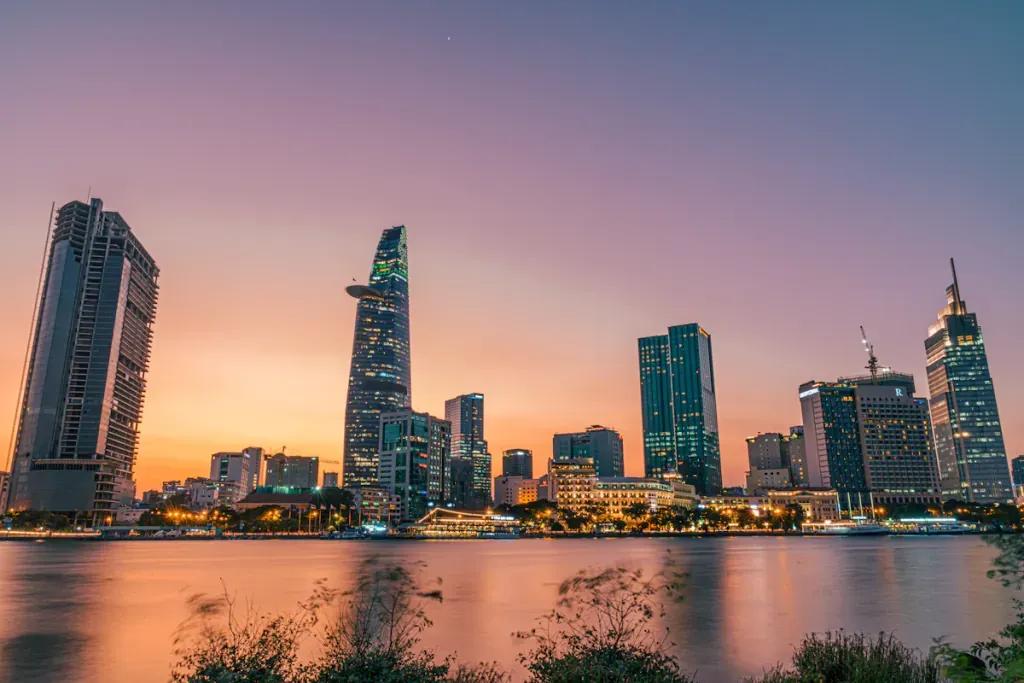
For the skyline with the Bitexco tower's helipad fin, shoot from the Thu Thiem riverside across the Saigon River at blue hour, or pay for the Landmark 81 SkyView deck, the tallest building in Vietnam, and get the whole sprawl at once. The Central Post Office interior wants a wide shot down the barrel of the arched hall soon after opening, before tour groups fill it. Catch Ben Thanh market's clock tower at dawn while the streets are still empty of bikes. The Cafe Apartment at 42 Nguyen Hue, a whole retired apartment block stacked with cafes, is best from across the pedestrian street with every balcony lit at dusk. Bui Vien at night is neon chaos and makes no apology for it. On a Cu Chi day trip, the tunnel-crawl shot needs a flash or a friend's torch.
Everyone still says Saigon, and both names are fine in conversation: the city was officially renamed Ho Chi Minh City in 1976, but the river, the beer, and the airport code (SGN) never got the memo. The city has over seven million registered motorbikes, likely more in practice. Vietnam is the world's largest exporter of robusta coffee, which is why ca phe sua da hits so hard; egg coffee, though, is a Hanoi invention, so order it there for the original. And the Cu Chi tunnel network ran to roughly 250 kilometers, an underground city within day-trip reach.
Tet, the Lunar New Year (movable, late January or February), transforms Nguyen Hue into a flower street, and honesty requires saying the rest: much of the city closes for several days, so book food and transport ahead. Reunification Day on April 30 brings parades and fireworks, and the 50th anniversary in 2025 was enormous. Mid-Autumn Festival (September or October) fills Cholon's lantern street with light. Christmas is a surprisingly big deal here, celebrated as a secular street party around the downtown churches.
The love: an absurd density of great, cheap street food, a coffee culture that rewards sitting still, energy at every hour, and value that stretches any budget. The gripes are just as real: the motorbike swarm is genuine sensory overload for the first day or two, rainy-season downpours can flood pockets of streets ankle-deep, pavements double as parking so walking is a slalom, and phone snatching from the curb does happen, so use your phone a step back from the road edge, facing away from traffic. Cross streets at a slow, steady pace and the river of bikes parts around you; it really does work.
Above-ground sections, most of the line out to Suoi Tien, have normal coverage. In the underground downtown stations expect the connection to dip or pause, so load tickets, routes and anything critical before heading down. Rides are short enough that it is a minor annoyance, not a problem.
Ho Chi Minh City's cafes hand out Wi-Fi passwords freely and speeds are decent, but the moments you most need data here, hailing a GrabBike from a curb, navigating between districts, coordinating a 7am tour pickup, all happen on the street. Treat cafe Wi-Fi as a nice bonus for uploading photos, not as your plan.
Only if you want a Vietnamese number for local wallet apps like MoMo, which need local registration anyway. Physical SIMs require passport registration at a shop, and airport counters charge tourist markups. For data, an eSIM installed before you land means Grab works from the arrivals curb.