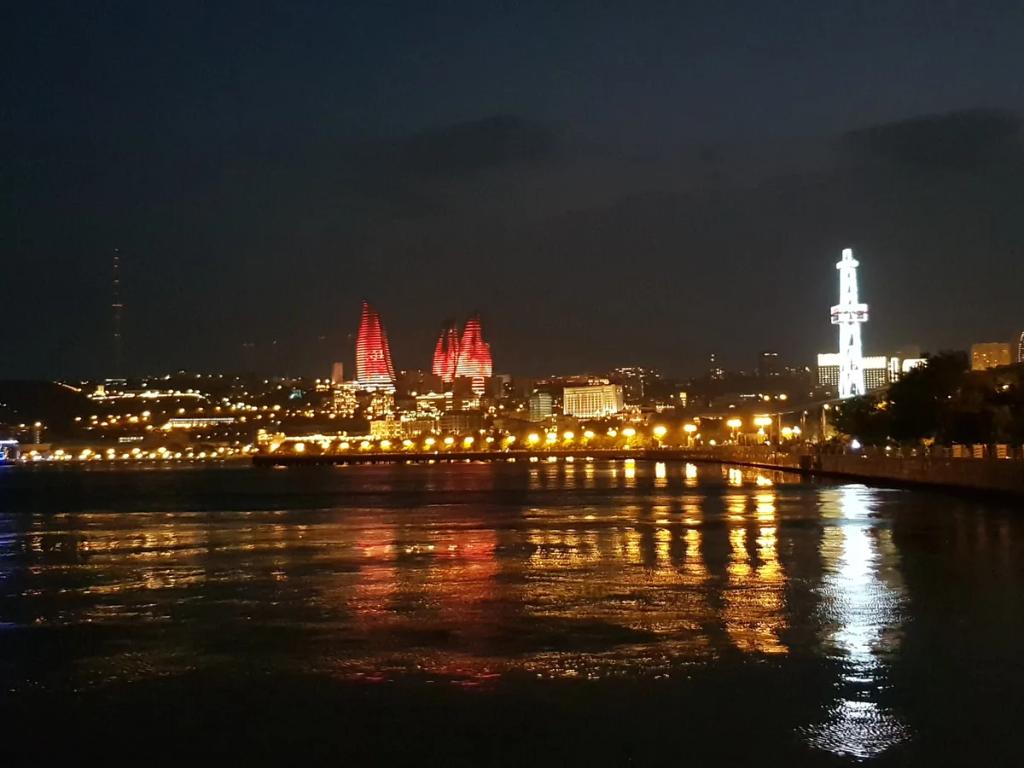
Baku is a city of two signal environments. The modern crescent along the Caspian - the Boulevard, Fountains Square, the Flame Towers district - has solid 4G from all three Azerbaijani networks (Azercell, Bakcell, and Nar), and your eSIM rides one of these as its host network. The moment you leave the capital for a day trip, though, coverage becomes something you plan around rather than assume.
Inside Icherisheher, the UNESCO-listed walled Old City, thick stone walls and narrow lanes around the Maiden Tower can knock your connection down a notch or two - it recovers in open squares and along the wall perimeter, so a stalled map usually just means walking a few meters. The Baku Metro is the bigger gap: mobile coverage exists at many stations, but the deep Soviet-era tunnels between them are unreliable, so load your route and anything else you need before you descend. And the classic day trips are honest dead zones: Gobustan's petroglyph sites and the mud volcanoes sit in open desert where the final rough track has little to no signal, and mountain roads toward Sheki and Gabala drop out in stretches. Download offline maps for anything outside the city - this is not a place to navigate on faith.
- Bolt is how Baku moves. Unmetered curbside taxis are the classic tourist overcharge here, and Bolt quotes the fare upfront - but it needs data the second you step out of arrivals.
- BakıKart is the metro and bus card; you can buy a physical card at stations, and QR ticket payment through the BakıKart app works at metro turnstiles. Contactless foreign bank cards now work on Baku buses and are being rolled out in the metro, but do not count on tap-to-pay at every gate yet.
- Google Translate with camera mode is close to essential. Azerbaijani and Russian dominate, and English thins out fast beyond upscale hotels and central restaurants - menus, signs, and marshrutka destinations all go through your camera.
- WhatsApp is how guesthouse hosts, drivers, and tour operators will actually reach you, especially when arranging Gobustan or Sheki trips.
From Heydar Aliyev Airport, the H1 Aerobus express runs to the city center around the clock, and Bolt covers the same run for a fixed in-app fare. All three local operators have kiosks in the terminal, but they come with passport registration and a queue - with the eSIM installed before you fly, you are ordering the Bolt while everyone else is still holding documents at a counter.
Baku trips are translation-heavy and Bolt-heavy, which are both light on data, plus maps in the Old City maze and the usual photo uploads of the Flame Towers at night. For most travelers 1GB per 2-3 days is comfortable; budget more if you video-call home or spend evenings streaming. If you are here for the Formula 1 weekend, expect slow speeds in the densest circuit crowds no matter which network you are on - that is congestion, not coverage. The Azerbaijan eSIM guide covers plans and the wider country in more detail.
Baku proper is secular and dresses sharply - normal city clothes are fine everywhere, and you will feel underdressed in flip-flops on Nizami Street before you feel overdressed. Pack modest cover for mosque visits (shoulders and knees, a headscarf for women at Taza Pir or Bibi-Heybat). The non-negotiable is a windproof layer in every season: they call this the City of Winds for a reason, and the khazri turns a mild day cold in minutes. Add solid shoes for the Old City's polished stone lanes.
The Flame Towers shot is taken from Highland Park by the funicular's upper station - arrive before dusk and wait for the LED skins to start their fire animation, with the Caspian behind you. Shoot Icherisheher and the Maiden Tower in the morning, before tour groups fill the lanes and while the low sun rakes the sandstone. At the Heydar Aliyev Center, get low and wide against the curves - the white shell against a blue sky needs no filter. The Boulevard delivers easy Caspian sunsets. Leave the drone at home: importing one requires prior government authorization, and customs routinely holds unpermitted drones at the airport.
Baku sits around 28 meters below sea level, making it the lowest-lying national capital on Earth. Azerbaijan holds roughly a third of the world's mud volcanoes by most counts (some estimates go higher), and dozens of them gurgle within a day trip of the city. And the Nobel brothers built their oil empire here in the 1870s - Baku crude money is part of the fortune that later endowed the Nobel Prizes.
The Formula 1 Azerbaijan Grand Prix takes over the city center each September - the 2026 race weekend runs September 24-26, with the race itself on Saturday the 26th - and the circuit literally wraps around the Old City walls, so hotels spike and central streets close. Novruz, the spring equinox festival in late March, is the big one for locals: bonfires, street festivities, and nearly a week of public holidays. Book ahead for either window; the rest of the calendar is easy.
The rave is real: Baku is safe, walkable, and affordable by European standards, and the collision of a medieval walled city, oil-boom Beaux-Arts mansions, and Zaha Hadid curves within one stroll is genuinely unlike anywhere else. The complaints are real too: unmetered taxis outside Bolt still play games with tourists, the wind can flatten a whole day's plans, English gets thin fast beyond the center, and beneath the cosmopolitan surface the society runs conservative - LGBTQ+ travelers in particular tend to keep a low profile. Come for the architecture and the Boulevard; keep Bolt installed.
Only if you use a local SIM beyond roughly 30 days - Azerbaijan requires foreign devices on local SIMs to have their IMEI registered (for a fee), and unregistered phones eventually get blocked from the local networks. A travel eSIM sidesteps the whole system for a normal trip: no registration, no countdown, and your phone needs nothing more than eSIM support.
Partly. Stations increasingly have coverage, but the deep tunnels between them are patchy, so treat the metro as offline: load your route, your BakıKart QR, and any directions before the escalator. Rides are cheap and the stations themselves - Nizami especially - are worth the trip.
Hotels and central cafés are fine, but public Wi-Fi is sparse exactly where you need it: hailing a Bolt curbside, translating a menu, or navigating Icherisheher's lanes. Install your eSIM before you land and Wi-Fi becomes a bonus rather than a dependency.