Las Fallas 2027: Dates, What to Expect & Staying Connected
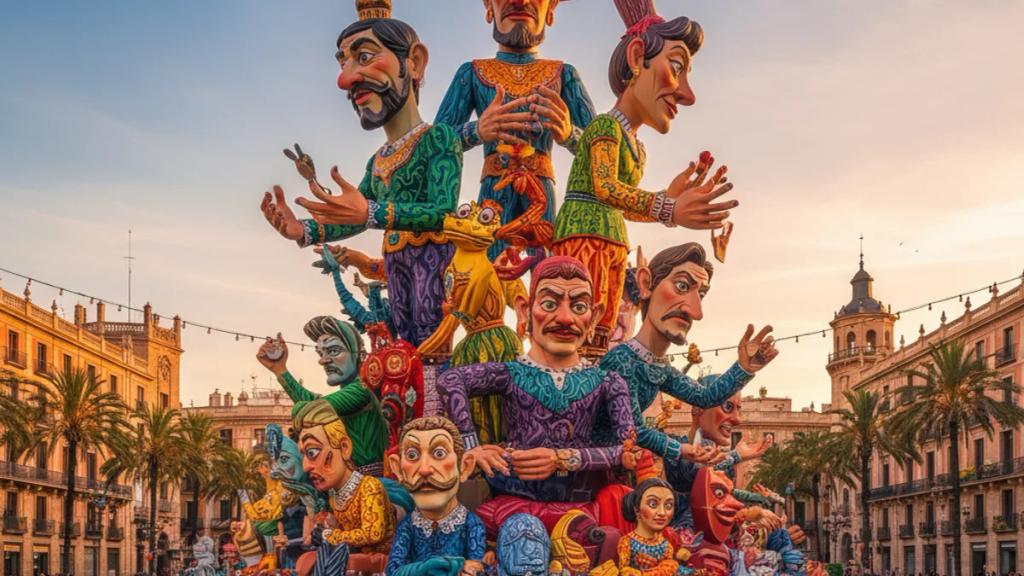
Las Fallas 2027 peaks from 15 to 19 March in Valencia - the same fixed dates every year - with daily 2pm mascletas thundering from 1 March. It is Spain's loudest festival and one of Europe's strangest: neighbourhoods spend a year building 700+ satirical monuments, plant them at every major intersection, then burn all of them on the final night, La Crema. The dates never move (confirmed on Visit Valencia), the streets close everywhere, and the network buckles exactly when you are navigating between burning sculptures at midnight. Here is the real experience and the connectivity plan - a Spain eSIM from €3.07 is the cheap part of the trip.
When exactly is Las Fallas 2027?
The main festival runs Monday 15 March to Friday 19 March 2027 - Las Fallas always ends on 19 March, the feast of San Jose, so you can book years ahead. The build-up starts earlier: from 1 March, a mascleta (a daytime firecracker concert - more below) fires every day at 2pm sharp in Plaza del Ayuntamiento.
How the main week unfolds:
- 15-16 March, La Planta: the monuments (fallas) go up overnight at hundreds of intersections.
- 17-18 March, the Ofrenda: falleras in traditional dress parade for hours to build a giant flower tapestry of the Virgin - the most photogenic (and most crowd-locked) daytime event.
- Night of 18 March, Nit del Foc: the festival's biggest fireworks display, after midnight by the old riverbed.
- 19 March, La Crema: children's fallas burn from around 8pm, the big ones from roughly 10pm, the municipal falla in Plaza del Ayuntamiento last, around 1am.
If you can only come for part of it, come for the 18th and 19th - and book accommodation months ahead, because the city fills far beyond capacity that week.
What should a first-timer actually expect?
A city that stops functioning normally and does not apologise for it. Everything on the street is free - monuments, mascletas, fireworks, parades. What costs money is everything around it: hotels at their highest rates of the year, restaurants fully booked near the centre, grandstand mascleta seats that sell out early.
Be honest with yourself about the noise and the crowds. Firecrackers go off constantly, everywhere, from early morning - thrown by kids, sold on corners, embedded in daily life. Plaza del Ayuntamiento packs solid well before the 2pm mascleta, the Ofrenda route is shoulder-to-shoulder for hours, and near the centre you will not sleep much. The reward: nothing else in Europe looks like a five-storey satirical sculpture collapsing into its own bonfire while a brass band plays - UNESCO listed the festival as Intangible Cultural Heritage in 2016. And eat the bunuelos de calabaza (pumpkin fritters) with hot chocolate - the festival breakfast.
Why does your phone struggle at Las Fallas?
Two reasons, on two scales. First, the daily 2pm mascleta: tens of thousands of people compress into Plaza del Ayuntamiento and the streets feeding it, all messaging "where are you?" off the same few cell sectors. For half an hour either side of the firing, data crawls and calls drop in the centre.
Second, and unique to this festival: La Crema on the 19th is a distributed event. More than 700 monuments burn across every neighbourhood in the same few hours, and the crowd does not gather in one place - it flows between burn sites all night. Navigating falla to falla is a live-map exercise performed simultaneously by hundreds of thousands of people, on streets that are closed, rerouted, or blocked by fire crews. That is the worst load pattern a network can face: everyone moving, everyone navigating, everyone streaming fire videos.
What actually works:
- Download offline maps of Valencia before the 19th - a cached route works when data dies.
- Screenshot the fallas map (Visit Valencia publishes the top monuments' locations) so the plan survives a dead connection.
- Texts and voice notes beat calls under congestion - small payloads squeeze through.
- Agree physical meeting points per neighbourhood before splitting up; live location sharing is exactly what will not work at 11pm on the 19th.
- Upload the fire videos from your accommodation Wi-Fi, not the street.
What is the best connectivity setup for Las Fallas?
A Spain eSIM installed before you fly. Roaming day passes bill you daily for the same congested signal, and hunting for a SIM shop during Fallas week - with half the centre behind street closures - is not a plan. A prepaid Spain eSIM puts your data on a Spanish host network at local rates:
| Data | Duration | Price |
|---|---|---|
| 3GB Data | 15 Days | €3.11 |
| 5GB Data | 30 Days | €4.67 |
| 10GB Data | 30 Days | €8.41 |
| 20GB Data | 30 Days | €15.13 |
| 50GB Data | 30 Days | €34.05 |
| 1 Day | 1 Day | €3.07 |
| 2 Days | 2 Days | €6.14 |
| 3 Days | 3 Days | €9.21 |
| 4 Days | 4 Days | €12.07 |
| 5 Days | 5 Days | €15.31 |
| 6 Days | 6 Days | €18.55 |
| 7 Days | 7 Days | €21.79 |
| 8 Days | 8 Days | €23.41 |
| 9 Days | 9 Days | €25.84 |
| 10 Days | 10 Days | €27.46 |
| 11 Days | 11 Days | €29.89 |
| 12 Days | 12 Days | €32.32 |
| 13 Days | 13 Days | €33.94 |
| 14 Days | 14 Days | €35.56 |
| 15 Days | 15 Days | €37.99 |
| 16 Days | 16 Days | €39.61 |
| 17 Days | 17 Days | €40.42 |
| 18 Days | 18 Days | €42.04 |
| 19 Days | 19 Days | €44.47 |
| 20 Days | 20 Days | €46.09 |
| 21 Days | 21 Days | €47.71 |
| 22 Days | 22 Days | €48.52 |
| 23 Days | 23 Days | €49.33 |
| 24 Days | 24 Days | €50.14 |
| 25 Days | 25 Days | €50.95 |
| 26 Days | 26 Days | €51.76 |
| 27 Days | 27 Days | €52.57 |
| 28 Days | 28 Days | €53.38 |
| 29 Days | 29 Days | €54.19 |
| 30 Days | 30 Days | €55.81 |
Install the QR code at home on Wi-Fi, switch it on when you land, and your home number stays live on dual SIM for calls and bank codes while data runs locally - so the metro app, restaurant bookings, and the fallas map work the moment you arrive.
A Fallas trip is heavy on maps, translation, and video - five nights of burning monuments generates more footage than most two-week holidays. Estimate your needs:
How do you get around Valencia during Fallas?
Do not bring a car anywhere near the centre - streets close progressively from mid-March, and on the main days the historic centre is effectively pedestrianised, with bus routes cut or diverted. The metro is the workhorse: lines 3 and 5 run from the airport to the centre in roughly 25 minutes, with extended service on the biggest nights.
On foot is how you will experience most of it anyway - the monuments are scattered across neighbourhoods like Ruzafa and El Carmen, and wandering between them is the festival. Wear shoes you can stand in for hours, expect any walk across the centre to take twice as long as the map says, and know that taxis cannot cross the closed zones.
How loud is it really - and can you bring kids?
Genuinely, brutally loud. A mascleta is not a fireworks show, it is a percussion concert of gunpowder - around 120 decibels in the plaza, pain-threshold territory. Bring proper earplugs as equipment, not a nicety; locals open their mouths slightly during the firing to equalise pressure, and children near the front wear ear defenders. If loud noise is a hard limit, watch from several streets back - you will feel it in your chest anyway.
That said, Fallas is a family festival at heart: every falla has a children's version, kids parade in traditional dress, and the daytime programme is family-friendly. Accommodation away from the centre buys sleep, and the children's fallas burning around 8pm on the 19th is the family slice of La Crema before the late-night main event.
The bottom line
Las Fallas 2027 runs 15-19 March - fixed dates, free to watch, daily 2pm mascletas from 1 March. Book beds early, pack real earplugs, cache offline maps before La Crema, and land with connectivity sorted: a Spain eSIM from €3.07 installed at home means the fallas map, the metro app, and your group chat work from the moment you arrive - even with 700 fires and a whole city's phones competing for the network.
What dates are Las Fallas 2027?
The main festival runs 15-19 March 2027 - Las Fallas always ends on 19 March with La Crema, so the dates are the same every year. Daily 2pm mascletas in Plaza del Ayuntamiento start on 1 March.
Is Las Fallas free to attend?
Yes - the monuments, mascletas, parades, fireworks, and La Crema are all free public events in the street. You pay for accommodation at peak-season rates, food, and optional extras like grandstand mascleta seats, which sell out well in advance.
Will my phone work during La Crema?
Expect slow data and failed calls in the busiest areas on the night of 19 March, when huge crowds move between 700+ burn sites at once. Download offline maps and the fallas locations beforehand, use texts instead of calls, and agree physical meeting points with your group.
How loud is the mascleta?
Around 120 decibels near Plaza del Ayuntamiento - physically uncomfortable and risky for unprotected hearing. Bring earplugs, keep small children further back with ear defenders, and if you are noise-sensitive, watch from a few streets away.
How much data do I need for a Las Fallas trip?
A five-day trip with constant maps, messaging, translation, and heavy photo and video capture typically lands around 3-8GB - more if you upload fire videos on the spot rather than on Wi-Fi. A fixed-data Spain eSIM from €3.07 can be topped up if La Crema footage gets out of hand.
Land in Valencia already online
A Spain eSIM from eSIMpass installs before you fly - local-rate data on a Spanish network for the whole festival, your home number kept via dual SIM, and top-ups if the fire videos add up.
Get Your Spain eSIM