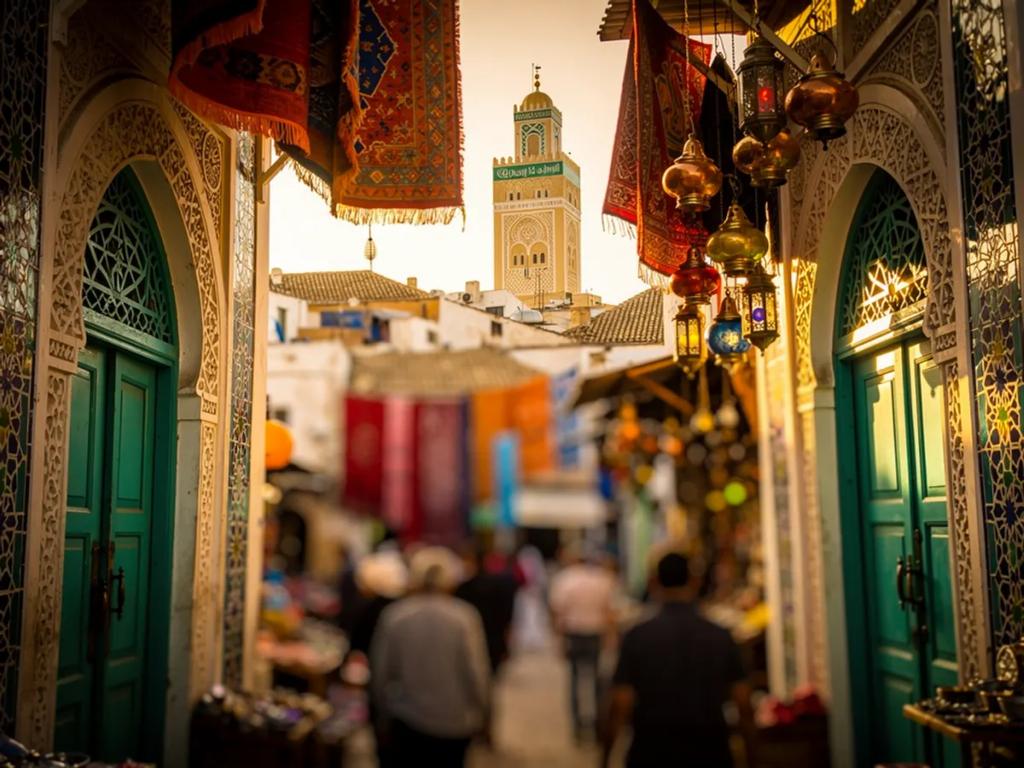
Tunis runs on three mobile networks - Ooredoo, Orange Tunisie and Tunisie Telecom - and your eSIM connects through one of them. In the capital that means dependable 4G across the ville nouvelle, the medina's edges, and the whole coastal corridor the TGM train follows: La Goulette, Carthage, Sidi Bou Said and La Marsa. 4G is the workhorse here; 5G is only just arriving in Tunisia, so do not plan around it. For a day of maps, messaging and photo uploads, the city and its seaside suburbs simply work.
The honest exception is the heart of the medina. Its covered souks are effectively stone tunnels - vaulted ceilings, meter-thick walls - and mid-souk your bars can sag to almost nothing. The fix is built into the architecture: signal returns at every open courtyard, rooftop terrace and square, so load your walking route before you dive in and re-sync when you surface. Out at the Carthage ruins and on the Sidi Bou Said clifftop, coverage is strong; both are dense with antennas because they are dense with residents.
- Ride apps changed recently: Bolt no longer works in Tunisia - the government shut it down in May 2025 - so do not land expecting it. Locals now use Yassir and inDrive in Tunis, and both need data to book. Yellow city taxis are everywhere and cheap; insist on the meter ("compteur") and expect small rounding.
- The TGM train to Carthage, Sidi Bou Said and La Marsa is a paper-ticket, cash-at-the-window operation - no contactless gates, no app. Fares are pocket change; keep coins handy.
- Translation earns its data in Tunis. Arabic and French carry the city and English is genuinely patchy, so Google Translate (plus its offline French and Arabic packs) gets daily use.
- Cash still rules. Cards are accepted at hotels, malls and bigger restaurants, but the medina, taxis, louages (intercity shared vans) and the TGM are cash territory - your data goes on finding the next reliable ATM.
Tunis-Carthage airport sits barely 8 km from downtown, so arrival is quick - the game is the taxi rank, where "broken meters" and inflated flat rates target fresh arrivals. Working data lets you check the route, book a Yassir, or calmly insist on the meter knowing the fair ballpark. There is no metro or rail link from the terminal, so a working phone is the arrival tool. Install your eSIM before you fly and skip the airport SIM kiosk queue entirely.
Tunis is a maps-and-translation city: the medina's lanes demand constant navigation, menus and signs invite the translate camera, and Sidi Bou Said will flood your camera roll. For most travelers 1GB per 2-3 days covers it comfortably; budget more if you video-call home or upload every mint tea terrace. Day trips (Carthage, La Marsa, or the long run to El Jem) ride on the same national networks, so no extra planning needed - just check your phone is eSIM compatible before the trip.
Tunis is a secular-leaning capital and downtown dress is relaxed, but the medina and its mosques expect modesty - covered shoulders and knees for everyone. At the great Zitouna Mosque, non-Muslims are admitted to the courtyard only, so dress for it rather than around it. Out at La Marsa and Gammarth, beach clubs are as relaxed as anywhere on the Mediterranean. Whatever the season, wear flat shoes with grip: the medina's polished cobbles and Sidi Bou Said's steep lanes punish slick soles. Summer demands a hat; winter, a rain layer.
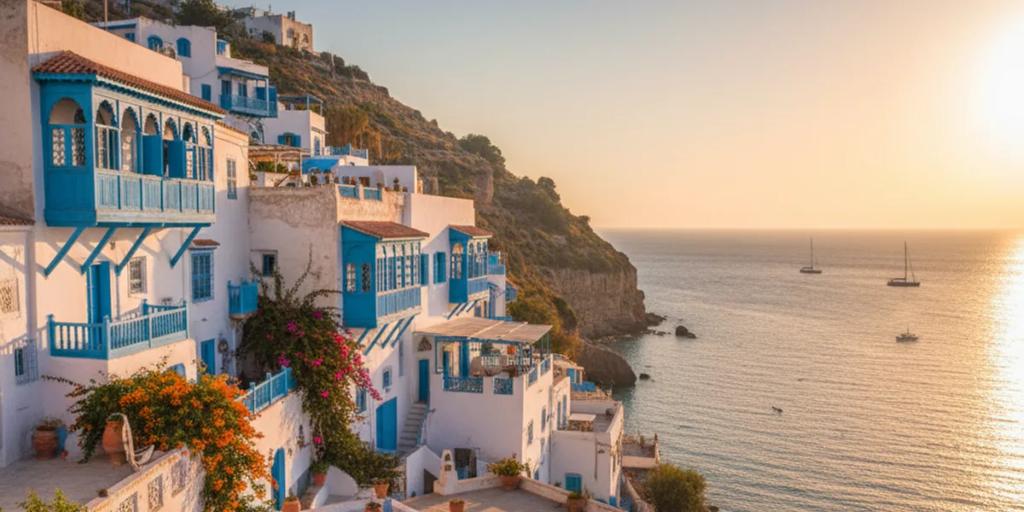
Sidi Bou Said's blue doors and bougainvillea are best mid-morning, before the tour buses crest the hill - shoot the doorways straight-on and let the white walls bounce light into your face. At Carthage, the Antonine Baths give the signature frame: stand with the columns in the foreground and the Mediterranean filling the background, best in late-afternoon light. In the medina, find a rooftop terrace cafe near the Zitouna Mosque and shoot the minaret over the rooftops. The Bardo's mosaics are an indoor rainy-day win. And the famous El Jem amphitheatre? That is a three-hour day trip, not a Tunis shot.
Carthage was Rome's great rival - the Punic Wars ended with the city razed in 146 BC, then Rome rebuilt it as the capital of its Africa province, which is why the ruins under Tunis's suburbs are Roman. The Bardo Museum holds one of the world's largest collections of Roman mosaics. And Star Wars' desert planet Tatooine was filmed in southern Tunisia and named after the real town of Tataouine.
The Carthage International Festival fills July and August, staging concerts in the ancient Roman theatre at Carthage - a 7,500-seat venue in use since antiquity. Jazz à Carthage usually lands in spring, around April, across the Carthage-Gammarth coast; dates shift yearly, so check the current program. Ramadan and Eid move with the lunar calendar and transform the medina - quiet days, then nights that hum until late. Sidi Bou Said also hosts its traditional kharja, a Sufi procession, typically in summer.
The love: nowhere else layers Punic, Roman, Arab and French history this casually - you ride a suburban train to Carthage - and the cafe-on-a-cliff life at Sidi Bou Said costs a fraction of its Amalfi lookalikes. The gripes are real too: airport taxi meter games are a rite of passage, touts around the Zitouna steer visitors toward "closed souk" detours ending in a carpet shop, and English is thin enough that travelers without French work harder. Infrastructure has its quirks, and occasional protests can snarl downtown. Come curious and slightly streetwise, and the ledger tilts firmly positive.
Mostly, with caveats. The open lanes and squares are fine, but the covered souks are vaulted stone tunnels and signal drops noticeably inside them. Load your route before entering; it recovers at every courtyard and rooftop.
Carry cash. Hotels, malls and upscale restaurants take cards, but the medina, taxis, the TGM and louages are cash-only in practice. Note that the dinar is a closed currency - you cannot legally bring TND in or out of Tunisia - so exchange as you go and keep receipts to convert leftovers back before departure.
Only if you need a Tunisian phone number. Buying a local SIM means a passport-registration stop at an Ooredoo, Orange or Tunisie Telecom shop; for data alone, an eSIM installed before landing skips the queue and keeps your home number live for bank codes and WhatsApp.