Sharm el-Sheikh sits at the well-connected end of Egypt. All four Egyptian networks - Vodafone, Orange, Etisalat and WE - cover the resort strip with solid 4G, and your eSIM rides one of them as its host network. In practice that means reliable data everywhere the town actually happens: Naama Bay, the Old Market at Sharm El Maya, Hadaba, SOHO Square and the Nabq hotel zone near the airport. Sharm is a resort town strung along one coastal road, and the towers follow the hotels.
Egypt restricts internet voice calls. Calls over WhatsApp, FaceTime and similar apps are often blocked or badly degraded on Egyptian mobile networks, and because a travel eSIM connects through those same local networks, it does not reliably get around this. Some travelers find calls connect intermittently or work on certain hotel Wi-Fi; do not build plans on it. Everything else works fine: WhatsApp text, photos, videos and voice notes all flow normally, and a back-and-forth of voice notes is the local substitute for a call.
Sharm's hotels are heavy on all-inclusive packages and light on bandwidth. At many resorts the free Wi-Fi is genuinely usable only in the lobby and main bar; in-room coverage is often weak, capped to one device, or sold as a paid upgrade. That is fine for an evening scroll and useless for the rest of the day, so your own data connection ends up carrying the trip - the poolside WhatsApp coordination, the excursion booking, the restaurant lookup in Naama Bay at night.
This is the honest part: Sharm's best days out are its worst for signal. Quad-bike and Bedouin-dinner excursions head straight into the Sinai desert, where coverage fades within minutes of leaving the road, and day trips deeper into Sinai run through long stretches of nothing. Ras Mohammed National Park at the peninsula's tip is patchy at best, and once a dive boat moors out at the Tiran reefs or the Ras Mohammed walls, treat the whole day as offline. Download offline maps, booking confirmations and any entertainment the night before, tell people you will be dark until evening, and let the reef have your full attention.
Sharm el-Sheikh airport is small and arrivals are straightforward, but expect to be offered SIM cards - persistently - between baggage claim and the exit. Local SIMs require passport registration at purchase, and airport pricing is aimed at people with no alternative. With the eSIM installed before you fly, you connect while everyone else is handing over passports. You will want data immediately: there is no meaningful public transport, so it is hotel shuttles and taxis, and taxi fares are negotiated before you get in - knowing where your hotel is and what the ride should cost is worth real money in that first conversation. Keep cash too: resorts take cards, but taxis and the Old Market run on Egyptian pounds.
A resort-and-reef trip is lighter on maps than a city break but heavier on everything social: all-day messaging and dive photo uploads. Because hotel Wi-Fi underdelivers, your plan carries more of the load than you might expect - 1GB per 2-3 days covers a messaging-and-photos trip, but size up if you hotspot a laptop or upload every dive. Check your phone is eSIM-compatible before you buy, and top up from your dashboard if the trip outruns the estimate.
Two dress codes coexist a few kilometers apart. Inside the resorts and on the beaches, anything goes - swimwear, shorts, whatever. In the Old Market and anywhere locals actually live, cover shoulders and knees; Egypt is conservative outside the hotel gates and the respect is repaid. Pack reef shoes (many entries cross coral rubble), a real sun kit - high SPF, a hat, and a rash top for snorkeling, because the desert sun burns even in January - and a light layer for winter evenings. Booked a Mount Sinai sunrise trip? The pre-dawn summit is genuinely cold; bring a proper jacket.
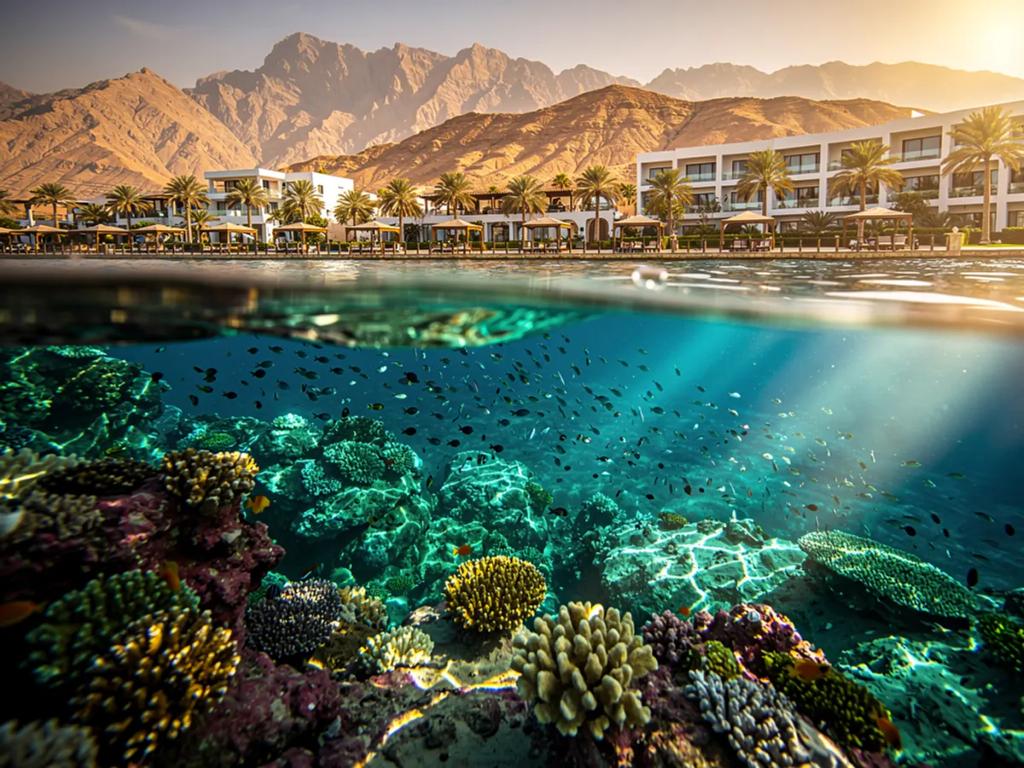
The land shot is the Ras Mohammed clifftops, where the Gulf of Suez meets the Gulf of Aqaba - go with the standard park excursion and shoot from the Shark Observatory cliffs. Underwater, a waterproof phone pouch on a lanyard is the realistic rig: shoot around midday when sunlight punches into the water, aim slightly upward toward the surface, and get close - water eats color and detail fast. Overnight Mount Sinai trips deliver the sunrise-over-Sinai panorama, and the ride back from any boat trip is golden-hour heaven off the stern. Leave the drone at home: Egypt bans civilian drones without military authorization and customs confiscate them at the airport.
Ras Mohammed became Egypt's very first national park in 1983, years before the resort boom arrived next door. And that boom was fast: Sharm was a small fishing village and naval outpost with three resorts in 1982, and over ninety by 2000. Offshore lies a genuine WWII grave - the SS Thistlegorm, a British freighter bombed in 1941 with trucks and motorcycles still in its holds, rediscovered by Jacques Cousteau in the 1950s and now a bucket-list day trip from Sharm.
Sharm runs on seasons, not festivals. Peak is the winter-sun window from October to April, with sharp surges over Christmas, New Year and Easter when European charter flights multiply; summer is scorching but noticeably cheaper. Ramadan is the other rhythm to know - it shifts about 11 days earlier each year, and while resorts operate normally, shops and local restaurants keep shorter daytime hours and the town wakes up after sunset. The Eid holidays that follow bring waves of domestic Egyptian tourists and full hotels.
The love is deserved: world-class reefs start meters from shore, winter sun is near-guaranteed when Europe is grey, the sea is warm year-round, and all-inclusive value is hard to beat. The complaints are just as real: all-inclusive life gets monotonous by day four, the Old Market and Naama Bay run on relentless hard-sell ("just look, no hassle" is the start of the hassle), every taxi ride is a negotiation, and Sharm is a purpose-built bubble - if you came to see Egypt, this is not it without long excursions. Divers and snorkelers rave; culture-seekers often leave underwhelmed.
Often not. Egypt restricts VoIP calling, so WhatsApp and FaceTime calls are frequently blocked on local mobile networks, and a travel eSIM riding those networks does not reliably bypass it. Messaging, photos and voice notes work normally - voice notes are the practical substitute.
Assume no. Boats at the Tiran reefs and Ras Mohammed lose signal offshore, and desert trips leave coverage shortly after the main road. Download offline maps and confirmations the night before and plan to be reachable again by evening.
You can, but local SIMs require passport registration, airport sellers charge tourist prices, and the same VoIP restrictions apply anyway. An eSIM installed before departure gets you online in arrivals with no queue and keeps your home number active for bank codes.