Madeira runs on Portugal's three national networks - MEO, NOS and Vodafone - and your eSIM rides one of them as its host. In Funchal, the hotel zone, Câmara de Lobos and the whole south coast strip, 4G and 5G are genuinely strong; you can video-call from a poncha bar without thinking about it. But this is a volcanic island that climbs from sea level to 1,862m in a few kilometers, and the coverage story splits in two the moment you leave the coast.
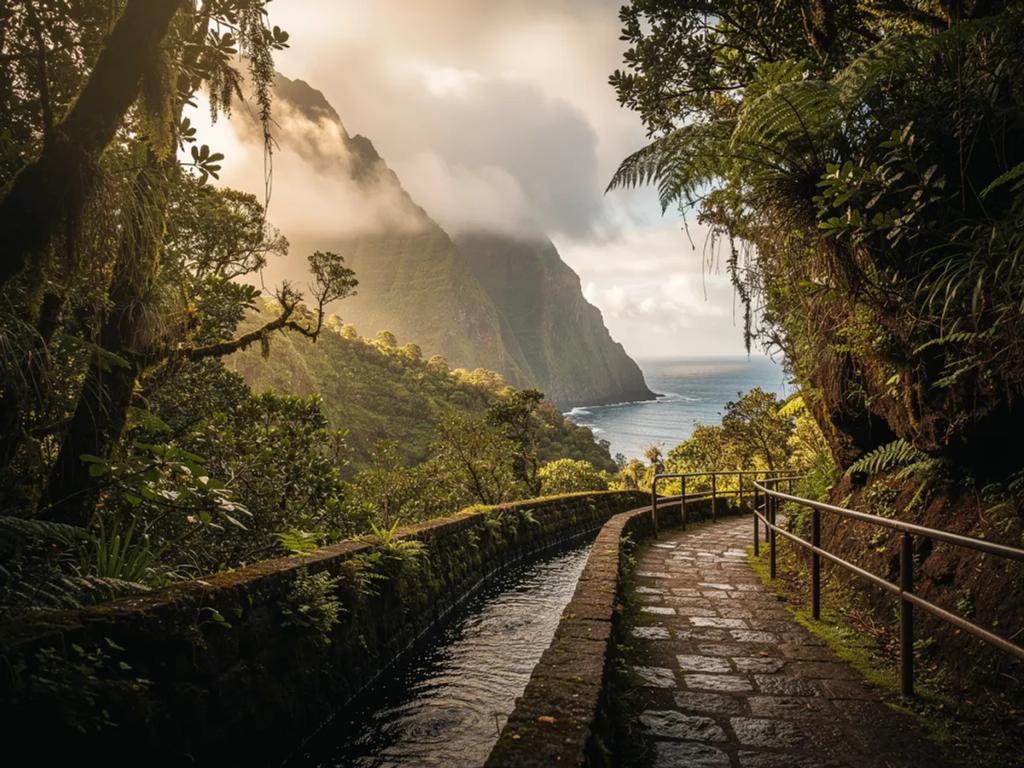
The dead zones are predictable once you know the terrain. Levada tunnels - and many classic walks like Caldeirão Verde pass through several - have zero signal inside, sometimes for hundreds of meters (you need a headlamp in there anyway). Deep valleys are shadowed by their own walls: Curral das Freiras, the "Nuns Valley" ringed by cliffs, is notorious for patchy reception, and stretches of the old north coast road drop in and out. Highest stakes of all is the central massif: hikers on the Pico do Arieiro to Pico Ruivo ridge regularly report long SOS-only sections between the viewpoints. Download offline maps and your trail route before you set off - this is safety advice on Madeira, not a data-saving tip - and remember 112 will use any network it can find.
- Bolt is the ride app that actually works here, covering Funchal, Câmara de Lobos and the airport corridor. Uber returned to the island in 2025, but driver numbers are thin and Bolt gets you a car faster - and it can hail a licensed taxi too. Only a few hundred ride-hail cars serve the whole island, so never count on summoning one from a remote trailhead.
- Trail booking is now mandatory: since 2026, every classified PR trail requires a pre-booked time slot on the government's SIMplifica platform, with a fee of 4.50 EUR for most routes for independent hikers (children under 12 free). The reopened Arieiro-Ruivo trail is 10.50 EUR and one-way only, Arieiro to Ruivo.
- Trail status changes daily with the weather - the IFCN page (ifcn.madeira.gov.pt) lists which levadas are open, restricted or closed, and checking it the morning of your hike saves a wasted drive.
- Horários do Funchal runs the city buses; timetables and route planning live online rather than at every stop, so expect to check your phone. The cable car from the old town up to Monte spares you the steepest walk in Portugal.
Cristiano Ronaldo Airport sits about 20 minutes east of Funchal, and the landing itself is famous - pilots need special certification for the crosswinds. The Aerobus shuttle and Bolt both cover the run into town, and that transfer is precisely when the just-landed messages, hotel directions and first weather-check hit your data plan. Install the eSIM before you fly; the arrivals hall is not where you want to be hunting Wi-Fi.
Less for navigation than a normal city break - you should be on offline maps in the mountains regardless - but Madeira adds its own habits: locals and hikers compulsively check weather webcams and the trail-status page, because conditions on the peaks change hourly, and the scenery generates a photo-upload volume that surprises people. For most travelers 1GB per 2-3 days covers messaging, weather roulette and social posting; add headroom for video calls or uploading every waterfall. The Portugal network comparison covers how MEO, NOS and Vodafone differ if you want the detail.
Layers, always. It can be 25C at the Funchal marina and feel like 5C in the wind on Pico do Arieiro an hour later, so a warm layer rides in the daypack even in August. Levada walks want a waterproof shell (tunnels drip, waterfalls spray) and shoes with real grip - the paths are wet stone with serious drops. All-white outfits are taken: that is the uniform of the Monte toboggan drivers who steer wicker sledges down the hill.
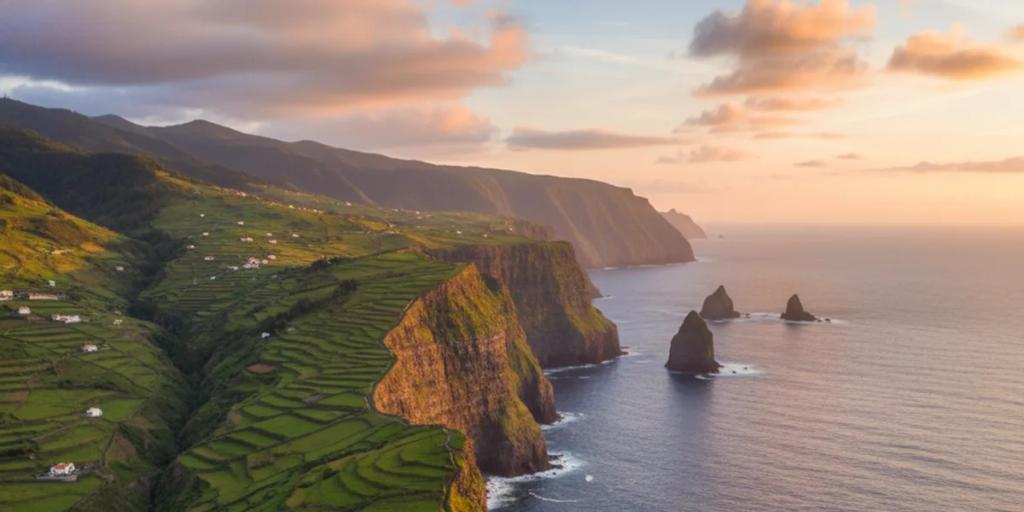
The Pico do Arieiro sunrise above a sea of clouds means driving up in the dark - about 45 minutes from Funchal - and it is worth every lost minute of sleep; arrive 40 minutes before sunrise for parking. Fanal's ancient laurel forest is the opposite: you want fog, not sun, so go midday when the mist usually sits on the plateau and shoot into the trees. At Ponta de São Lourenço, morning light hits the striped cliffs best from the Pedra Furada viewpoint. On the Cabo Girão skywalk, shoot your feet on the glass floor with the sea 580m below - go early, before cruise-excursion buses arrive. Much of the island is protected parkland where drone flights need authorization.
The airport is named after Funchal's most famous son, Cristiano Ronaldo, and its runway extension rests on 180 concrete columns about 70m tall, standing in the sea. Madeira wine exists in its modern form because barrels crossing the tropics in hot ship holds came back tasting better - producers now recreate the heating deliberately. And Funchal's New Year fireworks won the Guinness World Record for the largest display in 2006, a title the island held until 2012.
The Flower Festival fills Funchal with floats and flower carpets for several weeks from late April into May (2026: April 30 to May 24, with two parades). The Atlantic Festival turns June Saturdays into a pyromusical fireworks contest over Funchal bay. The Wine Festival celebrates the harvest from late August to mid-September, in town and in the vineyards. And New Year's Eve is the island's signature night - the whole amphitheater of Funchal becomes the launch site.
The love is real: spring-like weather in every month, a levada network that turns irrigation channels into some of Europe's best walking, and poncha that tastes better after a hike. The gripes are real too. Driving means relentless hairpins, tunnels and 25% grades that some visitors find genuinely stressful. The peaks play weather roulette - you can drive an hour to a viewpoint and stand inside a cloud. Funchal's old town gets swamped on multi-cruise-ship days. And the beaches surprise people: the main island's natural beaches are black pebble - the golden sand at Calheta was imported, and the real sandy beach is a ferry away on Porto Santo.
At trailheads and on coastal walks, usually yes; inside tunnels, no; in deep valleys and on the high ridges, expect long gaps and SOS-only stretches. Download offline maps, save your trail route, and tell someone your plan before committing to the mountain hikes.
Yes. Since 2026 all classified PR trails require a reserved time slot booked online via the SIMplifica platform, with a 4.50 EUR fee for most trails for non-resident adults - the famous Pico do Arieiro to Pico Ruivo route costs 10.50 EUR and now runs one-way. Book before you are standing at a trailhead with no signal.
It returned in 2025, but Bolt is the app with actual driver density in Funchal and around the airport, and it can call regular taxis too. Outside the Funchal area, pre-arrange transport - ride-hail coverage of the island's far side is thin to nonexistent.