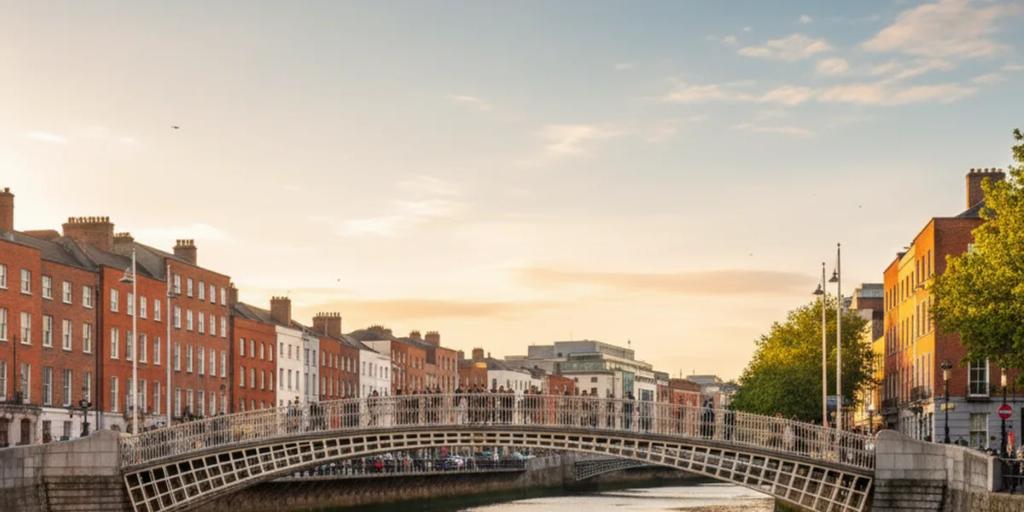
Dublin is an easy city to stay online in. Three networks cover Ireland - Vodafone, Three and eir - and your eSIM connects through one of them as its host. In the city itself that means solid 4G and 5G from the Georgian squares to the Docklands, on the DART along the bay, and in every pub with a fireplace and an opinion. Ireland skipped building a metro, so there are no tunnel dead zones to plan around either.
The honest exceptions sit just outside town, which matters because Dublin's best half-days are coastal. On the Howth cliff path and out in the Wicklow Mountains (Glendalough, the Sally Gap), coverage thins to patchy pockets once you round a headland or drop into a valley - normal for exposed Irish coast and upland, but worth knowing before you rely on live maps. Download the offline map and your return train time before you set out and the walk stays stress-free. Back in the city, thick-walled Victorian pubs and basement venues can knock a bar or two off, but you rarely lose data outright.
- Public transport still runs on the Leap Card, not your bank card. Ireland's contactless upgrade (the TFI Next Generation Ticketing programme) is not due on Dublin Bus, Luas trams and DART until around 2028, so tapping a Visa at the gate does not work yet. The TFI Leap Top-Up app loads credit onto the card from your phone, and the TFI Live app handles real-time times - both need data.
- FreeNow is the taxi app Dubliners actually use. Uber operates, but an Irish quirk: it can only dispatch licensed taxis here, so it is effectively the same cars at similar prices.
- dublinbikes is the city's bike-share - cheap 3-day tickets, bought and unlocked through the app.
- Tap-to-pay is universal in shops, pubs and cafes, so your phone wallet covers everything except the bus.
- Book the big sights online: the Book of Kells Experience at Trinity, the Guinness Storehouse and Kilmainham Gaol all sell timed tickets that routinely sell out on the day.
Dublin Airport has no train link, so it is buses: the Dublin Express and Aircoach coaches run to the city centre frequently and take card payments on board or app bookings. The ride in is 30-45 minutes depending on traffic, which is exactly when the accommodation directions, the "just landed" messages and the first Leap-app top-up happen - install your eSIM before you fly and that whole stretch just works.
Dublin trips are walking-and-talking trips: maps between pubs and museums, messages, a flood of photos when the light briefly cooperates. Translation apps stay in your pocket and video streaming tends to lose out to live music. For most visitors 1GB per 2-3 days is comfortable; budget more if you upload video or hotspot a laptop. Plans top up from your dashboard if the trip runs long, and installation takes minutes if you follow the setup guide before departure.
Pack for weather roulette: layers, comfortable waterproof shoes, and a rain shell rather than an umbrella - Dublin's wind turns umbrellas inside out on the quays. Summer evenings drop cool enough for a jacket even in July. Dress codes barely exist: smart-casual covers every pub and most restaurants, and nobody dresses up. If a local promises "four seasons in a day", believe them and dress in removable pieces.
The Ha'penny Bridge is best at dawn, shot from the boardwalk on the north quays so the white arch reflects in the Liffey before the foot traffic starts. The Long Room at Trinity is still spectacular but be aware most of its 200,000 books are in storage during the library's conservation project (a glowing Earth sculpture hangs there instead) - book the timed Book of Kells Experience ticket ahead. Temple Bar's red facade glows at golden hour; go for the photo, drink elsewhere. For something less postcard, walk the Great South Wall to Poolbeg lighthouse or catch the Howth cliff path in late light.
Arthur Guinness signed a 9,000-year lease on the St James's Gate brewery in 1759 - the document is displayed in the Storehouse floor. The remains of St Valentine rest in Whitefriar Street Church, a gift from Pope Gregory XVI in 1836. And the city's name comes from Dubh Linn, "black pool" - the dark tidal pool where the Vikings moored. Not bad for one town that also produced Wilde, Stoker, Joyce and Beckett.
St Patrick's Festival takes over the city for roughly five days around 17 March - book accommodation months out. Bloomsday (16 June) celebrates Joyce's Ulysses with readings and Edwardian dress. The All-Ireland finals fill Croke Park with 80,000 fans, now in July since the GAA's split season. TradFest (late January) packs the temple of trad music, and the NYE Festival closes the year along the Liffey.
The love: a genuinely walkable capital with a literary soul, pubs where strangers talk to you within a pint, and the sea plus mountains inside a 30-minute train ride. The gripes are just as real: Dublin is expensive - the famous Temple Bar pubs now charge 9-10 EUR a pint against roughly 6 elsewhere in town, and hotel prices are honestly brutal in summer. Rain can rearrange any given afternoon, and Temple Bar itself is a tourist district locals mostly avoid - walk five minutes to the pubs around Camden Street or Stoneybatter and both your pint and your company improve.
Not yet. Dublin Bus, the Luas and DART still require a Leap Card or paper ticket; the national contactless rollout is not expected on Dublin services until around 2028. Get a Leap Card on arrival (or use the TFI Leap Top-Up app to manage credit) - airport coaches, by contrast, happily take cards.
In the city, yes, everywhere. On the Howth cliff path and in the Wicklow uplands you should expect patchy pockets once you leave the villages - carry offline maps and tell someone your route if you are walking alone, standard hill-walking practice in Ireland.
Only if you need an Irish phone number. For data, an eSIM installed before you land skips the shop queue entirely, keeps your home number active for bank codes, and connects to the same Vodafone, Three or eir networks a local SIM would use. Check your phone is eSIM-capable on our compatible devices list first.