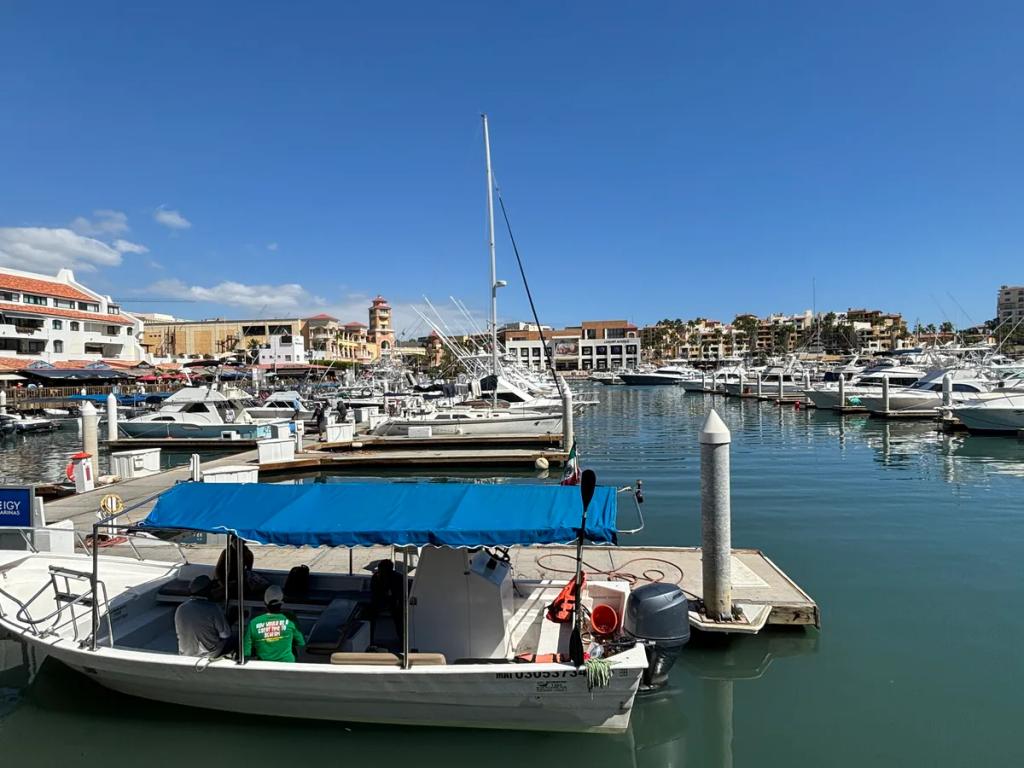
Cabo San Lucas is served by Telcel, AT&T and Movistar, and your eSIM attaches to whichever is strongest where you are standing. Coverage along the whole developed strip is good and resort wifi is generally solid - our Cancun and Mexico City guides cover Mexican networks and resort connectivity in more detail. The thing that catches visitors here is not signal. It is that they arrive at a beach destination and discover that most of the beaches cannot be swum.
This is the most important safety information about Cabo and it is routinely buried in brochures.
The Pacific side is dangerous. The beaches facing west - including the long, beautiful stretch north of town - have powerful undertow, sudden shore break and rip currents. People drown here every year, and strong swimmers are not exempt.
Divorce Beach is the notorious one. On the Pacific face of the same rock formation as Lover's Beach, it looks idyllic and is not swimmable. The names tell you the story and people still ignore it.
Lover's Beach, on the Sea of Cortez side of that same rock, is calm. Ten metres of sand separates a safe beach from a lethal one, which is exactly why the distinction gets missed.
Where you can actually swim: Medano Beach, the main town beach, is sheltered and busy and fine. Chileno and Santa María, both out along the Corridor, are protected coves with snorkelling and are the best swimming on this coast.
Learn the flag system. Green is calm, yellow means caution, red means dangerous, and black means the beach is closed. Red and black are flown often on the Pacific side and they are not decorative.
Many beaches have no lifeguard. Absence of a flag does not mean the water is safe; it usually means nobody is watching.
If the trip is about swimming, book on the Sea of Cortez side or plan around Chileno and Santa María rather than assuming the sand outside your hotel is usable.
Cabo San Lucas is the marina, the nightlife, the sportfishing fleet and the arch. Loud, busy, and where most of the bars are.
San José del Cabo, at the other end, is the older town - a colonial plaza, an art district, galleries and a considerably quieter evening.
The Corridor is the 33 km of coast between them, where most of the large resorts sit, along with Chileno and Santa María.
They are not interchangeable. People book "Cabo", arrive in San José expecting the marina, and spend the week in taxis - or book the marina wanting quiet and do not get it.
Taxis between them are expensive by Mexican standards, and fares are negotiated rather than metered. Uber operates and is considerably cheaper, though pickup from some resorts is restricted.
A hire car makes sense if you are staying on the Corridor and want both ends plus the beaches.
The strip from town to San José is well covered, resorts included.
The Pacific beaches north of town thin out as development does, and the road up to Todos Santos has gaps.
On the water - the arch, snorkel trips, whale watching - coverage holds close in and drops as you go out. Sportfishing boats run well beyond it.
The desert interior and the Sierra de la Laguna behind the coast have very little.
Todos Santos, an hour up the Pacific side, is covered in town.
La Paz and the Espíritu Santo islands, two hours north, are covered in the city and not among the islands.
Grey whales and humpbacks migrate here between roughly December and April, and Cabo is one of the most reliable places on earth to see them.
Humpbacks breach in the bay and are often visible from the shore, let alone a boat.
Grey whales calve in the Pacific lagoons further north - San Ignacio and Magdalena Bay - where the encounters are closer and the trip is a long day or an overnight from here.
Outside that window there are no whales, which surprises people who booked in July on the strength of a photograph.
The Sea of Cortez is exceptional generally. Cousteau called it the world's aquarium, and the snorkelling, diving and fishing are the genuine draw - Cabo is the marlin capital, and the sportfishing tournaments here are among the richest in the world.
- Uber, which works and is far cheaper than the negotiated taxi fares.
- Maps with offline copies for the Corridor and any drive up the Pacific coast.
- A weather and surf app, which is how to know what the flags will be doing.
- A translation app is barely needed - English is spoken everywhere in the tourist zone, more than Spanish in places.
- Cards work widely, and US dollars are accepted almost everywhere at rates that quietly favour the merchant. Pay in pesos.
Los Cabos International (SJD) sits near San José del Cabo, about 50 km from Cabo San Lucas town and much closer to the Corridor's eastern end.
Pre-book a transfer. The arrivals hall is notorious for timeshare representatives presenting themselves as transport or information desks; the pattern is a free ride or a discount in exchange for a "short presentation" that is neither short nor optional-feeling once you are there. Walk past, go outside, and use your booked transfer or an official taxi.
Uber from the airport is permitted but pickup arrangements change; a pre-booked shuttle avoids the question entirely.
Budget 40 minutes to an hour to Cabo San Lucas, less to the Corridor.
Modest. Resort and restaurant wifi is good, the developed strip is well covered, and much of a Cabo trip is spent in one place. Budget more if you are driving the Corridor or heading up to Todos Santos, where offline maps matter.
Beach and resort clothing, with something for the evening - the marina restaurants dress up more than the beach suggests.
Reef shoes for the rocky coves at Chileno and Santa María.
Serious sun protection. This is a desert at 22 degrees north and the sea breeze disguises the strength of it completely.
A light layer for winter evenings, which drop cooler than the daytime suggests.
Closed shoes for the desert if you are doing anything inland - everything there has spines.
El Arco, the arch at Land's End where the Pacific meets the Sea of Cortez, from a boat at first light before the day traffic.
Lover's Beach and Divorce Beach, from above, showing the two seas either side of the same spit.
The sea lion colony on the rocks by the arch.
Santa María cove, from the cliff path above it, for the colour of the water.
The marina at night, from the far side.
San José del Cabo's plaza and mission church, in the evening when the art district is open.
Todos Santos, an hour north, a genuine Pueblo Mágico with a very different feel.
A breaching humpback, between December and April, which requires patience and a long lens.
El Arco marks the meeting of two seas. The Pacific Ocean and the Sea of Cortez converge at Land's End, and the difference in water conditions either side of that rock is the reason for everything in the first section of this guide.
The Sea of Cortez is a UNESCO World Heritage Site and one of the most biologically diverse marine environments on the planet - Cousteau's description of it as the world's aquarium is the standard quotation for a reason.
Cabo is one of the great sportfishing destinations, and the Bisbee's Black and Blue marlin tournament each October pays out prize money in the millions.
Baja California Sur runs on Mountain Time, an hour behind Mexico City, which catches out anyone booking connections through the capital.
Todos Santos has a Hotel California, and the band has consistently denied any connection, which has never slowed the T-shirt trade.
And the peninsula is a desert running into a tropical sea, which is why cactus and marlin appear in the same photograph.
Whale season, December to April, which is the main reason to choose those months.
Bisbee's Black and Blue, in October, the sportfishing tournament that fills the marina.
Día de Muertos, 1 and 2 November, marked more quietly here than on the mainland but properly in San José.
The San José del Cabo art walk, Thursday evenings from November to June, when the galleries open late.
Hurricane season runs August to October, and while direct hits are infrequent, it is the wet and humid stretch and travel insurance matters more then.
November to May is the season, and March and April combine whales with warm water.
The love: Cabo delivers reliable sun, a genuinely spectacular meeting of desert and sea, world-class fishing and diving, and whales in season - all with excellent infrastructure and a short flight from the western United States. Medano beach is lively and easy, the Corridor resorts are very good, San José provides the quiet counterweight, and the Sea of Cortez is a serious natural attraction rather than a backdrop.
The complaints are consistent. The swimming situation genuinely disappoints people who did not research it. It is expensive - the most expensive part of Mexico for many things, and priced in dollars in practice. The timeshare pressure starts at the airport and does not stop. It can feel detached from Mexico, an English-speaking resort strip with the country somewhere behind it. And the nightlife in town is either the point or the problem.
Come between January and April, check the flags before you swim, stay on the side of the peninsula that matches the holiday you want, and book a whale trip on a morning with flat water.
Check first, every time. Many Cabo beaches - especially all the Pacific-facing ones - have dangerous undertow and shore break, and drownings happen every year. Divorce Beach is not swimmable; Lover's Beach, on the other side of the same rock, is. Medano in town, and Chileno and Santa María on the Corridor, are the reliable swimming beaches. Learn the flags: red is dangerous, black means closed.
No, and this is the most common booking mistake. They sit at opposite ends of a 33 km corridor - Cabo San Lucas is the marina and the nightlife, San José is the older, quieter colonial town. Taxis between them are expensive. Decide which holiday you want before you book.
Pesos. US dollars are accepted almost everywhere, but the exchange rate applied is set by the merchant and rarely in your favour. Cards work widely and settle at a proper rate.
Close inshore, yes - around the arch and on the snorkelling coves. Coverage drops as you head out, and sportfishing boats run well beyond it. Download offline maps and let someone know your plan for any long day on the water.